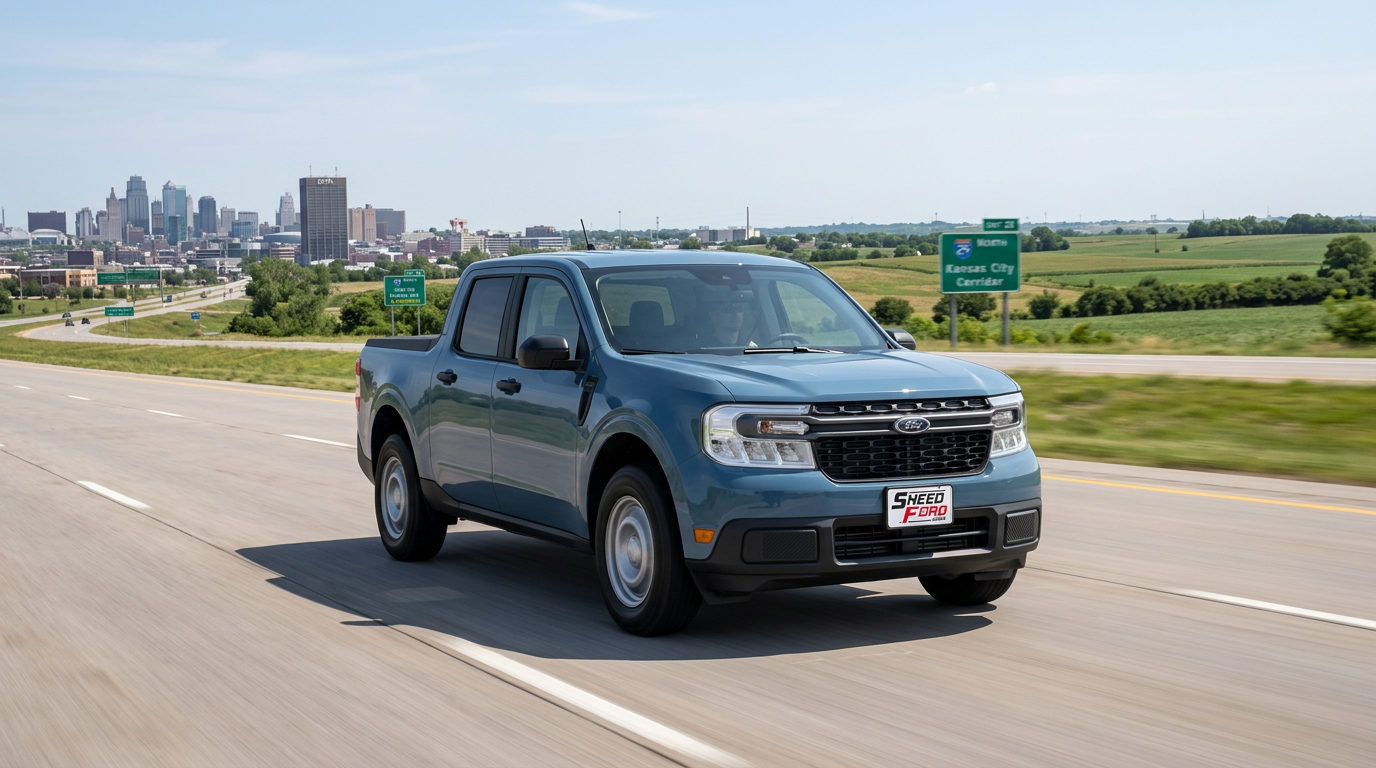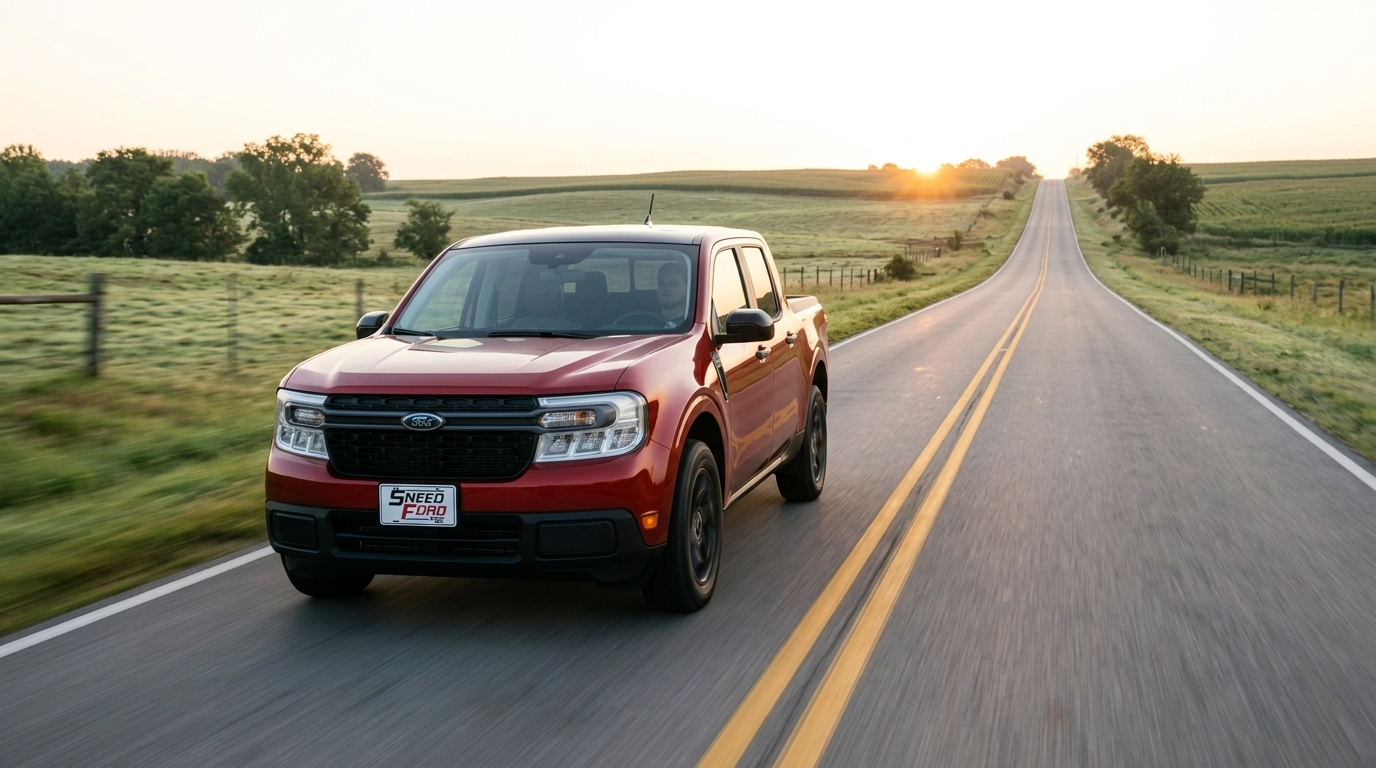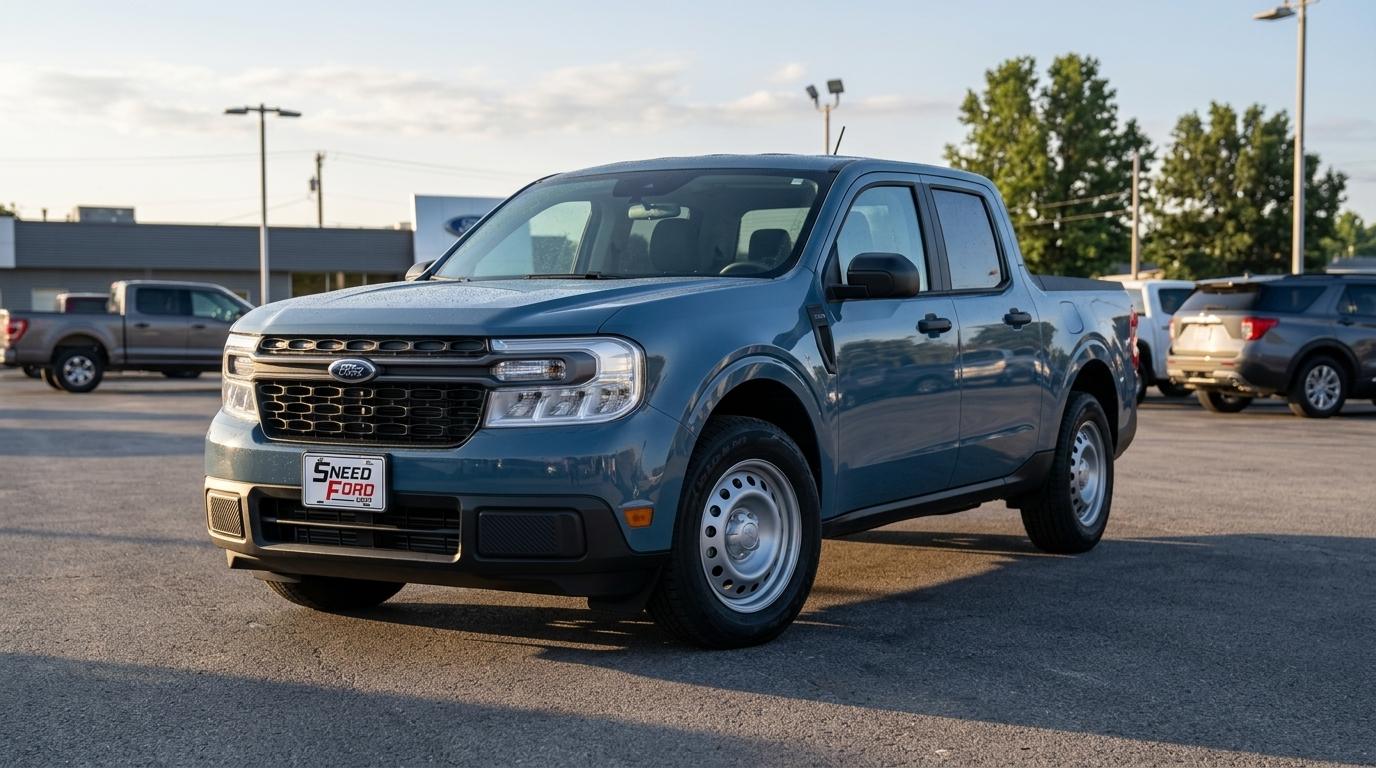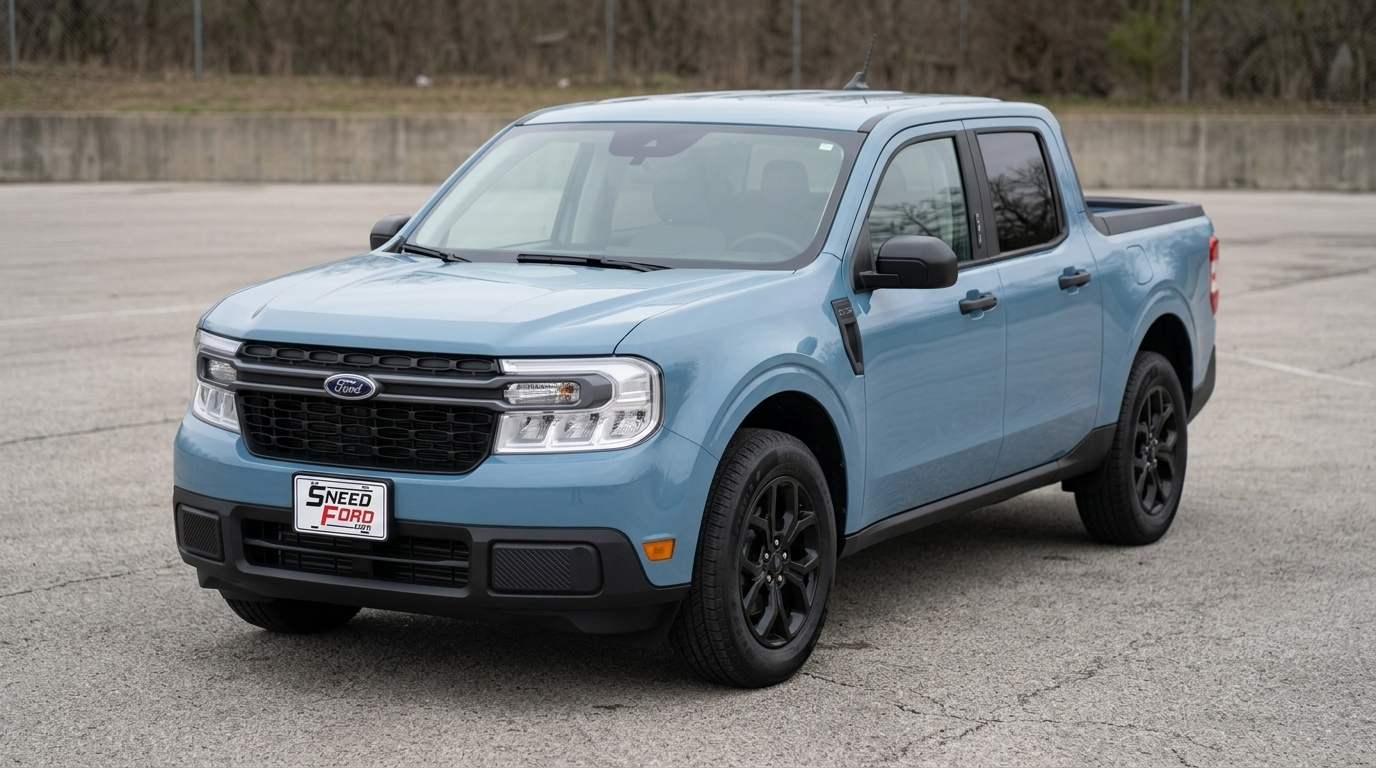

2026 Ford Explorer Tremor parked on a gravel road at the edge of a Missouri tree line with a Dennis Sneed Ford dealer plate

New for 2026, the Explorer Tremor is the first genuinely off-road-capable Explorer — not a styling package, but a real hardware upgrade built for gravel roads, hunting land, and rougher rural property. Here’s everything it adds, verified against the official Ford Order Guide and a real window sticker.

New for 2026

What is the 2026 Ford Explorer Tremor?

The 2026 Explorer Tremor is a new, off-road-focused version of the Explorer with standard 4WD, all-terrain tires, a Torsen limited-slip rear axle, front and rear skid plates, off-road-tuned shocks, front tow hooks, and off-road auxiliary lighting. It’s the first Explorer built for genuine off-pavement capability rather than just rugged looks — while keeping the three-row seating and family practicality the Explorer is known for.

For years, buyers who wanted a capable Ford SUV for gravel roads, hunting property, or rougher terrain had to choose between the compact Bronco Sport or step way up to a full-size truck. The Explorer Tremor fills that gap: a three-row family SUV with real off-road hardware. For northwest Missouri buyers with acreage, hunting land, or long gravel driveways, that’s a genuinely useful combination.

What does the Explorer Tremor add over other trims?

The Tremor adds a full package of off-road hardware you can’t get on other Explorer trims: standard 4WD, all-terrain tires, a Torsen limited-slip rear axle, front and rear skid plates, off-road-tuned shocks, front tow hooks, off-road auxiliary grille lights, and unique 18″ black wheels. Inside, it gets Miko suede seating with Tremor badging and heated-and-ventilated front seats.

2026 Explorer Tremor — the off-road hardware

  • 4WD standard — intelligent four-wheel drive on every Tremor, not an option.
  • All-terrain tires — P265/65R18 all-terrain rubber for gravel, mud, and loose surfaces.
  • Torsen limited-slip rear axle — sends power to the wheel with grip for better traction off-pavement.
  • Skid plates — front and rear underbody deflector plates protect vital components.
  • Off-road-tuned shocks — suspension calibrated for rougher terrain.
  • Front tow hooks — recovery-ready, for when a friend needs a pull.
  • Off-road auxiliary grille lighting — extra light for early mornings and back roads.
  • Unique 18″ high-gloss ebony black wheels and blackout headlamp/taillamp treatment.
  • Tremor badging and graphics plus Miko suede interior with heated-and-ventilated front seats.

What engine does the 2026 Explorer Tremor have?

The Explorer Tremor comes standard with the 2.3L EcoBoost four-cylinder (300 hp, 310 lb-ft), and the 3.0L EcoBoost V6 (385 hp, 415 lb-ft) is available as a no-charge engine option within the Tremor Ultimate Package. Both pair with a 10-speed automatic and standard 4WD. The V6 is the choice for buyers who want maximum power along with the off-road capability.
Engine Power Combined MPG Drive
2.3L EcoBoost I-4 (standard) 300 hp / 310 lb-ft 21 4WD
3.0L EcoBoost V6 (available) 385 hp / 415 lb-ft 19 4WD

That the V6 is a no-charge option on the Tremor is worth knowing — it’s ordered as part of the Ultimate Package, which also brings a panoramic glass roof, a 14-speaker B&O sound system, and premium interior features. For the full engine comparison, see our 2026 Explorer engines guide.

Is the Explorer Tremor good for hunting and rural property?

Yes — that’s exactly the buyer it’s built for. The combination of standard 4WD, all-terrain tires, a Torsen limited-slip axle, skid plates, and off-road-tuned shocks makes the Tremor genuinely capable on gravel roads, muddy field access, pasture, and hunting-land trails, while still seating up to seven and driving comfortably on pavement. For northwest Missouri buyers who split time between town and rougher rural ground, it’s the Explorer that finally does both.

It’s not a rock-crawler and Ford doesn’t pretend it is — there’s no low-range transfer case like a Bronco or a truck. But for the terrain most rural Missouri families actually deal with — gravel county roads, wet field entrances, snow-covered driveways, the trail to the deer stand — the Tremor has real, verifiable hardware that a standard Explorer doesn’t. It’s the difference between an SUV that looks capable and one that’s actually equipped for it.

“The Tremor is the first Explorer with genuine off-road hardware — 4WD, all-terrain tires, a Torsen axle, and skid plates as standard equipment, not a look-alike package.”

How much can the Explorer Tremor tow?

The Explorer Tremor tows up to 5,000 lbs when properly configured, the same as the rest of the Explorer lineup, with the Class III Trailer Tow Package standard. That’s enough for a small boat, a utility or ATV trailer, or a small camper — a natural pairing with the Tremor’s outdoor-oriented mission.

All Tremor equipment and specifications sourced from the official 2026 Ford Explorer Order Guide and a verified Ford window sticker. Fuel-economy figures are EPA estimates and vary by configuration and driving conditions. Confirm the exact equipment on any specific vehicle via its window sticker or with our team.

Why Buy Your Tremor from Sneed Ford

30 years serving the rural families of northwest Missouri from Gower.

Dennis Sneed Ford is a Top 5 Ford remarketing dealer in the country and a Ford Credit Partners in Quality award winner — one of roughly 111 dealers nationally. Our customer base is the working and rural families of DeKalb, Clinton, Buchanan, Platte, and Clay counties — exactly the buyers the Explorer Tremor is built for. We can order a Tremor spec’d the way you want it, with the 2.3L or the V6. Read why Kansas City and rural families drive to Gower for their Explorer →

Where can I see the 2026 Explorer Tremor near Kansas City?

At Dennis Sneed Ford in Gower, MO — about 45 minutes north of the Kansas City metro on US-169. As a brand-new trim for 2026, Tremor availability rotates, so call 816-409-1975 to confirm what’s on the lot or to order one built to your spec.

2026 Ford Explorer Tremor questions, answered

What is the 2026 Ford Explorer Tremor?

The Explorer Tremor is a new-for-2026 off-road-focused trim with standard 4WD, all-terrain tires, a Torsen limited-slip rear axle, front and rear skid plates, off-road-tuned shocks, front tow hooks, and off-road auxiliary lighting. It’s the first Explorer built for genuine off-pavement capability while keeping three-row seating and everyday comfort.

What does the Explorer Tremor come with that other trims don’t?

The Tremor adds off-road hardware unavailable on other Explorers: standard 4WD, all-terrain tires, a Torsen limited-slip rear axle, front and rear skid plates, off-road-tuned shocks, front tow hooks, off-road auxiliary grille lights, unique 18-inch black wheels, and blackout exterior treatment. Inside it gets Miko suede seating with Tremor badging and heated-and-ventilated front seats.

What engine does the Explorer Tremor have?

The Tremor comes standard with the 2.3L EcoBoost four-cylinder (300 hp, 310 lb-ft). The 3.0L EcoBoost V6 (385 hp, 415 lb-ft) is available as a no-charge engine option within the Tremor Ultimate Package. Both pair with a 10-speed automatic and standard 4WD.

Is the Explorer Tremor good off-road?

Yes, for the terrain most rural buyers deal with. Its standard 4WD, all-terrain tires, Torsen limited-slip axle, skid plates, and off-road-tuned shocks make it genuinely capable on gravel roads, muddy field access, pasture, and hunting trails. It isn’t a low-range rock-crawler like a Bronco, but it has real off-road hardware a standard Explorer doesn’t.

How much can the 2026 Explorer Tremor tow?

The Explorer Tremor tows up to 5,000 lbs when properly configured, the same as the rest of the Explorer lineup, with the Class III Trailer Tow Package standard. That’s enough for a small boat, an ATV or utility trailer, or a small camper.

Is the Explorer Tremor a family vehicle?

Yes. Despite its off-road focus, the Tremor keeps the Explorer’s three rows of seating and everyday comfort, so it works as a family SUV that’s also capable off-pavement. For rural families who need both school-run practicality and gravel-road capability, it’s a genuine do-both option.


Carey Sneed

Dennis Sneed Ford · Gower, MO · 30 Years Family-Owned

Carey Sneed represents the second generation at Dennis Sneed Ford, a Ford Credit Partners in Quality dealer and one of the Top 5 Ford remarketing dealers in the country. Meet the Sneed Ford team →

2026 Ford Explorer on the highway near Gower, Missouri, with a Dennis Sneed Ford dealer plate

The 2026 Ford Explorer offers two engines — an efficient 2.3L four-cylinder and a powerful 3.0L V6. Here’s the honest breakdown of what each delivers, which trims get them, and how to pick the right one, verified against the official Ford Order Guide and real window stickers.

What engines does the 2026 Ford Explorer offer?

The 2026 Ford Explorer offers two engines: a 2.3L EcoBoost turbocharged four-cylinder making 300 horsepower and 310 lb-ft of torque, and a 3.0L EcoBoost V6 making 385 horsepower and 415 lb-ft. Both pair with a 10-speed automatic transmission. The 2.3L is standard on most trims; the V6 comes standard on the ST and is available on the Tremor.
Engine Horsepower Torque Transmission Found On
2.3L EcoBoost I-4 300 hp 310 lb-ft 10-speed auto Active, ST-Line, Platinum, Tremor
3.0L EcoBoost V6 385 hp 415 lb-ft 10-speed auto ST (standard), Tremor (available)

The 2.3L EcoBoost four-cylinder

2.3L EcoBoost I-4

300 hp · 310 lb-ft · 10-speed automatic · up to 24 MPG combined

The standard Explorer engine, and the right choice for most buyers. Don’t let “four-cylinder” fool you — this turbocharged 2.3L makes 300 horsepower and 310 lb-ft of torque, which is more than enough to move a fully loaded three-row SUV with confidence. It’s the efficiency leader in the lineup at up to 20 city / 29 highway / 24 combined MPG (rear-wheel drive), and it still tows the Explorer’s full 5,000-lb rating. It’s standard on the Active, ST-Line, and, new for 2026, the Platinum.

Best for: the vast majority of Explorer buyers — families, commuters, and anyone who wants strong real-world performance with the best fuel economy.

The 3.0L EcoBoost V6

3.0L EcoBoost V6

385 hp · 415 lb-ft · 10-speed automatic

The performance engine. The twin-turbocharged 3.0L V6 makes 385 horsepower and 415 lb-ft of torque — a substantial step up in power and the character that makes the Explorer ST genuinely quick. The extra torque shows up most when you’re merging, passing with a full load, or want the SUV to feel effortless rather than adequate. It comes standard on the ST and is available on the new Tremor as a no-charge engine option within the Ultimate Package. The trade-off is fuel economy: the V6 returns 19–21 MPG combined depending on the trim, versus up to 24 for the four-cylinder.

Best for: buyers who want performance, a quicker three-row SUV, or the V6 on the ST or Tremor specifically.

Is the 2026 Explorer V6 385 or 400 horsepower? The honest answer.

You’ll see both numbers online, and here’s why. Ford currently lists the 2026 Explorer’s 3.0L EcoBoost V6 at 385 horsepower — that’s what ford.com and the official Ford Order Guide show. Some earlier-build 2026 Explorers, and many third-party sites, list 400 horsepower. The difference is tied to a new gas particulate filter added during the model year, which slightly reduced the rating. Torque is 415 lb-ft either way.

Because the figure can vary by build, the only way to know for certain what a specific Explorer is rated at is to check that vehicle. We’re happy to confirm the exact horsepower on any 3.0L Explorer in our inventory before you buy — just ask.

“Most competitor pages confidently print one horsepower number for the Explorer V6. The truth is it depends on the build — and we’ll confirm the exact figure on the specific vehicle you’re looking at.”

2.3L vs 3.0L: which 2026 Explorer engine should I choose?

Choose the 2.3L EcoBoost if you want the best fuel economy and everyday value — it has more than enough power for family duty and returns up to 24 MPG combined. Choose the 3.0L V6 if you specifically want performance, or if you’re buying the ST or a V6-equipped Tremor. For most family buyers, the 2.3L is the smarter pick; the V6 is for buyers who prioritize power.
  2.3L EcoBoost I-4 3.0L EcoBoost V6
Horsepower 300 hp 385 hp
Torque 310 lb-ft 415 lb-ft
Combined MPG up to 24 19–21
Max Towing 5,000 lbs 5,000 lbs
Standard on Active, ST-Line, Platinum ST
Best for Efficiency & value Performance

Notice the towing is identical — both engines pull the Explorer’s full 5,000-lb rating, with the Class III Trailer Tow Package standard on every trim. So if towing capacity is your only concern, the four-cylinder does everything the V6 does. The V6 is about how the vehicle *feels* and accelerates, not what it can tow. For the complete fuel-economy picture by engine and drivetrain, see our 2026 Explorer MPG guide, and for how the engines map to each trim, our Explorer trims guide.

All engine specifications sourced from the official 2026 Ford Explorer Order Guide and verified Ford window stickers. Horsepower on the 3.0L V6 can vary by build date; confirm the rating on any specific vehicle via its window sticker or with our team. Fuel-economy figures are EPA estimates and vary by configuration.

Why Buy Your Explorer from Sneed Ford

30 years family-owned, serving Kansas City and St. Joseph from Gower.

Dennis Sneed Ford is a Top 5 Ford remarketing dealer in the country and a Ford Credit Partners in Quality award winner — one of roughly 111 dealers nationally. Whether you want the efficient 2.3L or the V6-powered ST, we can put you in the exact engine and configuration that fits how you drive — and confirm the specs on any vehicle before you buy. Read why Kansas City families drive to Gower for their Explorer →

Where can I compare 2026 Explorer engines near Kansas City?

At Dennis Sneed Ford in Gower, MO — about 45 minutes north of the Kansas City metro on US-169. We stock Explorers with both the 2.3L four-cylinder and the 3.0L V6, so you can drive them back to back and feel the difference. Call 816-409-1975 to confirm what’s on the lot before you drive up.

2026 Ford Explorer engine questions, answered

How much horsepower does the 2026 Ford Explorer have?

The 2026 Ford Explorer’s standard 2.3L EcoBoost four-cylinder makes 300 horsepower and 310 lb-ft of torque. The available 3.0L EcoBoost V6 makes 385 horsepower and 415 lb-ft. Ford lists the V6 at 385 hp; some earlier-build 2026 units and third-party sources cite 400 hp, a difference tied to a new gas particulate filter added during the model year. We can confirm the exact rating on any specific Explorer in our inventory.

Is the 2026 Ford Explorer V6 385 or 400 horsepower?

Ford currently lists the 2026 Explorer’s 3.0L EcoBoost V6 at 385 horsepower, which is what ford.com and the official Order Guide show. Some earlier-build 2026 Explorers and many third-party sites list 400 horsepower. The reduction is tied to a new gas particulate filter. Torque is 415 lb-ft either way. Because it can vary by build, we recommend confirming the figure on the specific vehicle you’re considering.

What’s the difference between the Explorer’s 2.3L and 3.0L engines?

The 2.3L EcoBoost is a turbocharged four-cylinder making 300 hp and 310 lb-ft, and it’s the fuel-economy leader at up to 24 MPG combined. The 3.0L EcoBoost V6 makes 385 hp and 415 lb-ft for noticeably stronger acceleration, at the cost of fuel economy (19–21 MPG combined). Both tow 5,000 lbs. The four-cylinder is the value and efficiency choice; the V6 is the performance choice.

Which 2026 Explorer trims have the V6 engine?

The 3.0L EcoBoost V6 comes standard on the Explorer ST and is available on the new Explorer Tremor. The Active, ST-Line, and Platinum trims use the 2.3L EcoBoost four-cylinder. Note that for 2026, the V6 is no longer offered on the Platinum trim, which now runs the more efficient four-cylinder.

Is the 2.3L EcoBoost engine powerful enough for the Explorer?

Yes. The 2.3L EcoBoost makes 300 horsepower and 310 lb-ft of torque, which is plenty to move a fully loaded three-row Explorer with confidence, and it tows the full 5,000-lb rating. Most Explorer buyers find the four-cylinder more than adequate for daily driving, road trips, and towing, while getting the best fuel economy in the lineup.

Do both Explorer engines tow the same amount?

Yes. Both the 2.3L EcoBoost four-cylinder and the 3.0L EcoBoost V6 tow up to 5,000 lbs when properly configured, with the Class III Trailer Tow Package standard on every trim. If towing capacity is your priority, the four-cylinder does everything the V6 does; the V6 is about acceleration and feel, not tow rating.


Carey Sneed

Dennis Sneed Ford · Gower, MO · 30 Years Family-Owned

Carey Sneed represents the second generation at Dennis Sneed Ford, a Ford Credit Partners in Quality dealer and one of the Top 5 Ford remarketing dealers in the country. Meet the Sneed Ford team →

2026 Ford Explorer driving north out of the Kansas City metro on US-169 toward Dennis Sneed Ford in Gower, MO

There’s a family-owned Ford store 45 minutes north of downtown Kansas City, in a town of about 1,500 people, that sells a surprising number of Explorers into the metro. Here’s why so many KC families make the drive to Gower.

Why do Kansas City families drive to Gower for a Ford Explorer?

Roughly 60% of Dennis Sneed Ford’s business comes from the Kansas City metro — from Overland Park, Lees Summit, Liberty, Smithville, and the surrounding suburbs. The reason is straightforward: low small-town overhead combined with one of the largest Ford remarketing sourcing programs in the country lets a 30-year, family-owned dealership in Gower stay genuinely competitive on Explorers against every metro Ford store.

If you’ve shopped three-row SUVs anywhere in the KC market lately, you know the routine. You walk into a big metro store, then another, and the experience is about the same. The major metro Ford dealers tend to land in similar territory on a 2026 Explorer because they carry similar overhead, similar inventory financing, and similar advertising budgets. Volume helps, but not as much as you’d expect.

Then someone mentions Sneed Ford in Gower. Maybe a coworker, maybe a neighbor, maybe a late-night search that turns up a small-town dealership with a 30-year track record and a phone number a real person answers. And the conversation goes differently. That’s not a coincidence — it’s a structural difference worth understanding.

Kansas City, MO
Overland Park, KS
Lees Summit
Liberty
Smithville
Leavenworth
Excelsior Springs
Kearney
St. Joseph

How can a small dealership in Gower stay competitive on Explorers against the metro stores?

Two real, verifiable advantages: dramatically lower overhead in a small town versus a metro location, and one of the highest-volume Ford remarketing programs in the country — which means Sneed Ford sources Ford and Lincoln inventory directly from Ford at scale, an advantage most dealers simply don’t have.

1. Small-town overhead is the math, not a slogan.

A metro Ford dealership pays metro real-estate prices, metro property taxes, metro wages, and metro advertising rates to maintain a facility big enough to compete on visibility. None of that is unreasonable — it’s the cost of being a metro store. But every dollar of it is part of the operating reality behind every Explorer that store sells.

Gower is a town of about 1,500 in DeKalb County. The land costs less, the taxes are lower, and we aren’t fighting for visibility against four other dealerships within a mile. Our advertising is targeted, not blanket. Our staff is family. The whole expense structure is fundamentally different from the metro reality.

2. Top-5 Ford remarketing status is the bigger advantage.

Dennis Sneed Ford has been recognized as one of the Top 5 Ford remarketing dealers in the country. We purchase more than 1,100 late-model, off-lease, and executive Ford and Lincoln vehicles every year directly from Ford. For a family shopping an Explorer, that sourcing relationship matters in two ways: it keeps our new-Explorer pricing competitive, and it means our used and off-lease Explorer inventory is unusually deep — often the exact late-model, low-mileage three-row SUV a growing family is looking for.

The Sneed Difference

30 years. Family-owned. Ford Credit Partners in Quality.

Dennis Sneed Ford has also been recognized as one of approximately 111 dealers nationally in Ford Motor Credit’s Partners in Quality program — Ford Credit’s most prestigious dealer recognition, awarded for the highest customer satisfaction and loyalty scores. Three numbers worth knowing:

  • 30 years as a family-owned Ford dealership in Gower, MO.
  • ~111 dealers nationally recognized in the Ford Credit Partners in Quality program.
  • 1,100+ Ford and Lincoln vehicles purchased directly from Ford each year through remarketing.

Read about Sneed Ford’s awards and recognition →

Is the drive from Kansas City actually worth it for an Explorer?

For a family-SUV purchase, almost always yes — especially when you end up working with a family-owned dealership that has been doing this for three decades. The drive itself is roughly 45 minutes from the north metro and about an hour from the south metro.

Here’s the practical view. From the I-35 corridor through Liberty or Kearney, you’re looking at about 45 minutes to reach us in Gower. From Overland Park or Lees Summit on the south side, closer to an hour. We’re easy to find on US-169, which runs straight to our front door at 1046 SW Highway 169.

What that drive gets you is real choice and a different experience. Most metro families we talk to have already shopped two or three big KC stores before they call us. By the time they arrive, they have a configuration in mind and a clear sense of what the metro experience felt like. Our job is simple: show them the Explorer they want, do it without a runaround, and earn their family’s business going forward.

“The reason we get the second Explorer sale, and the third one, is the experience after the drive.”

What kind of Explorer inventory does Sneed Ford carry?

Across new and pre-owned, we stock the 2026 Explorer lineup — Active, ST-Line, ST, Platinum, and the new Tremor — in the configurations Missouri and Kansas families actually buy, weighted toward all-wheel-drive models for winter. Our pre-owned Explorer inventory is unusually deep thanks to the remarketing program.

Most metro Ford stores carry Explorer inventory weighted toward whatever regional allocation gives them. We carry that allocation too, and we go after the specific configurations our customer base asks for — well-equipped Active and ST-Line 4WD models being the most common family conversation we have. We’ll also gladly factory-order an Explorer built exactly the way you want it. Not sure which trim fits? Our 2026 Explorer trims guide walks through all six in plain language.

Want to see what’s on the ground right now? Search our 2026 Explorer inventory here, or call us at 816-409-1975 and we’ll walk you through what’s arriving in the next two weeks.

What about service after the sale — is that practical from Kansas City?

More practical than most KC buyers expect. Routine service and warranty work can be done at any Ford dealer, so metro families typically use a KC Ford dealer for oil changes and minor work while keeping Sneed Ford for purchases, trade-ins, and bigger conversations. Plenty of customers simply drive back up because the experience is better.

Ford’s national warranty network means a 2026 Explorer you buy in Gower can be serviced at any Ford dealership in the country — including every Ford dealer in the KC metro. The warranty travels with the vehicle, not the dealer. So buying from us doesn’t lock you into driving to Gower for every oil change.

How do I get started with Sneed Ford as a Kansas City Explorer buyer?

Three easy paths: search inventory online, value your trade in about a minute, or get pre-qualified for financing before the drive up. Most KC families do at least one before they call, which makes the in-person visit faster and more productive.

If you already know what you want, start with the complete 2026 Ford Explorer buyer’s guide, then move to inventory or financing. Still deciding between trims or engines? The buyer’s guide and our Explorer MPG guide cover the details families ask about most.


Kansas City Explorer buyer questions, answered

How far is Sneed Ford from Kansas City?

Dennis Sneed Ford is approximately 45 minutes north of downtown Kansas City via I-35 and US-169. The drive from north metro suburbs like Liberty, Smithville, and Kearney is closer to 30 minutes. From south metro suburbs like Overland Park and Lees Summit, plan on about an hour. Our address is 1046 SW Highway 169, Gower, MO 64454.

Why does Sneed Ford stay competitive against the larger Kansas City Ford dealers?

Two reasons. First, a small-town dealership in Gower has dramatically lower overhead than a metro Ford store — lower real-estate costs, lower taxes, and a leaner operating structure. Second, Sneed Ford is one of the Top 5 Ford remarketing dealers in the country, purchasing 1,100+ late-model Ford and Lincoln vehicles directly from Ford each year, which keeps both new and used Explorer inventory competitive.

Can I get my Ford Explorer serviced in Kansas City if I buy from Sneed Ford?

Yes. Ford’s national warranty network means any 2026 Ford Explorer you purchase from Sneed Ford can be serviced at any Ford dealership in the United States, including every Ford dealer in the Kansas City metro. The warranty travels with the vehicle, not the dealer.

Does Sneed Ford have a good selection of used Explorers?

Yes — unusually deep for a dealership our size. Because Sneed Ford is a Top 5 Ford remarketing dealer, we purchase 1,100+ late-model, off-lease, and executive Ford and Lincoln vehicles directly from Ford each year. That often includes low-mileage, late-model Explorers, which makes us a strong stop for families cross-shopping new versus used.

Does Sneed Ford take trade-ins from Kansas City buyers?

Yes. We take trades from anywhere — Kansas City, Overland Park, St. Joseph, wherever you’re driving in from. You can get a no-obligation trade value online with our Value Your Trade tool before the drive, so we have your paperwork ready when you arrive.

What hours is Sneed Ford open for Kansas City families driving up after work?

We’re open evening hours during the week and Saturdays for exactly this reason — a meaningful share of our metro customers drive up after work. For exact hours and to schedule a time so we have the Explorer you want pulled up and ready, contact us here or call 816-409-1975.


Carey Sneed

Dennis Sneed Ford · Gower, MO · 30 Years Family-Owned

Carey Sneed represents the second generation at Dennis Sneed Ford, a Ford Credit Partners in Quality dealer and one of the Top 5 Ford remarketing dealers in the country. Meet the Sneed Ford team →

2026 Ford Explorer parked on a small-town Missouri main street with a Dennis Sneed Ford dealer plate

The 2026 Ford Explorer comes in six trims — from the value-focused Active to the luxury Platinum, the performance ST, and the brand-new off-road Tremor. Here’s what separates each one, and how to pick the trim that fits your family, verified against the official Ford Order Guide.

What are the 2026 Ford Explorer trim levels?

The 2026 Ford Explorer comes in six trims: Active (the well-equipped foundation), ST-Line (sporty styling with the four-cylinder), ST (the V6 performance model), Platinum (luxury), and the all-new Tremor (off-road capability). Active and Platinum run the 2.3L EcoBoost four-cylinder; the ST comes with the 3.0L V6; the Tremor offers both.
Trim Engine Drive Best For
Active 2.3L I-4 (300 hp) RWD / 4WD Value & efficiency
ST-Line 2.3L I-4 (300 hp) RWD / 4WD Sport looks, efficient engine
ST 3.0L V6 (385 hp) RWD / 4WD Performance
Platinum 2.3L I-4 (300 hp) RWD / 4WD Luxury
Tremor 2.3L or 3.0L V6 4WD standard Off-road capability

Ford Explorer Active

Explorer Active

2.3L EcoBoost I-4 · 300 hp · RWD or 4WD

The foundation of the lineup — and far better equipped than most base trims. Standard tri-zone climate control, three rows of seating, the 13.2″ touchscreen with Ford Digital Experience (Google built-in, wireless Apple CarPlay and Android Auto), and the full Ford Co-Pilot360 Assist+ suite of driver aids. The 200A equipment group adds a power liftgate, heated front seats, a 10-way power driver’s seat, and active noise cancellation. New for 2026, a value-focused Active base joins the lineup as the most accessible way into an Explorer.

Best for: families who want three rows, modern tech, and the best fuel economy in the lineup without paying for luxury features.

Ford Explorer ST-Line

Explorer ST-Line

2.3L EcoBoost I-4 · 300 hp · RWD or 4WD

The look of the ST with the efficient four-cylinder underneath. ST-Line adds a blacked-out grille, black lower cladding and skid-plate elements, an EXPLORER hood badge, unique 20″ Ebony machined-aluminum wheels, and a sport-styled interior with red stitching and a heated leather-wrapped wheel. It also steps up the tech with the B&O sound system and Ford Co-Pilot360 Assist 2.0, which adds the 360-degree camera. All the sporty style, none of the V6 fuel-economy penalty.

Best for: buyers who want the aggressive ST look but prefer the four-cylinder’s better gas mileage.

Ford Explorer ST

Explorer ST V6 Performance

3.0L EcoBoost V6 · 385 hp · RWD or 4WD

The performance Explorer. The ST comes standard with the 3.0L EcoBoost V6 (385 horsepower, 415 lb-ft), a sport-tuned suspension, quad exhaust tips, red-painted performance brakes, paddle shifters, and 21″ wheels. Inside, Miko suede sport seats with ST logos, red accent stitching, and BlueCruise hands-free highway driving. New for 2026, the ST can be ordered with a second-row bench for seven-passenger capability — previously it was captain’s-chairs only.

Best for: buyers who want a genuinely quick three-row SUV with performance handling and the V6.

Ford Explorer Platinum

Explorer Platinum

2.3L EcoBoost I-4 · 300 hp · RWD or 4WD

The luxury Explorer. Platinum brings leather seating, adaptive headlamps, a 14-speaker Bang & Olufsen sound system, 20″ Luster Nickel-painted wheels, multicontour front seats with massage, and premium interior finishes throughout. The available Lux Leather Package adds quilted premium leather seating and door panels. One important 2026 change: the 3.0L V6 is no longer offered on Platinum — it now runs the 2.3L EcoBoost four-cylinder, which also improves its fuel economy over the old V6 Platinum.

Best for: buyers who want the most comfortable, best-appointed Explorer and don’t need V6 performance.

Ford Explorer Tremor

Explorer Tremor New for 2026

2.3L EcoBoost I-4 standard · 3.0L V6 available · 4WD standard

The first off-road Explorer, and the biggest news in the 2026 lineup. The Tremor comes with 4WD standard, all-terrain tires, a Torsen limited-slip rear axle, front and rear skid plates, off-road-tuned shocks, front tow hooks, off-road auxiliary lighting, and unique 18″ black wheels. Inside, Miko suede seating and Tremor badging. The 2.3L is standard; the 3.0L V6 is available (a no-charge engine option within the Ultimate Package) for buyers who want off-road capability plus V6 power.

Best for: buyers with gravel roads, hunting land, or rougher rural property who want a capable Explorer, not just a styling package.

“The two biggest 2026 changes are the new Tremor — a genuinely off-road-capable Explorer — and the Platinum losing its V6 in favor of the more efficient four-cylinder.”

Which 2026 Explorer trim should I buy?

For most families, the Active or ST-Line is the sweet spot — well-equipped, efficient, and sensibly priced. Choose the ST if you want V6 performance, the Platinum if you want luxury, and the new Tremor if you want real off-road capability. The engine follows the trim: Active, ST-Line, and Platinum use the efficient 2.3L; the ST uses the V6; the Tremor offers both.

The honest way to narrow it down: start with what you need the Explorer to do. If it’s a family hauler and commuter, the Active or ST-Line gives you everything most people use, with the best fuel economy. If you want it to feel special inside, the Platinum is the one. If you want performance, the ST’s V6 delivers it. And if you actually drive gravel, pasture, or hunting land, the Tremor is the first Explorer built for it. For a deeper look at the engine choice behind these trims, see our 2026 Explorer engines guide, and for real-world gas mileage by trim, our Explorer MPG guide.

All trim and equipment details sourced from the official 2026 Ford Explorer Order Guide and verified Ford window stickers. Equipment and availability can change during the model year; confirm the exact configuration on any specific vehicle via its window sticker or with our team.

Why Buy Your Explorer from Sneed Ford

30 years family-owned, serving Kansas City and St. Joseph from Gower.

Dennis Sneed Ford is a Top 5 Ford remarketing dealer in the country and a Ford Credit Partners in Quality award winner — one of roughly 111 dealers nationally. We stock the Explorer across trims, so you can compare an Active, an ST, and a Tremor in person rather than guessing from a spec sheet. Read why Kansas City families drive to Gower for their Explorer →

Where can I compare 2026 Explorer trims near Kansas City?

At Dennis Sneed Ford in Gower, MO — about 45 minutes north of the Kansas City metro on US-169. We carry a range of Explorer trims so you can see the difference between Active, ST-Line, ST, Platinum, and Tremor in person. Call 816-409-1975 to confirm which trims are on the lot before you drive up.

2026 Ford Explorer trim questions, answered

How many trims does the 2026 Ford Explorer have?

The 2026 Ford Explorer has six trims: Active, ST-Line, ST, Platinum, and the all-new Tremor. Active and Platinum use the 2.3L EcoBoost four-cylinder, the ST-Line uses the four-cylinder with sport styling, the ST comes with the 3.0L V6, and the Tremor offers both engines with standard 4WD.

What is the difference between the Explorer ST-Line and ST?

The ST-Line gives you the sporty appearance — blacked-out styling, unique wheels, red-stitched interior — with the efficient 2.3L EcoBoost four-cylinder. The ST is the true performance model, adding the 3.0L EcoBoost V6 (385 hp), a sport-tuned suspension, quad exhaust, performance brakes, and paddle shifters. In short: ST-Line is the look, ST is the performance.

What’s new for the 2026 Ford Explorer lineup?

The biggest additions are the new off-road Tremor trim and a new value-focused Active base. Other changes include a new Marsh Gray color, an available panoramic glass roof across the lineup, expanded BlueCruise availability, a new second-row bench option on the ST, and the removal of the 3.0L V6 from the Platinum trim.

Which 2026 Explorer trim is the most luxurious?

The Explorer Platinum is the luxury trim. It includes leather seating, adaptive headlamps, a 14-speaker Bang & Olufsen sound system, multicontour front seats, and premium interior finishes, with an available Lux Leather Package that adds quilted premium leather. For 2026 the Platinum runs the 2.3L EcoBoost four-cylinder rather than the V6.

Which Explorer trims come with the V6 engine?

The 3.0L EcoBoost V6 (385 horsepower) comes standard on the Explorer ST and is available on the new Explorer Tremor. The Active, ST-Line, and Platinum trims use the 2.3L EcoBoost four-cylinder (300 horsepower). Note that for 2026 the V6 is no longer offered on the Platinum.

Is the Explorer Tremor good off-road?

Yes — the Tremor is the first Explorer genuinely built for off-road use, not just an appearance package. It comes with 4WD standard, all-terrain tires, a Torsen limited-slip rear axle, skid plates, off-road-tuned shocks, front tow hooks, and off-road auxiliary lighting. It’s well-suited to gravel roads, hunting land, and rougher rural property.

Which 2026 Explorer trim is best for a family?

For most families, the Active or ST-Line hits the sweet spot — three rows, modern tech, driver-assist safety features, and the best fuel economy in the lineup. Step up to the Platinum for luxury, the ST for performance, or the Tremor if you need off-road capability. The right choice depends on your budget and what you need the vehicle to do.


Carey Sneed

Dennis Sneed Ford · Gower, MO · 30 Years Family-Owned

Carey Sneed represents the second generation at Dennis Sneed Ford, a Ford Credit Partners in Quality dealer and one of the Top 5 Ford remarketing dealers in the country. Meet the Sneed Ford team →

2026 Ford Explorer driving on an open Missouri highway toward the Kansas City skyline with a Dennis Sneed Ford dealer plate

Gas mileage is the number-one question Ford Explorer shoppers ask — and the answer depends entirely on which engine and drivetrain you pick. Here’s the complete, honest breakdown of 2026 Explorer MPG, with real EPA figures verified against Ford window stickers.

How many MPG does the 2026 Ford Explorer get?

The 2026 Ford Explorer gets up to 24 MPG combined — 20 city and 29 highway — with the standard 2.3L EcoBoost four-cylinder in rear-wheel drive. That’s the most fuel-efficient configuration. The 3.0L EcoBoost V6 models return lower numbers, from 21 MPG combined on the ST down to 19 MPG combined on the off-road Tremor.
24 MPG
Combined — Best Available
2.3L EcoBoost I-4 · rear-wheel drive · 20 city / 29 highway

For a three-row SUV that seats up to seven, that’s a genuinely competitive number. The Explorer’s efficiency comes from the standard 2.3L EcoBoost turbocharged four-cylinder paired with a 10-speed automatic — a combination that delivers enough power for a full family load while keeping highway fuel economy in the high 20s. The trade-off is straightforward: the more power and capability you add (the V6, all-wheel drive, the off-road Tremor), the more the MPG comes down. Below is every configuration, so you can match the number to the Explorer you’re actually considering.

2026 Ford Explorer MPG by engine and drivetrain

The 2.3L EcoBoost is the efficiency leader at 20/29/24 (RWD) or 20/27/23 (4WD). The 3.0L V6 in the ST returns 18/25/21 (RWD) or 18/25/20 (4WD), and the V6 in the Tremor returns 17/22/19. Rear-wheel-drive models are slightly more efficient than their all-wheel-drive counterparts.
Configuration City Highway Combined
2.3L EcoBoost — RWD 20 29 24
2.3L EcoBoost — 4WD 20 27 23
3.0L V6 (ST) — RWD 18 25 21
3.0L V6 (ST) — 4WD 18 25 20
3.0L V6 (Tremor) — 4WD 17 22 19

All figures are EPA estimates, verified against 2026 Ford Explorer window stickers and the official Ford Order Guide. Actual mileage varies with driving conditions, load, and how you drive. Confirm the rating on any specific vehicle via its window sticker.

Is the Ford Explorer good on gas?

For a three-row midsize SUV, yes — the 2026 Explorer is competitive to good on gas, especially in 2.3L EcoBoost form. At up to 24 MPG combined and 29 MPG highway, the four-cylinder Explorer holds its own against rivals like the Toyota Highlander, Honda Pilot, and Chevy Traverse, most of which land in the same 21–24 combined range for their standard engines.

The honest way to think about it: no full three-row SUV is a fuel-economy champion, because you’re moving a large, heavy, seven-seat vehicle. But within that class, the 2.3L Explorer is one of the more efficient choices, and the EcoBoost turbo four gives up very little in real-world drivability. If gas mileage is at the top of your list and you don’t need the V6’s towing and passing power, the 2.3L is the clear pick.

“If fuel economy is your priority, the 2.3L EcoBoost Explorer in rear-wheel drive is the one to get — 24 MPG combined is strong for a seven-seat SUV.”

What does it cost to fuel a 2026 Explorer per year?

The EPA estimates annual fuel cost at roughly $2,150 for the 2.3L 4WD Explorer, about $2,500 for the V6 ST, and about $2,600 for the V6 Tremor — based on 15,000 miles a year at average fuel prices. These figures come directly from the vehicles’ window stickers.
2.3L Active 4WD
$2,150
est. annual fuel cost
3.0L V6 ST 4WD
$2,500
est. annual fuel cost
3.0L V6 Tremor 4WD
$2,600
est. annual fuel cost

That’s a roughly $350–$450 per year difference between the efficient four-cylinder and the V6 models — useful to weigh against what the V6 gives you in return (385 horsepower, quicker acceleration, and, on the Tremor, real off-road capability). For most family buyers who don’t need the extra power, the 2.3L’s fuel savings add up over years of ownership. For buyers who want the performance or the off-road build, the difference is modest enough that MPG alone shouldn’t be the deciding factor.

Does all-wheel drive lower the Explorer’s MPG?

Slightly. Adding intelligent 4WD to the 2.3L Explorer drops the highway figure from 29 to 27 MPG and combined from 24 to 23 — a difference of about 1–2 MPG. It’s a small penalty for the winter traction and confidence that all-wheel drive brings, which is why so many Kansas City and northwest Missouri buyers choose it.

The city number actually stays the same at 20 MPG; the difference shows up mostly on the highway, where the extra drivetrain weight and parasitic loss matter most. For northwest Missouri winters, most families find the 1–2 MPG trade well worth it — the Explorer’s intelligent 4WD sends power where it’s needed on snow, ice, and gravel, and reverts to efficient rear-wheel drive the rest of the time.

Which 2026 Explorer engine should I choose for fuel economy?

Choose the 2.3L EcoBoost if fuel economy matters most — it’s up to 24 MPG combined and comes standard on Active, ST-Line, and Platinum. Choose the 3.0L V6 only if you want the performance of the ST or the off-road capability of the Tremor, and you’re willing to accept 19–21 MPG combined in exchange.

The 2.3L EcoBoost is the right answer for the majority of Explorer buyers. It’s standard on most trims, it delivers the best mileage in the lineup, and it has more than enough power for daily driving, road trips, and the Explorer’s 5,000-lb towing capacity. The 3.0L V6 is a specialty choice — it’s what makes the ST quick and the Tremor capable, and if either of those is what you want, the fuel-economy difference is a fair trade. But if you’re buying an Explorer primarily as an efficient family hauler, the four-cylinder is the smart pick.

For a full head-to-head on both engines — including the honest answer on the V6’s horsepower rating — see our 2026 Explorer engines guide. And for the complete picture on trims, specs, and what’s new, start with the 2026 Ford Explorer buyer’s guide.

Why Buy Your Explorer from Sneed Ford

30 years family-owned, serving Kansas City and St. Joseph from Gower.

Dennis Sneed Ford is a Top 5 Ford remarketing dealer in the country and a Ford Credit Partners in Quality award winner — one of roughly 111 dealers nationally. We stock the Explorer across trims and drivetrains, so whether you want the efficient 2.3L or the V6 ST, we can put you in the exact configuration that fits your driving. Read why Kansas City families drive to Gower for their Explorer →

Where can I see the 2026 Explorer’s MPG in person near Kansas City?

At Dennis Sneed Ford in Gower, MO — about 45 minutes north of the Kansas City metro on US-169. Every new Explorer on our lot has its EPA fuel-economy figures right on the window sticker, and we can walk you through the real-world difference between the 2.3L and the V6. Call 816-409-1975 to confirm what’s in stock.

2026 Ford Explorer MPG questions, answered

How many miles per gallon does the 2026 Ford Explorer get?

The 2026 Ford Explorer gets up to 20 city, 29 highway, and 24 combined MPG with the standard 2.3L EcoBoost four-cylinder in rear-wheel drive. All-wheel-drive 2.3L models get 20/27/23. The 3.0L V6 models range from 18/25/21 on the ST down to 17/22/19 on the Tremor.

Is the Ford Explorer good on gas?

For a three-row midsize SUV, yes. At up to 24 MPG combined and 29 MPG highway, the 2.3L EcoBoost Explorer is competitive with rivals like the Toyota Highlander, Honda Pilot, and Chevy Traverse. No full three-row SUV is a hybrid-level fuel sipper, but within its class the four-cylinder Explorer is one of the more efficient choices.

What is the most fuel-efficient 2026 Explorer?

The 2.3L EcoBoost Explorer in rear-wheel drive is the most fuel-efficient, at 20 city / 29 highway / 24 combined MPG. It comes standard on the Active, ST-Line, and Platinum trims. If maximum fuel economy is your goal, that’s the configuration to choose.

How much does the 2026 Explorer’s V6 affect gas mileage?

The 3.0L EcoBoost V6 lowers combined fuel economy to 20–21 MPG on the ST and 19 MPG on the Tremor, compared to up to 24 MPG for the 2.3L four-cylinder. That’s roughly a 3–5 MPG difference. The V6 trades efficiency for 385 horsepower and, on the Tremor, off-road capability.

Does all-wheel drive lower the Explorer’s fuel economy?

Yes, but only slightly. Adding intelligent 4WD to the 2.3L Explorer drops highway MPG from 29 to 27 and combined from 24 to 23. City mileage stays at 20. The 1–2 MPG penalty is a small trade for the winter traction all-wheel drive provides, which is why it’s popular with Kansas City and northwest Missouri buyers.

What does it cost to fuel a 2026 Ford Explorer per year?

The EPA estimates roughly $2,150 per year for the 2.3L 4WD Explorer, about $2,500 for the V6 ST, and about $2,600 for the V6 Tremor, based on 15,000 miles annually at average fuel prices. These figures come directly from the vehicles’ window stickers and will vary with fuel prices and driving habits.

Does the 2026 Ford Explorer come as a hybrid?

For 2026, the Explorer lineup at Dennis Sneed Ford is offered with the 2.3L EcoBoost four-cylinder and the 3.0L EcoBoost V6, both gas engines. The most fuel-efficient choice is the 2.3L EcoBoost, rated up to 24 MPG combined. Contact us for the latest on Explorer powertrain availability.


Carey Sneed

Dennis Sneed Ford · Gower, MO · 30 Years Family-Owned

Carey Sneed represents the second generation at Dennis Sneed Ford, a Ford Credit Partners in Quality dealer and one of the Top 5 Ford remarketing dealers in the country. Meet the Sneed Ford team →

2026 Ford Explorer driving on an open Missouri highway toward the Kansas City skyline with a Dennis Sneed Ford dealer plate

Gas mileage is the number-one question Ford Explorer shoppers ask — and the answer depends entirely on which engine and drivetrain you pick. Here’s the complete, honest breakdown of 2026 Explorer MPG, with real EPA figures verified against Ford window stickers.

How many MPG does the 2026 Ford Explorer get?

The 2026 Ford Explorer gets up to 24 MPG combined — 20 city and 29 highway — with the standard 2.3L EcoBoost four-cylinder in rear-wheel drive. That’s the most fuel-efficient configuration. The 3.0L EcoBoost V6 models return lower numbers, from 21 MPG combined on the ST down to 19 MPG combined on the off-road Tremor.
24 MPG
Combined — Best Available
2.3L EcoBoost I-4 · rear-wheel drive · 20 city / 29 highway

For a three-row SUV that seats up to seven, that’s a genuinely competitive number. The Explorer’s efficiency comes from the standard 2.3L EcoBoost turbocharged four-cylinder paired with a 10-speed automatic — a combination that delivers enough power for a full family load while keeping highway fuel economy in the high 20s. The trade-off is straightforward: the more power and capability you add (the V6, all-wheel drive, the off-road Tremor), the more the MPG comes down. Below is every configuration, so you can match the number to the Explorer you’re actually considering.

2026 Ford Explorer MPG by engine and drivetrain

The 2.3L EcoBoost is the efficiency leader at 20/29/24 (RWD) or 20/27/23 (4WD). The 3.0L V6 in the ST returns 18/25/21 (RWD) or 18/25/20 (4WD), and the V6 in the Tremor returns 17/22/19. Rear-wheel-drive models are slightly more efficient than their all-wheel-drive counterparts.
Configuration City Highway Combined
2.3L EcoBoost — RWD 20 29 24
2.3L EcoBoost — 4WD 20 27 23
3.0L V6 (ST) — RWD 18 25 21
3.0L V6 (ST) — 4WD 18 25 20
3.0L V6 (Tremor) — 4WD 17 22 19

All figures are EPA estimates, verified against 2026 Ford Explorer window stickers and the official Ford Order Guide. Actual mileage varies with driving conditions, load, and how you drive. Confirm the rating on any specific vehicle via its window sticker.

Is the Ford Explorer good on gas?

For a three-row midsize SUV, yes — the 2026 Explorer is competitive to good on gas, especially in 2.3L EcoBoost form. At up to 24 MPG combined and 29 MPG highway, the four-cylinder Explorer holds its own against rivals like the Toyota Highlander, Honda Pilot, and Chevy Traverse, most of which land in the same 21–24 combined range for their standard engines.

The honest way to think about it: no full three-row SUV is a fuel-economy champion, because you’re moving a large, heavy, seven-seat vehicle. But within that class, the 2.3L Explorer is one of the more efficient choices, and the EcoBoost turbo four gives up very little in real-world drivability. If gas mileage is at the top of your list and you don’t need the V6’s towing and passing power, the 2.3L is the clear pick.

“If fuel economy is your priority, the 2.3L EcoBoost Explorer in rear-wheel drive is the one to get — 24 MPG combined is strong for a seven-seat SUV.”

What does it cost to fuel a 2026 Explorer per year?

The EPA estimates annual fuel cost at roughly $2,150 for the 2.3L 4WD Explorer, about $2,500 for the V6 ST, and about $2,600 for the V6 Tremor — based on 15,000 miles a year at average fuel prices. These figures come directly from the vehicles’ window stickers.
2.3L Active 4WD
$2,150
est. annual fuel cost
3.0L V6 ST 4WD
$2,500
est. annual fuel cost
3.0L V6 Tremor 4WD
$2,600
est. annual fuel cost

That’s a roughly $350–$450 per year difference between the efficient four-cylinder and the V6 models — useful to weigh against what the V6 gives you in return (385 horsepower, quicker acceleration, and, on the Tremor, real off-road capability). For most family buyers who don’t need the extra power, the 2.3L’s fuel savings add up over years of ownership. For buyers who want the performance or the off-road build, the difference is modest enough that MPG alone shouldn’t be the deciding factor.

Does all-wheel drive lower the Explorer’s MPG?

Slightly. Adding intelligent 4WD to the 2.3L Explorer drops the highway figure from 29 to 27 MPG and combined from 24 to 23 — a difference of about 1–2 MPG. It’s a small penalty for the winter traction and confidence that all-wheel drive brings, which is why so many Kansas City and northwest Missouri buyers choose it.

The city number actually stays the same at 20 MPG; the difference shows up mostly on the highway, where the extra drivetrain weight and parasitic loss matter most. For northwest Missouri winters, most families find the 1–2 MPG trade well worth it — the Explorer’s intelligent 4WD sends power where it’s needed on snow, ice, and gravel, and reverts to efficient rear-wheel drive the rest of the time.

Which 2026 Explorer engine should I choose for fuel economy?

Choose the 2.3L EcoBoost if fuel economy matters most — it’s up to 24 MPG combined and comes standard on Active, ST-Line, and Platinum. Choose the 3.0L V6 only if you want the performance of the ST or the off-road capability of the Tremor, and you’re willing to accept 19–21 MPG combined in exchange.

The 2.3L EcoBoost is the right answer for the majority of Explorer buyers. It’s standard on most trims, it delivers the best mileage in the lineup, and it has more than enough power for daily driving, road trips, and the Explorer’s 5,000-lb towing capacity. The 3.0L V6 is a specialty choice — it’s what makes the ST quick and the Tremor capable, and if either of those is what you want, the fuel-economy difference is a fair trade. But if you’re buying an Explorer primarily as an efficient family hauler, the four-cylinder is the smart pick.

For a full head-to-head on both engines — including the honest answer on the V6’s horsepower rating — see our 2026 Explorer engines guide. And for the complete picture on trims, specs, and what’s new, start with the 2026 Ford Explorer buyer’s guide.

Why Buy Your Explorer from Sneed Ford

30 years family-owned, serving Kansas City and St. Joseph from Gower.

Dennis Sneed Ford is a Top 5 Ford remarketing dealer in the country and a Ford Credit Partners in Quality award winner — one of roughly 111 dealers nationally. We stock the Explorer across trims and drivetrains, so whether you want the efficient 2.3L or the V6 ST, we can put you in the exact configuration that fits your driving. Read why Kansas City families drive to Gower for their Explorer →

Where can I see the 2026 Explorer’s MPG in person near Kansas City?

At Dennis Sneed Ford in Gower, MO — about 45 minutes north of the Kansas City metro on US-169. Every new Explorer on our lot has its EPA fuel-economy figures right on the window sticker, and we can walk you through the real-world difference between the 2.3L and the V6. Call 816-409-1975 to confirm what’s in stock.

2026 Ford Explorer MPG questions, answered

How many miles per gallon does the 2026 Ford Explorer get?

The 2026 Ford Explorer gets up to 20 city, 29 highway, and 24 combined MPG with the standard 2.3L EcoBoost four-cylinder in rear-wheel drive. All-wheel-drive 2.3L models get 20/27/23. The 3.0L V6 models range from 18/25/21 on the ST down to 17/22/19 on the Tremor.

Is the Ford Explorer good on gas?

For a three-row midsize SUV, yes. At up to 24 MPG combined and 29 MPG highway, the 2.3L EcoBoost Explorer is competitive with rivals like the Toyota Highlander, Honda Pilot, and Chevy Traverse. No full three-row SUV is a hybrid-level fuel sipper, but within its class the four-cylinder Explorer is one of the more efficient choices.

What is the most fuel-efficient 2026 Explorer?

The 2.3L EcoBoost Explorer in rear-wheel drive is the most fuel-efficient, at 20 city / 29 highway / 24 combined MPG. It comes standard on the Active, ST-Line, and Platinum trims. If maximum fuel economy is your goal, that’s the configuration to choose.

How much does the 2026 Explorer’s V6 affect gas mileage?

The 3.0L EcoBoost V6 lowers combined fuel economy to 20–21 MPG on the ST and 19 MPG on the Tremor, compared to up to 24 MPG for the 2.3L four-cylinder. That’s roughly a 3–5 MPG difference. The V6 trades efficiency for 385 horsepower and, on the Tremor, off-road capability.

Does all-wheel drive lower the Explorer’s fuel economy?

Yes, but only slightly. Adding intelligent 4WD to the 2.3L Explorer drops highway MPG from 29 to 27 and combined from 24 to 23. City mileage stays at 20. The 1–2 MPG penalty is a small trade for the winter traction all-wheel drive provides, which is why it’s popular with Kansas City and northwest Missouri buyers.

What does it cost to fuel a 2026 Ford Explorer per year?

The EPA estimates roughly $2,150 per year for the 2.3L 4WD Explorer, about $2,500 for the V6 ST, and about $2,600 for the V6 Tremor, based on 15,000 miles annually at average fuel prices. These figures come directly from the vehicles’ window stickers and will vary with fuel prices and driving habits.

Does the 2026 Ford Explorer come as a hybrid?

For 2026, the Explorer lineup at Dennis Sneed Ford is offered with the 2.3L EcoBoost four-cylinder and the 3.0L EcoBoost V6, both gas engines. The most fuel-efficient choice is the 2.3L EcoBoost, rated up to 24 MPG combined. Contact us for the latest on Explorer powertrain availability.


Carey Sneed

Dennis Sneed Ford · Gower, MO · 30 Years Family-Owned

Carey Sneed represents the second generation at Dennis Sneed Ford, a Ford Credit Partners in Quality dealer and one of the Top 5 Ford remarketing dealers in the country. Meet the Sneed Ford team →

Ford F-250 Super Duty Section 179 tax deduction guide at Dennis Sneed Ford in Gower Missouri

At Dennis Sneed Ford in Gower, Missouri, we help business owners understand how buying the right work truck can put serious money back in their pocket immediately. The Ford F-250 Super Duty isn’t just one of the most capable trucks on the market — for qualifying businesses, it’s also one of the smartest tax moves you can make in 2026.

Thanks to the One Big Beautiful Bill Act, the 2026 Section 179 deduction limit has jumped dramatically to $2,560,000 — more than double the 2024 cap — and 100% bonus depreciation has been fully restored. That means a business purchasing a Ford F-250 Super Duty this year can potentially write off the entire purchase price in the same year they buy it, creating immediate cash flow relief rather than waiting years for depreciation to trickle through.

This guide walks you through how Section 179 works, why the F-250 qualifies without the vehicle caps that limit SUVs and cars, how to calculate your actual tax savings, what documentation you need, and common mistakes to avoid. As always, this is educational information — consult your tax professional for advice tailored to your specific business situation.

Explore Ford Super Duty Trucks at Dennis Sneed Ford

Why the Section 179 Deduction Matters for Business Owners

Section 179 of the IRS tax code is one of the most powerful tools available to businesses that purchase equipment. Instead of depreciating a truck’s cost over five to seven years, Section 179 lets you deduct the full purchase price in the year you place the vehicle in service. The financial impact is immediate: lower taxable income, lower taxes owed, and more cash available to reinvest in your business.

For 2026, the benefit is better than it’s ever been:

  • Maximum Section 179 deduction: $2,560,000 for qualifying equipment placed in service during the tax year
  • Phase-out threshold: $4,090,000 in total qualifying purchases — well above what most small and mid-size businesses will spend in a year
  • 100% bonus depreciation restored for property placed in service after January 19, 2025, giving businesses an additional tool beyond Section 179
  • Both new and used vehicles qualify — pre-owned F-250 trucks are fully eligible as long as the vehicle is new to your business
Section 179 Feature 2026 Details Business Impact
Maximum Deduction Limit $2,560,000 Write off equipment purchases fully in year one
Phase-Out Threshold Begins at $4,090,000 Applies to total qualifying equipment spending for the year
Business Use Requirement More than 50% Must track and document business mileage carefully
Taxable Income Limitation Cannot exceed business income Unused amounts carry forward to the following tax year
Bonus Depreciation 100% No taxable income limitation; can create a loss

One important note: Section 179 cannot reduce your taxable income below zero. If your deduction exceeds your business income for the year, the unused portion carries forward to the following tax year. This is where a combination with bonus depreciation — which has no taxable income limitation — can be powerful. Talk to your CPA about the optimal approach for your situation.

Why the Ford F-250 Super Duty Qualifies Without a Cap

Not all vehicles are equal under Section 179. The IRS places strict deduction caps on many business vehicles — but the F-250 Super Duty avoids them entirely. Here’s why.

The GVWR Threshold That Changes Everything

The IRS classifies vehicles for tax purposes based on Gross Vehicle Weight Rating (GVWR) — the maximum loaded weight of the vehicle as certified by the manufacturer. You’ll find this number on a sticker inside your driver’s door jamb. The 6,000 lb GVWR threshold is the dividing line:

  • Passenger cars under 6,000 lbs GVWR: highly limited deductions (small annual caps)
  • SUVs and crossovers between 6,000–14,000 lbs GVWR: deduction is capped at $32,000 for 2026
  • Heavy-duty pickup trucks like the F-250 with a GVWR over 6,000 lbs: no deduction cap — full purchase price eligible

The F-250 Super Duty’s GVWR ranges from approximately 8,800 to 10,000 lbs depending on configuration — well above the threshold that would impose any cap. Every F-250 at Dennis Sneed Ford qualifies for full, uncapped Section 179 treatment.

Vehicle Type Typical GVWR 2026 Section 179 Cap
Passenger Sedans Under 6,000 lbs Very limited annual cap
SUVs and Crossovers 6,000–14,000 lbs $32,000 maximum
Ford F-250 Super Duty ~8,800–10,000 lbs No cap — full deduction

Every Trim, Cab Style, and Engine Qualifies

There’s no wrong choice when it comes to Section 179 eligibility across the F-250 lineup. Every configuration qualifies because every configuration exceeds the GVWR threshold by a wide margin:

  • All six trim levels qualify: XL, XLT, Lariat, King Ranch, Platinum, and Limited
  • All cab configurations qualify: Regular Cab, SuperCab, and Crew Cab
  • Both engine options qualify: 6.7L Power Stroke Diesel and gasoline engines
  • Higher trims and diesel engines increase your purchase price — which means a larger dollar deduction

Choose the F-250 configuration that fits your business needs and workload. Explore the full Ford Super Duty lineup or see how the F-150 and F-250 compare if you’re weighing which Super Duty is right for your operation.

How to Calculate Your 2026 Section 179 Tax Savings

The math behind your tax savings is straightforward. Here’s a step-by-step calculation, followed by two real-world scenarios:

Step 1: Start with your F-250’s purchase price (including any options or accessories).
Step 2: Multiply by your business use percentage (if less than 100%). This is your deductible basis.
Step 3: Confirm the deductible basis doesn’t exceed your 2026 taxable business income or the $2,560,000 Section 179 limit.
Step 4: Multiply your deductible amount by your combined effective tax rate (federal + state).
Step 5: Subtract that figure from the purchase price to find your true after-tax cost.

Scenario 1: Contractor Buying a New F-250 Lariat

Ford F-250 Super Duty Lariat — qualifies for full Section 179 deduction in 2026
Calculation Step Amount
F-250 Lariat Purchase Price $82,000
Business Use Adjustment (90%) $73,800
Tax Savings (32% combined rate) $23,616
Effective After-Tax Cost $58,384

Scenario 2: Landscaper Adding a Pre-Owned F-250 to Her Fleet

Calculation Step Amount
Pre-Owned F-250 XLT Purchase Price $58,000
Business Use (100% — dedicated work truck) $58,000
Tax Savings (28% combined rate) $16,240
Effective After-Tax Cost $41,760

These scenarios illustrate one of the most important facts about Section 179: the truck doesn’t have to be new to qualify. Both new and quality pre-owned F-250 Super Duty trucks at Dennis Sneed Ford are fully eligible — the deduction is based on your actual purchase price, not whether the vehicle is new. The key requirement for used vehicles is simply that it must be new to your business, purchased from an unrelated party.

Ford F-250 Super Duty at work on a job site near Gower Missouri Dennis Sneed Ford

Business Use Requirements and Record-Keeping Rules

Qualifying for Section 179 isn’t just about buying the right truck — it’s about using it correctly and documenting that use every year you own it. The IRS has clear rules, and the consequences for falling short can be costly.

The 50% Business Use Threshold

Your F-250 must be used more than 50% for business to qualify for Section 179 — and this requirement applies in every subsequent year, not just the year of purchase. If business use drops to 50% or below in a later year, the IRS will require you to pay back a portion of the deduction you claimed (called “recapture”), including interest and potential penalties.

Activity Type Counts as Business Use Does Not Count
Job Site Travel Driving to client sites, customer locations, work projects Commuting from home to a fixed regular workplace
Equipment and Material Transport Hauling tools, materials, livestock, business supplies Moving personal belongings or household goods
Customer and Supplier Visits Service calls, sales meetings, deliveries, pickups Personal shopping, social visits, family errands
Travel Between Locations Multiple work sites, supplier visits, business conferences Vacation travel, recreational trips, personal events

The Mileage Log: Your Most Important Document

The IRS requires contemporaneous records — meaning you document each business trip as it happens, not months later from memory. A solid mileage log for each business trip should include:

  • Date of the trip and starting location
  • Destination address or description
  • Business purpose of the trip (specific enough to be clear)
  • Miles driven (starting and ending odometer is ideal)
  • Beginning and ending odometer reading for each calendar year

Smartphone apps can automate much of this tracking. Paper logbooks work equally well. What matters is consistency. Keep these records for at least five to seven years — the IRS statute of limitations for audits. One additional note: if you claim Section 179 or bonus depreciation, you are required to use the actual expense method for that vehicle going forward. You cannot switch back to the standard mileage rate, so keep all receipts for fuel, maintenance, insurance, and repairs as well.

Section 179 and Bonus Depreciation: Using Both Strategically

Section 179 and bonus depreciation are two separate tax tools, and for 2026 both are at peak strength. Understanding how they work together lets your tax advisor structure your deduction for maximum benefit.

  • Section 179: Deduct up to $2,560,000 in qualifying purchases in year one. Limited to your taxable business income — cannot create a loss. Unused amounts carry forward to the next year.
  • Bonus Depreciation (100% for 2026): Applies to the remaining basis after Section 179. No taxable income limitation — can create or increase a loss, which may carry forward and benefit future years.
  • You cannot apply both provisions to the same dollar of asset cost — but you can use Section 179 first (up to your taxable income), then apply bonus depreciation to any remaining eligible basis.

Example: Your business has $60,000 in taxable income and purchases an $85,000 F-250 (used 100% for business). You elect $60,000 under Section 179 to zero out your taxable income, then apply 100% bonus depreciation to the remaining $25,000 basis. Your total first-year write-off equals the full $85,000 purchase price. Always confirm the optimal structure with your CPA — every business situation is different.

Timing Your F-250 Purchase for Maximum Tax Benefit

To claim a Section 179 deduction for the 2026 tax year, your F-250 must be placed in service by December 31, 2026. “Placed in service” means the truck is in your possession, registered, and available for business use — not just ordered or under contract. Payment alone doesn’t satisfy the requirement.

Here’s what makes year-end timing risky if you wait too long:

Timeline Phase Recommended Timing Why It Matters
Initial Research and Financing 6–8 weeks before year-end Time to explore options and secure financing without pressure
Vehicle Selection and Pricing 4–6 weeks before year-end Ensures your preferred F-250 configuration is available
Purchase and Paperwork 2–3 weeks before December 31 Provides buffer for documentation or registration delays
Final Delivery At least one week before deadline Guarantees vehicle is placed in service before 2026 tax deadline

Note that the deduction is the same whether you purchase in January or November — what changes is which tax year it applies to. If your goal is a 2026 deduction, don’t wait until the final week of December. Holiday schedules, Missouri weather, title processing delays, and high year-end demand all create risks. Our team at Dennis Sneed Ford is experienced in helping business customers meet year-end deadlines — but start early.

Financing, Leasing, and Common Mistakes to Avoid

Good news if you’re financing: Section 179 allows you to deduct the full purchase price of your F-250 in year one, even if you financed 100% of it. The deduction is based on the truck’s total cost, not your down payment or payments made during the year. For many business owners, the tax savings in year one are comparable to or exceed the first year of truck payments — making a financed Super Duty remarkably accessible.

If you’re leasing: Traditional leases do not qualify for Section 179 (you don’t own the vehicle). However, monthly lease payments are generally deductible as a business expense proportional to business use. Some capital lease or lease-to-own arrangements may qualify — confirm with your tax advisor. For maximum first-year tax benefit, purchasing is the recommended route.

Three common mistakes that can cost you your deduction:

  • Exceeding personal use limits: Using your F-250 as the family’s everyday vehicle can push business use below the required 50% threshold. Track every mile and stay honest with your estimates. If you’re unsure whether you’ll consistently clear 50%, standard depreciation may be safer than Section 179.
  • Inadequate record-keeping: The IRS puts the burden of proof on you. Reconstructed logs created months after the fact are far less defensible than contemporaneous records. Start your mileage log from day one and maintain it every week.
  • Missing the in-service deadline: Taking delivery on January 2nd instead of December 31st delays your deduction by a full year. For a business expecting $25,000 in tax savings, that’s a meaningful cash flow setback. Plan ahead and give yourself at least one week of buffer before the deadline.

Apply for Business Financing at Dennis Sneed Ford

Why Dennis Sneed Ford Is the Right Partner for Your Business Vehicle Purchase

At Dennis Sneed Ford in Gower, Missouri, we understand that buying a work truck is a business decision as much as it is a vehicle decision. We specialize in helping contractors, farmers, landscapers, tradespeople, and business owners across northwest Missouri find the right F-250 Super Duty configuration for their operations — and we provide the complete documentation your tax professional needs to claim the Section 179 deduction with confidence.

  • Detailed purchase invoice with vehicle price, make, model, VIN, and sale date — everything your CPA needs
  • GVWR specification documentation confirming your F-250 qualifies for full, uncapped Section 179 treatment
  • Manufacturer’s Certificate of Origin (new trucks) or title documentation (pre-owned trucks)
  • Finance team experienced in structuring business vehicle purchases to maximize cash flow and tax benefits
  • Wide Super Duty inventory across trim levels, cab styles, and engine options — in stock and ready to view in Gower

We’re also equipped to help you long after the purchase. Our Ford-certified service center keeps your work truck running at full capability, and our team is happy to provide additional documentation if your accountant has follow-up questions. We’re not your tax advisor — but we make sure you have everything your tax advisor needs to do the job right.

For more truck research, read our related posts: 2025 Ford Super Duty towing capacity, pickup trucks with the best longevity, and what to look for when buying a used Ford truck.

Your Tax Savings Start Here: Find Your F-250 at Dennis Sneed Ford

The 2026 Section 179 deduction is the most powerful version of this benefit ever offered — with a $2,560,000 limit and 100% bonus depreciation fully restored, business owners have more first-year write-off potential than at any point in recent history. The Ford F-250 Super Duty is uniquely positioned to take full advantage: its GVWR eliminates the caps that limit SUVs, every trim level qualifies for full deductions, and its unmatched capability means it earns its place in your operation every day.

Visit Dennis Sneed Ford at 1046 S.W. Highway 169 in Gower, Missouri — conveniently located on the I-29 corridor between Kansas City and St. Joseph. Call our sales team at (816) 409-1975, schedule a test drive, or browse our full Super Duty inventory online. Our team is ready to help you find the right F-250, build a purchase strategy around your timeline, and put the documentation in your hands before tax season.

Disclaimer: This article is for general informational purposes only and does not constitute tax, legal, or financial advice. Tax laws change frequently and individual circumstances vary. Always consult a qualified tax professional or CPA to determine your eligibility and optimize your specific tax strategy.

Ford F-250 Super Duty at Dennis Sneed Ford dealership in Gower Missouri

Schedule Your F-250 Test Drive at Dennis Sneed Ford

Frequently Asked Questions

Does the Ford F-250 Super Duty qualify for the full Section 179 deduction without a vehicle cap?

Yes. The Ford F-250 Super Duty qualifies for a full, uncapped Section 179 deduction. Because its Gross Vehicle Weight Rating (GVWR) exceeds 6,000 lbs — typically ranging from 8,800 to 10,000 lbs depending on configuration — it is not subject to the $32,000 cap that applies to SUVs. This means you can potentially deduct the entire purchase price of your F-250 in the year you place it in service, up to the 2026 maximum of $2,560,000, provided your business meets the business use and taxable income requirements. At Dennis Sneed Ford in Gower, Missouri, every F-250 in our inventory qualifies. We can show you the GVWR certification label on any truck you’re considering.

Can I still claim Section 179 if I finance my Ford F-250 purchase?

Absolutely. Financing your F-250 — even 100% of the purchase price — does not reduce or eliminate your Section 179 deduction. The deduction is based on the vehicle’s total purchase price, not your down payment or what you’ve paid during the year. Many of our business customers find that their first-year tax savings equal or exceed their first year of truck payments, making a financed Super Duty a very efficient use of working capital. Our finance team at Dennis Sneed Ford works with multiple lenders and can help structure a loan that fits both your cash flow and your tax strategy. Always confirm the final details with your CPA.

What is the 2026 Section 179 deduction limit, and how does the phase-out work?

For 2026, the Section 179 maximum deduction is $2,560,000 — more than double the 2024 limit — thanks to the One Big Beautiful Bill Act and annual inflation adjustments. The phase-out begins when your total qualifying equipment purchases for the year exceed $4,090,000, reducing your available deduction dollar-for-dollar above that threshold. For most small and mid-size businesses, these limits are far above their annual equipment spending, meaning the full deduction is available. Additionally, 100% bonus depreciation has been restored for qualifying property placed in service after January 19, 2025, providing a complementary tool for businesses whose Section 179 deduction is limited by taxable income. Confirm current limits with your tax professional before filing.

What percentage of business use is required, and what happens if it drops later?

Your Ford F-250 must be used more than 50% for qualifying business purposes — meaning at least 51% or greater. If your business use falls to 50% or below in any year after you’ve claimed Section 179, the IRS can require recapture of a portion of the deduction, resulting in additional taxable income, taxes owed, interest, and potential penalties. This requirement applies in every year you own the vehicle, not just the purchase year. To protect your deduction, maintain a detailed, contemporaneous mileage log from day one, documenting each business trip with the date, destination, purpose, and miles driven. If there’s meaningful doubt about whether you can consistently maintain more-than-50% business use, consider standard depreciation methods instead — your tax advisor can help you evaluate the risk.

What is the difference between Section 179 and Bonus Depreciation for an F-250 purchase?

Both Section 179 and Bonus Depreciation allow you to write off equipment costs in the year of purchase rather than over several years, but they work differently. Section 179 lets you deduct up to $2,560,000 for 2026 but cannot exceed your business’s taxable income — it cannot create a loss. Bonus depreciation (100% for 2026) has no taxable income limitation and can create or increase a loss, which may carry forward to benefit future years. A common strategy is to use Section 179 first, up to your taxable income limit, then apply bonus depreciation to any remaining eligible basis. You cannot apply both to the same dollar amount of cost. For an F-250 purchase, the right approach depends on your business’s income, other equipment purchases, and long-term tax planning. Your CPA can determine the optimal combination for your specific situation. Dennis Sneed Ford provides all the purchase documentation your tax advisor needs to make this determination accurately.

2026 Ford Bronco Sport driving north on US-169 out of the Kansas City metro toward Dennis Sneed Ford in Gower, MO

Back to: 2026 Ford Bronco Sport Buyer’s Guide

If you are shopping for a 2026 Ford Bronco Sport in the Kansas City area, it is worth knowing that some of the best selection and pricing is a short drive north of the metro. Dennis Sneed Ford in Gower, Missouri sits about 30 minutes up US-169, and buyers from Kansas City, Overland Park, Liberty, and St. Joseph make that drive every week. Here is why.

Where is the best place to buy a Bronco Sport near Kansas City?

Dennis Sneed Ford in Gower, MO is one of the most popular places for Kansas City-area buyers to purchase a Ford Bronco Sport. As a Top 5 Ford remarketing dealer nationally, Sneed Ford moves high volume and keeps overhead low in small-town Gower – a combination that translates into strong selection and pricing metro buyers often cannot match closer to the city. Gower is roughly a 30-minute drive north of Kansas City on US-169.

How far is Dennis Sneed Ford from Kansas City?

Dennis Sneed Ford is about 30 minutes north of the Kansas City metro, located at 1046 S.W. Highway 169 in Gower, MO. The drive is a straight shot up US-169, and the dealership is also convenient to St. Joseph, Liberty, Smithville, Kearney, and Platte City.
Coming from Approximate drive to Gower
Kansas City, MO About 30 minutes north on US-169
St. Joseph, MO About 20 minutes
Liberty, MO About 25 minutes
Smithville, MO About 15 minutes
Overland Park, KS About 45 minutes

Why do Kansas City buyers drive to Gower for a Bronco Sport?

The main reasons are selection and value. Because Dennis Sneed Ford is a Top 5 Ford remarketing dealer, it sources and moves far more Ford inventory than a typical small-town store – more than 1,100 vehicles a year. That volume, paired with low overhead in Gower, is why so many metro shoppers find the short drive north worth it for their Bronco Sport.

It is also a simpler buying experience. You get straight answers from a family-owned store that has been in Gower for three decades, without the pressure or the markups that can come with high-overhead metro dealerships. Many buyers tell us the drive up US-169 is the easy part.

What Bronco Sport trims and colors are available at Sneed Ford?

Dennis Sneed Ford carries the full 2026 Bronco Sport lineup – Big Bend, Heritage, Outer Banks, and Badlands – in the current range of exterior colors, including the new-for-2026 Space White Metallic and Orange Fury Metallic Tri-Coat. If we do not have the exact configuration you want on the lot, we can often locate it.

To dig into the details before you drive up, see our 2026 Bronco Sport trims guide, colors guide, and fuel economy guide, or start with the full 2026 Bronco Sport Buyer’s Guide.

Can you buy a Bronco Sport from Sneed Ford if you live farther away?

Yes. Dennis Sneed Ford ships vehicles nationwide, so buyers well beyond the Kansas City metro regularly purchase from Gower. Whether you are in the metro, elsewhere in Missouri, or out of state, the team can walk you through the process remotely and arrange delivery.
THE SNEED DIFFERENCE

Why buyers across Missouri and Kansas make the drive to Gower:

  • Top 5 Ford remarketing dealer nationally – our sourcing volume drives pricing metro stores can’t match.
  • Ford Credit Partners in Quality – recognized as one of roughly 111 dealers nationwide for customer satisfaction and loyalty.
  • Family-owned for 30 years – the Sneed name on the building and straight answers.
  • We ship nationwide – and we’re an easy drive from Kansas City, Liberty, Smithville, and St. Joseph.

Buying a Bronco Sport near Kansas City: FAQ

Is it worth driving from Kansas City to Gower for a Bronco Sport?
Many buyers think so. Gower is about 30 minutes north of the metro on US-169, and as a Top 5 Ford remarketing dealer, Dennis Sneed Ford offers selection and pricing that metro shoppers often find worth the short drive.
How far is Gower, MO from Kansas City?
About 30 minutes north on US-169. Dennis Sneed Ford is at 1046 S.W. Highway 169, Gower, MO 64454, and is also close to St. Joseph, Liberty, and Smithville.
Does Dennis Sneed Ford carry every Bronco Sport trim?
Sneed Ford carries the full 2026 Bronco Sport lineup – Big Bend, Heritage, Outer Banks, and Badlands – and can often locate a specific configuration if it is not currently on the lot.
Can I buy from Sneed Ford if I do not live near Kansas City?
Yes. Dennis Sneed Ford ships nationwide and regularly works with buyers outside the Kansas City area, handling the process remotely and arranging delivery.

2026 Ford Bronco Sport on a gravel county road in Northwest Missouri near Dennis Sneed Ford in Gower

Back to: 2026 Ford Bronco Sport Buyer’s Guide

The Ford Bronco Sport and Jeep Compass are two of the most cross-shopped compact SUVs, and both were built with a little more capability in mind than the typical crossover. For 2026, both get streamlined lineups. Here is an honest, spec-by-spec look at how the 2026 Bronco Sport and 2026 Jeep Compass compare – including where each one has the edge.

2026 Bronco Sport vs. Jeep Compass: the quick answer

The 2026 Ford Bronco Sport offers two engines (up to 250 horsepower), more cargo space, and higher towing capacity, along with more serious off-road hardware on the Badlands. The 2026 Jeep Compass counters with a stronger standard engine (200 horsepower versus the Bronco Sport’s base 180) and slightly better highway fuel economy. Both come standard with four-wheel drive and seat five.

Specs compared side by side

Spec 2026 Bronco Sport 2026 Jeep Compass
Base engine 1.5L turbo, 180 hp / 200 lb-ft 2.0L turbo, 200 hp / 221 lb-ft
Top engine 2.0L turbo, 250 hp / 280 lb-ft 2.0L turbo, 200 hp (one engine)
Drivetrain Standard 4×4 Standard 4×4
Combined MPG (base) 27 mpg 26 mpg
Highway MPG (base) 30 mpg 31 mpg
Max towing 2,200-2,700 lbs 2,000 lbs
Max cargo 65.2 cu ft 59.8 cu ft
Cargo behind rear seat 32.5 cu ft 27.2 cu ft
Seating 5, two rows 5, two rows
Off-road trim Badlands (twin-clutch 4×4, HOSS) Trailhawk (Trail Rated, 20:1 crawl)

Figures are manufacturer and EPA estimates and can change with configuration. Towing and fuel economy vary by trim and equipment.

Where the Bronco Sport has the edge

The Bronco Sport offers more cargo room (65.2 vs. 59.8 cubic feet), higher towing capacity (up to 2,700 pounds on the Badlands vs. 2,000 on the Compass), a choice of two engines including a 250-horsepower option, and slightly better combined fuel economy on its base engine. Its Badlands trim also brings heavier-duty off-road hardware, including a twin-clutch rear drive unit and seven terrain modes with a locking differential.

For buyers who want to actually use the capability – hauling gear, towing a small trailer, or heading off the pavement – the Bronco Sport’s extra cargo space, towing, and available 2.0L engine give it real practical advantages. The Badlands trim in particular is built for more serious off-road duty than any Compass short of the Trailhawk.

Where the Compass has the edge

The 2026 Jeep Compass comes standard with a stronger base engine – a 2.0L turbo making 200 horsepower, compared with the Bronco Sport’s base 1.5L at 180 horsepower. The Compass also posts a slightly higher highway fuel economy figure (31 vs. 30 mpg) and offers the Trail Rated Trailhawk trim with a low-range 4×4 system for dedicated rock crawling.

To be fair to the Compass: if your priority is standard power without stepping up trims, its base engine is the stronger of the two. The Bronco Sport answers that with its available 2.0L, but only on the Badlands – so the trim you are considering matters to this comparison.

Which should you buy?

Choose the 2026 Bronco Sport if you want more cargo space, higher towing, a choice of engines, and Ford’s G.O.A.T. terrain system – especially in Badlands form for off-road use. Choose the 2026 Jeep Compass if a stronger standard engine and the Trailhawk’s dedicated low-range 4×4 matter most to you. Both are capable, five-passenger compact SUVs with standard four-wheel drive.

Prefer a deeper trim-by-trim look at the Ford side before you decide? Our original Bronco Sport vs. Jeep Compass comparison covers the matchup in even more detail, and our 2026 Bronco Sport Buyer’s Guide walks through every trim, engine, and feature.

2026 Bronco Sport vs. Jeep Compass FAQ

Which is bigger, the Bronco Sport or the Compass?
The Bronco Sport offers more cargo space – 65.2 cubic feet maximum versus 59.8 in the Compass, and 32.5 cubic feet behind the rear seat versus 27.2. Both seat five in two rows.
Which has more towing capacity?
The Bronco Sport. It tows up to 2,200 pounds on the 1.5L trims and up to 2,700 on the Badlands, when properly equipped. The 2026 Jeep Compass tows up to 2,000 pounds.
Which has the stronger engine?
It depends on trim. The Compass has a stronger standard engine (200 hp vs. the Bronco Sport’s base 180 hp). But the Bronco Sport’s available 2.0L on the Badlands makes 250 hp, more than any Compass.
Which is better off-road?
Both offer capable off-road trims. The Bronco Sport Badlands brings a twin-clutch rear drive unit, HOSS suspension, and seven terrain modes with a locking differential. The Compass Trailhawk is Trail Rated with a low-range 20:1 crawl ratio. The Badlands is the more powerful of the two; the Trailhawk emphasizes low-range crawling.
Keep researching the 2026 Bronco Sport: the 2026 Bronco Sport Buyer’s Guide, the trims guide, the fuel economy guide, and the colors guide.

2026 Ford Bronco Sport driving on an open highway near Kansas City and Dennis Sneed Ford in Gower, MO

Back to: 2026 Ford Bronco Sport Buyer’s Guide

One of the Bronco Sport’s biggest advantages over larger SUVs and trucks is efficiency – you get real 4×4 capability while still returning car-like fuel economy. Here is what the 2026 Ford Bronco Sport is EPA-rated to deliver, how the two engines compare, and what those numbers mean for the drive from Kansas City up to Gower and back.

What is the 2026 Bronco Sport’s gas mileage?

The 2026 Ford Bronco Sport with the standard 1.5L EcoBoost engine is EPA-rated at 25 mpg city, 30 mpg highway, and 27 mpg combined. The Badlands, with the 2.0L EcoBoost, is rated at 21 city, 27 highway, and 23 combined. An Outer Banks equipped with the Sasquatch Package is rated at 23 city, 26 highway, and 24 combined. All versions run on regular 87-octane fuel.
25
MPG CITY
1.5L EcoBoost
30
MPG HIGHWAY
1.5L EcoBoost
27
MPG COMBINED
1.5L EcoBoost

2026 Bronco Sport MPG by engine and configuration

Configuration City Highway Combined
1.5L EcoBoost (Big Bend, Heritage, Outer Banks) 25 30 27
1.5L Outer Banks with Sasquatch Package 23 26 24
2.0L EcoBoost (Badlands) 21 27 23

The most efficient Bronco Sport is any of the standard 1.5L trims at 27 mpg combined. Stepping up to the Badlands trades some efficiency for the stronger 2.0L engine and its more advanced off-road hardware, and adding the Sasquatch off-road package to an Outer Banks lowers its ratings slightly because of the more aggressive tires and running gear.

Why is there a difference between the two engines?

The 1.5L EcoBoost is a smaller three-cylinder tuned for efficiency, making it the mileage leader. The 2.0L EcoBoost in the Badlands is a larger four-cylinder that produces more power (250 horsepower versus 180) for serious off-road use, which is why its fuel economy is lower. Both use an 8-speed automatic and standard 4×4.

For most buyers who split their time between the highway and the occasional gravel road or campsite, the 1.5L strikes the better balance. The 2.0L makes sense if you regularly head off-road or want the extra power. Our trims guide breaks down which engine comes on each trim.

Does the Bronco Sport use regular or premium fuel?

Both the 1.5L and 2.0L EcoBoost engines in the 2026 Bronco Sport are designed to run on regular 87-octane gasoline. There is no requirement for premium fuel, which helps keep running costs down compared with some rivals that recommend premium.

What does that mean for real driving?

At 27 mpg combined, a 1.5L Bronco Sport can cover a lot of ground on a tank. The roughly 30-minute drive from the Kansas City metro up US-169 to Gower, for example, is an easy, efficient trip – and the same efficiency that makes the commute cheap also makes the Bronco Sport a practical daily driver and road-trip vehicle.

Keep in mind that EPA ratings are standardized estimates. Your real-world mileage will vary with driving style, terrain, weather, cargo, and how much time you spend off-pavement. Cold Missouri winters and lots of short trips will pull numbers down; steady highway cruising will push them up.

2026 Bronco Sport fuel economy FAQ

What is the most fuel-efficient Bronco Sport?
Any 2026 Bronco Sport with the standard 1.5L EcoBoost engine – Big Bend, Heritage, or Outer Banks – is the most efficient, at 25 city / 30 highway / 27 combined mpg.
What is the Badlands’ fuel economy?
The Badlands, with the 2.0L EcoBoost engine, is EPA-rated at 21 city / 27 highway / 23 combined mpg. It trades some efficiency for more power and off-road capability.
Does the Bronco Sport require premium gas?
No. Both Bronco Sport engines are designed to run on regular 87-octane fuel.
How far can a Bronco Sport go on a tank?
Exact range depends on the trim and driving conditions, but at 27 mpg combined the 1.5L Bronco Sport delivers strong range for a compact SUV, making it well-suited to commuting and road trips.
Keep researching the 2026 Bronco Sport: the 2026 Bronco Sport Buyer’s Guide, the trims guide, and the colors guide.

2026 Ford Bronco Sport in Orange Fury Metallic on a gravel drive in Northwest Missouri near Dennis Sneed Ford in Gower

Back to: 2026 Ford Bronco Sport Buyer’s Guide

Choosing a color is one of the more fun parts of ordering a Bronco Sport – and for 2026 the palette gets two new additions while a couple of older colors retire. Here is the full 2026 Ford Bronco Sport exterior and interior color lineup, what is new, and how the choices change from trim to trim.

What exterior colors does the 2026 Bronco Sport come in?

Most 2026 Bronco Sport trims – Big Bend, Outer Banks, and Badlands – are offered in eight exterior colors: Space White Metallic and Orange Fury Metallic Tri-Coat (both new for 2026), plus Velocity Blue Metallic, Shadow Black, Azure Gray Metallic Tri-Coat, Carbonized Gray Metallic, Ruby Red Metallic Tinted Clearcoat, and Oxford White. The retro Heritage trim has its own distinct color palette.
Space White MetallicMetallicNEW FOR 2026
Orange Fury Metallic Tri-CoatTri-coat finishNEW FOR 2026
Velocity Blue MetallicMetallic
Shadow BlackSolid
Azure Gray Metallic Tri-CoatTri-coat finish
Carbonized Gray MetallicMetallic
Ruby Red Metallic Tinted ClearcoatTinted clearcoat
Oxford WhiteSolid
A note on color accuracy: the swatches above are screen approximations. Metallic, tinted, and tri-coat finishes shift in real light and never match a monitor exactly. Always view the actual paint in person before deciding – we are happy to pull examples on our Gower lot.

What colors are new for the 2026 Bronco Sport?

Two exterior colors are new for 2026: Space White Metallic and Orange Fury Metallic Tri-Coat. At the same time, Eruption Green Metallic and Desert Sand from the prior model year are discontinued and no longer offered.

What colors does the Heritage trim come in?

The Heritage trim has its own retro-styled palette of five colors: Shadow Black, Azure Gray Metallic Tri-Coat, Carbonized Gray Metallic, Ruby Red Metallic Tinted Clearcoat, and the Heritage-exclusive Robin’s Egg Blue. Every Heritage also gets an Oxford White roof and a unique Oxford White grille as part of its throwback styling.
Shadow BlackHeritage
Azure Gray Metallic Tri-CoatHeritage
Carbonized Gray MetallicHeritage
Ruby Red Metallic Tinted ClearcoatHeritage
Robin’s Egg BlueHeritage-exclusive

What interior colors does the 2026 Bronco Sport offer?

Interior options vary by trim. Big Bend comes with an Ebony cloth interior, with a Medium Light Smoked Truffle option available. Outer Banks offers premium-trimmed seats in Ebony or a distinctive Platinum Blue. Badlands features Ebony ActiveX-trimmed seats with perforation, and its available Tech Package adds leather-trimmed seats with Dove Gray inserts and Orchid Yellow accents. Heritage has a unique Navy Pier plaid cloth interior with Race Red stitching.
Trim Standard interior
Big Bend Ebony cloth (Medium Light Smoked Truffle available)
Heritage Navy Pier plaid cloth with Race Red stitching
Outer Banks Premium-trimmed, Ebony or Platinum Blue
Badlands Ebony ActiveX with perforation (leather available via Tech Package)

Which Bronco Sport colors look best?

That comes down to personal taste, but the two new-for-2026 colors tend to draw the most attention: Orange Fury Metallic Tri-Coat is bold and adventure-ready, while Space White Metallic is clean and modern. For a more understated look, Carbonized Gray Metallic and Shadow Black are perennially popular, and Velocity Blue adds color without being loud.

Whatever direction you lean, we can help you see the actual paint before you commit. If we do not have your color on the lot in Gower, we can often locate it – and we never charge extra to do so.

2026 Bronco Sport colors FAQ

How many colors does the 2026 Bronco Sport come in?
Big Bend, Outer Banks, and Badlands are offered in eight exterior colors. The Heritage trim has its own separate palette of five colors, including the exclusive Robin’s Egg Blue.
What are the new 2026 Bronco Sport colors?
Space White Metallic and Orange Fury Metallic Tri-Coat are both new for 2026. Eruption Green and Desert Sand from the prior year are discontinued.
Is Robin’s Egg Blue available on every trim?
No. Robin’s Egg Blue is exclusive to the Heritage trim as part of its retro-inspired color palette.
What is a tri-coat finish?
A tri-coat finish uses three layers of paint – a base coat, a tinted middle coat, and a clear coat – to create more depth and a richer look than a standard finish. Orange Fury and Azure Gray are tri-coat colors on the 2026 Bronco Sport.