Back to: 2026 Ford Bronco Sport Buyer’s Guide
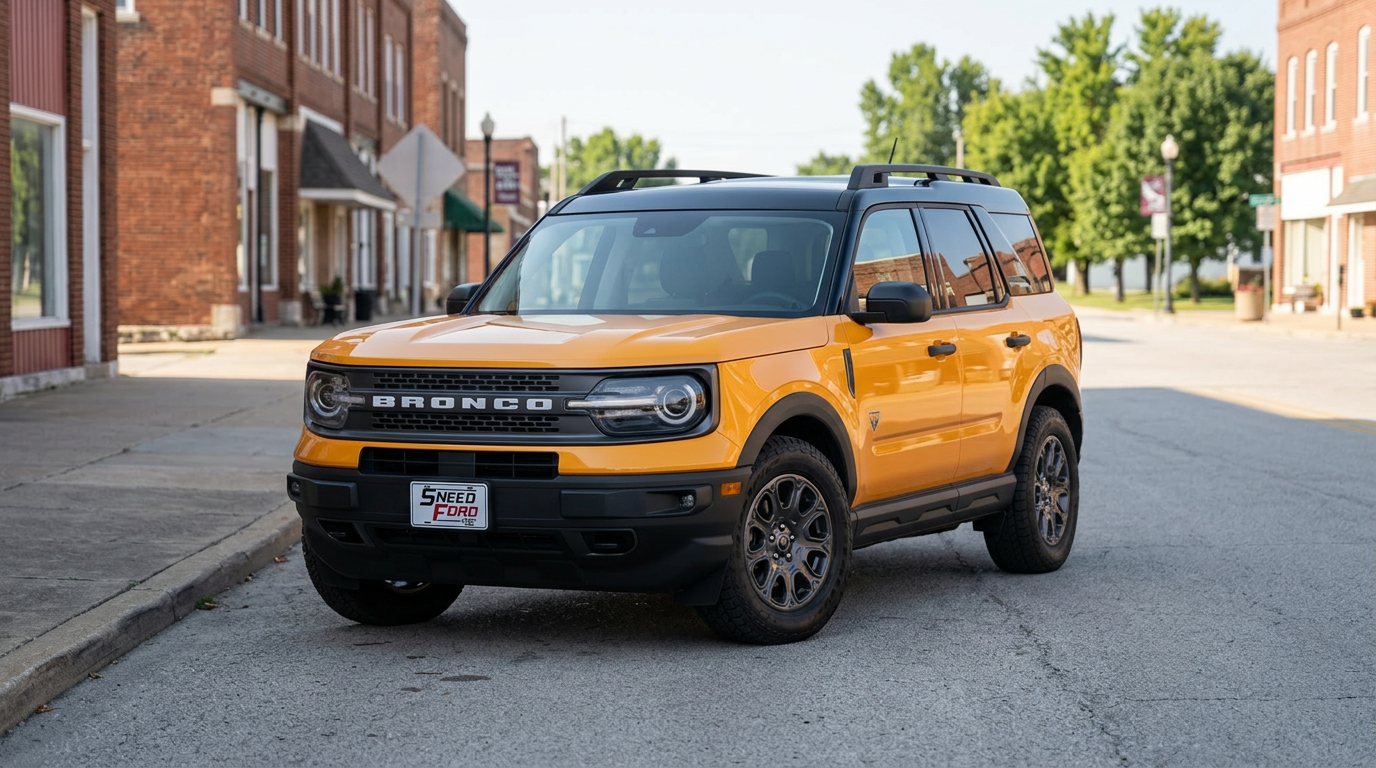
The 2026 Ford Bronco Sport comes in four trims, and choosing between them is mostly about how far off the pavement you plan to go and how much comfort and technology you want along the way. Here is a straightforward walkthrough of Big Bend, Heritage, Outer Banks, and Badlands – what each one includes, who each is best for, and how to decide.
What trims does the 2026 Bronco Sport come in?
| Trim | Engine | Drive | Best for |
|---|---|---|---|
| Big Bend | 1.5L EcoBoost | 4×4 | Everyday drivers who want capability and value |
| Heritage | 1.5L EcoBoost | 4×4 | Buyers who want retro Bronco style |
| Outer Banks | 1.5L EcoBoost | 4×4 | Comfort and premium features |
| Badlands | 2.0L EcoBoost | Advanced 4×4 | Maximum off-road capability |
A closer look at each 2026 Bronco Sport trim
Big Bend
Best for: everyday drivers who want capability without extras
The well-equipped starting point. Big Bend comes standard with 4×4, the 1.5L EcoBoost, a new-for-2026 8-inch digital gauge cluster, the 13.2-inch SYNC 4 touchscreen, easy-to-clean cloth seats, and G.O.A.T. terrain modes for weather and light trails. Available Bronze, Black Diamond Off-Road, and Convenience packages let you dress it up or add capability.
Heritage
Best for: buyers who want retro Bronco style
Heritage takes the Big Bend foundation and adds throwback style: an Oxford White grille and roof, unique heritage side decals, and a distinctive Navy Pier plaid cloth interior with Race Red stitching. Mechanically it matches Big Bend – the same capable 1.5L 4×4 setup – so it is style-focused rather than a capability step up.
Outer Banks
Best for: buyers who prioritize comfort and premium features
The premium build. Outer Banks adds 18-inch machined-face wheels, premium-trimmed seats with an 8-way power driver and 6-way power passenger, heated front seats, a heated steering wheel, dual-zone automatic climate, LED signature lighting, and remote start. It can also be equipped with the Sasquatch Package for Advanced 4×4 and a 12.3-inch cluster.
Badlands
Best for: buyers who want the most off-road capability
The off-road flagship. Badlands is the only trim with the 2.0L EcoBoost (250 hp) and comes standard with Advanced 4×4, a twin-clutch rear drive unit, HOSS 2.0 suspension, steel skid plates, a 12.3-inch cluster, and seven G.O.A.T. modes including a locking rear differential, Rock Crawl, and Rally. The available Badlands Tech Package adds leather-trimmed seats and B&O audio, while the Sasquatch Package steps up to HOSS 3.0 suspension.
What’s new for the 2026 Bronco Sport lineup?
Which 2026 Bronco Sport trim should you buy?
A practical way to decide: if you mostly drive pavement with occasional gravel, snow, or a campsite run, a 1.5L trim (Big Bend, Heritage, or Outer Banks) is plenty. If you regularly head off-road or want the strongest engine and the most advanced 4×4 hardware, the Badlands is worth the step up. For a deeper look at how the two engines differ in day-to-day driving, see our Bronco Sport fuel economy guide.
2026 Bronco Sport trims FAQ
How many trims does the 2026 Bronco Sport have?
Which Bronco Sport trims have the 2.0L engine?
Does the base Big Bend come with four-wheel drive?
What is the most off-road-capable Bronco Sport trim?
Back to: 2026 Ford Super Duty Buyer’s Guide
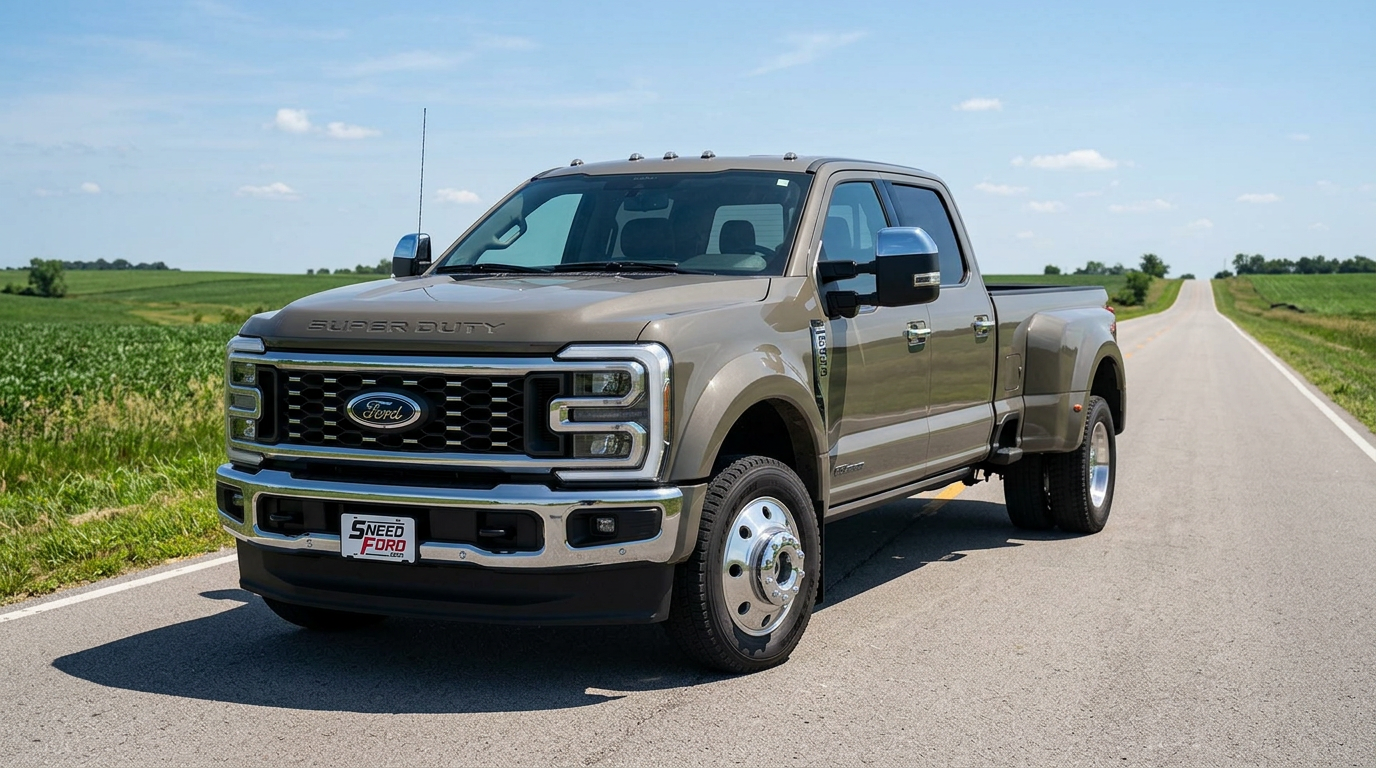
If you’re shopping for a 2026 Ford Super Duty in the Kansas City area, it’s worth knowing that one of the best places to buy one isn’t in the metro at all – it’s a short drive north in Gower. Here’s why heavy-duty truck buyers from Kansas City, St. Joseph, Liberty, and Smithville make the easy trip out to Dennis Sneed Ford, and what they get for it.
Where is the best place to buy a Super Duty near Kansas City?
Kansas City has plenty of Ford dealers, so why do so many Super Duty buyers drive past them to get to Gower? It comes down to how Sneed sources and prices its trucks, the family-owned way it does business, and how easy the trip actually is. For a truck this significant, a short drive is well worth it for the right deal and the right experience.
How far is Dennis Sneed Ford from Kansas City?
| Coming from | Approximate drive time |
|---|---|
| Kansas City, MO | About 30-40 minutes |
| St. Joseph, MO | About 20 minutes |
| Liberty, MO | About 25 minutes |
| Smithville, MO | About 20 minutes |
| Overland Park, KS | About 45-55 minutes |
Why buy a Super Duty from Dennis Sneed Ford instead of a metro dealer?
Being a Top 5 remarketing dealer means Sneed is constantly sourcing and turning inventory at a scale most single-point dealers never reach. That volume, combined with lower small-town overhead than a big metro store, is what lets a dealer in Gower compete hard with dealers in the heart of Kansas City. Add three decades of family ownership and Ford’s Partners in Quality recognition, and the trip north starts to make a lot of sense.
What Super Duty models does Dennis Sneed Ford carry?
Whether you need an F-250 for a big camper, an F-350 dually for heavy gooseneck work, or an F-450 for the maximum 40,000-pound tow rating, Sneed stocks and sources across the lineup. Because inventory moves fast, the best move is to check current stock online or tell the team what you’re after so they can track down the exact configuration you need.
Why heavy-duty buyers from Kansas City, St. Joseph, and across northwest Missouri make the drive to Gower:
- Top 5 Ford remarketing dealer nationally – sourcing volume that drives pricing metro stores can’t match.
- Ford Credit Partners in Quality – one of roughly 111 dealers nationwide recognized for customer satisfaction.
- Family-owned for 30 years – straight answers and a real relationship, not a big-store number.
- An easy drive, or no drive at all – about 30 minutes north of Kansas City, 20 from St. Joseph, and we ship nationwide.
Kansas City Super Duty buyer FAQ
Is it worth driving from Kansas City to Gower for a Super Duty?
How far is Gower, MO from Kansas City?
Does Dennis Sneed Ford sell to buyers outside Missouri?
What makes Dennis Sneed Ford different from Kansas City Ford dealers?
Dennis Sneed Ford | 1046 S.W. Highway 169, Gower, MO 64454 | Sales: 816-409-1975 | Open 24/7 online at sneedford.com
Back to: 2026 Ford Super Duty Buyer’s Guide
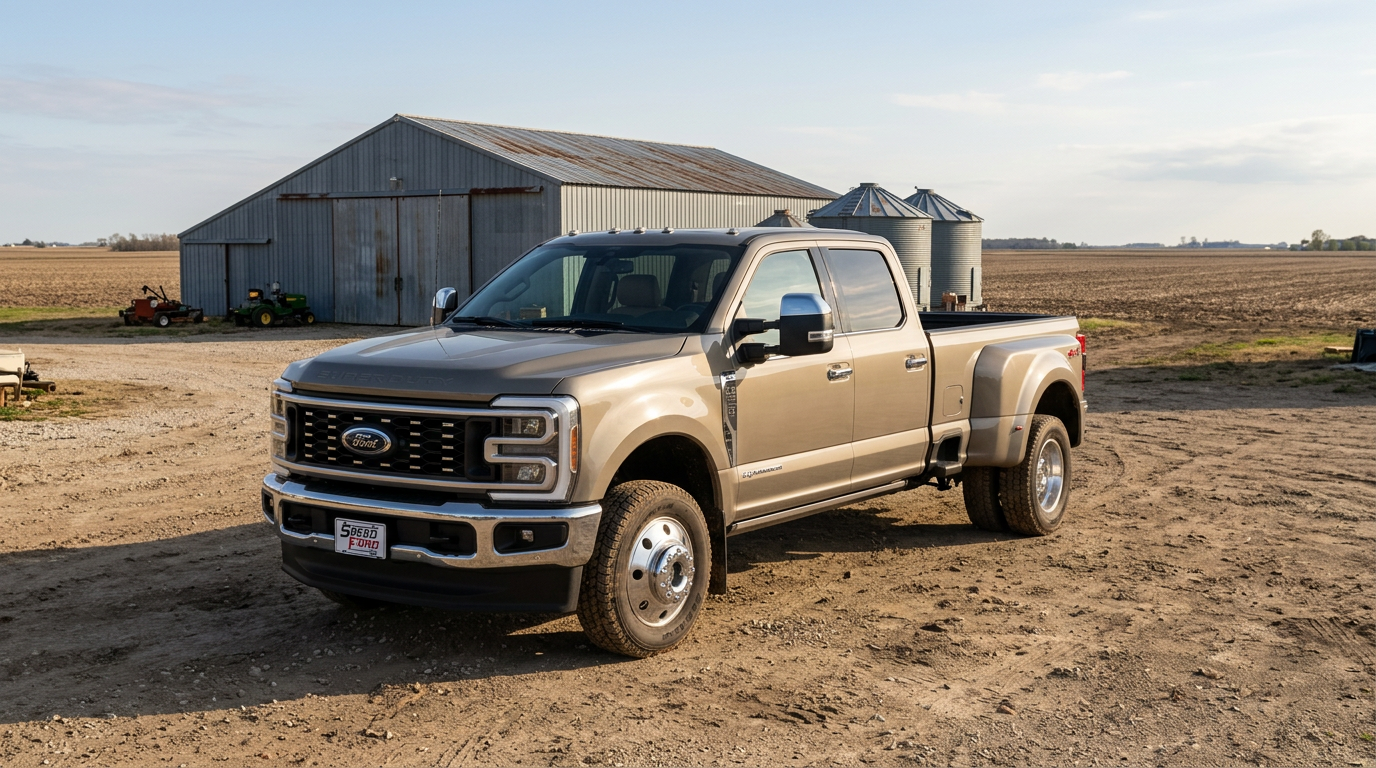
The 2026 Ford Super Duty runs from the work-ready XL all the way up to the luxury Platinum Plus, and picking the right trim is really about matching features to how you use the truck. Here is every 2026 Super Duty trim explained – what each one gives you, who it’s built for, and how the appearance and off-road packages fit in – so buyers across Kansas City, St. Joseph, and northwest Missouri can order with confidence.
What trims does the 2026 Ford Super Duty come in?
| Trim | Best for | Standard engine |
|---|---|---|
| XL | Work and fleet | 6.8L gas V8 |
| XLT | Work plus comfort | 6.8L gas V8 |
| Lariat | Comfort and towing | 6.8L gas V8 |
| King Ranch | Western luxury | 7.3L gas V8 |
| Platinum | Top-tier luxury | 7.3L gas V8 |
| Platinum Plus | Flagship | 7.3L gas V8 |
A closer look at each 2026 Super Duty trim
XL
Best for: work trucks, fleets, and buyers who want capability without extras
The foundation of the lineup. The XL keeps things purposeful with durable vinyl or cloth and the features that matter on a job site. New for 2026, the SuperCab 148-inch wheelbase is now offered on XL, adding configuration flexibility for work buyers.
XLT
Best for: buyers who work the truck but want more comfort and tech
The XLT adds the comfort and technology most buyers want day to day – SYNC 4 infotainment, available heated power seats, upgraded trim, and driver-assist features – without stepping into luxury pricing territory. It’s the practical middle ground.
Lariat
Best for: heavy-tow buyers who want a comfortable, well-equipped cabin
Where the Super Duty starts to feel refined. The Lariat brings ActiveX seating, larger displays, and available advanced trailering technology. New for 2026, the available Lariat Premium Package adds Ford Co-Pilot360 Assist 2.0, platform running boards, and Pro Trailer Hitch Assist.
King Ranch
Best for: buyers who want distinctive Western-themed luxury
The King Ranch is unmistakable, with Kingsville Antique leather, Java interior tones, and unique badging. It steps up to the standard 7.3L gas V8 and adds refined touches throughout – a favorite for buyers who tow in comfort and want a truck with character.
Platinum
Best for: buyers who want the most modern, top-tier comfort and tech
The Platinum is the technology and comfort flagship – power running boards, head-up display, ventilated seats, and the most advanced available driver-assist suite. Refined materials and a quieter, more modern cabin set it apart.
Platinum Plus
Best for: buyers who want the absolute top of the Super Duty range
The Platinum Plus package is the flagship of the lineup, featuring the exclusive Smoked Truffle interior, quilted leather, Max Recline seats, and a twin-panel moonroof. It’s the most luxurious way to own a Super Duty.
What appearance and off-road packages are available?
These packages layer on top of the trims to tailor looks and capability. The STX and Black Appearance packages give the truck a blacked-out, modern look, while Chrome leans bright and traditional. For terrain, the Tremor Off-Road Package is the most capable – upgraded suspension, skid plates, and off-road hardware – with FX4 and the XL Off-Road Package offering rugged capability at different levels. If you split time between the highway and rough Missouri back roads or job sites, an off-road package is worth a look.
What is the difference between SRW and DRW on the Super Duty?
This choice matters as much as the trim. If you tow a large fifth-wheel or gooseneck regularly, or you need maximum payload, a dually adds the stability and capacity that heavy loads demand – an F-350 DRW carries the lineup’s highest payload, up to 8,000 pounds when properly equipped. If your towing is lighter and you value everyday drivability, single rear wheel keeps the truck easier to live with. Many trims are offered both ways, so you can pair the cabin you want with the rear-wheel setup your workload needs.
Which 2026 Super Duty trim should you buy?
The good news is there’s no wrong answer – just the right match for your use. A rancher who tows daily and a family that wants a comfortable tow rig for the lake will land on different trims, and both will be well served. Come see the lineup in person at our Gower showroom, an easy drive from Kansas City and St. Joseph, and we’ll help you sort it out.
Why heavy-duty buyers from Kansas City, St. Joseph, and across northwest Missouri come to Gower:
- Top 5 Ford remarketing dealer nationally – sourcing volume that drives pricing metro stores can’t match.
- Ford Credit Partners in Quality – one of roughly 111 dealers nationwide recognized for customer satisfaction.
- Family-owned for 30 years – straight answers on trims and configurations, with no pressure to overbuy.
- An easy drive – about 30 minutes north of Kansas City, 20 from St. Joseph. We ship nationwide.
2026 Super Duty trims FAQ
What is the top 2026 Super Duty trim?
What is the difference between Lariat and King Ranch?
Should I get a single rear wheel or dually Super Duty?
What is new for the 2026 Super Duty trims?
Dennis Sneed Ford | 1046 S.W. Highway 169, Gower, MO 64454 | Sales: 816-409-1975 | Open 24/7 online at sneedford.com
Back to: 2026 Ford Super Duty Buyer’s Guide
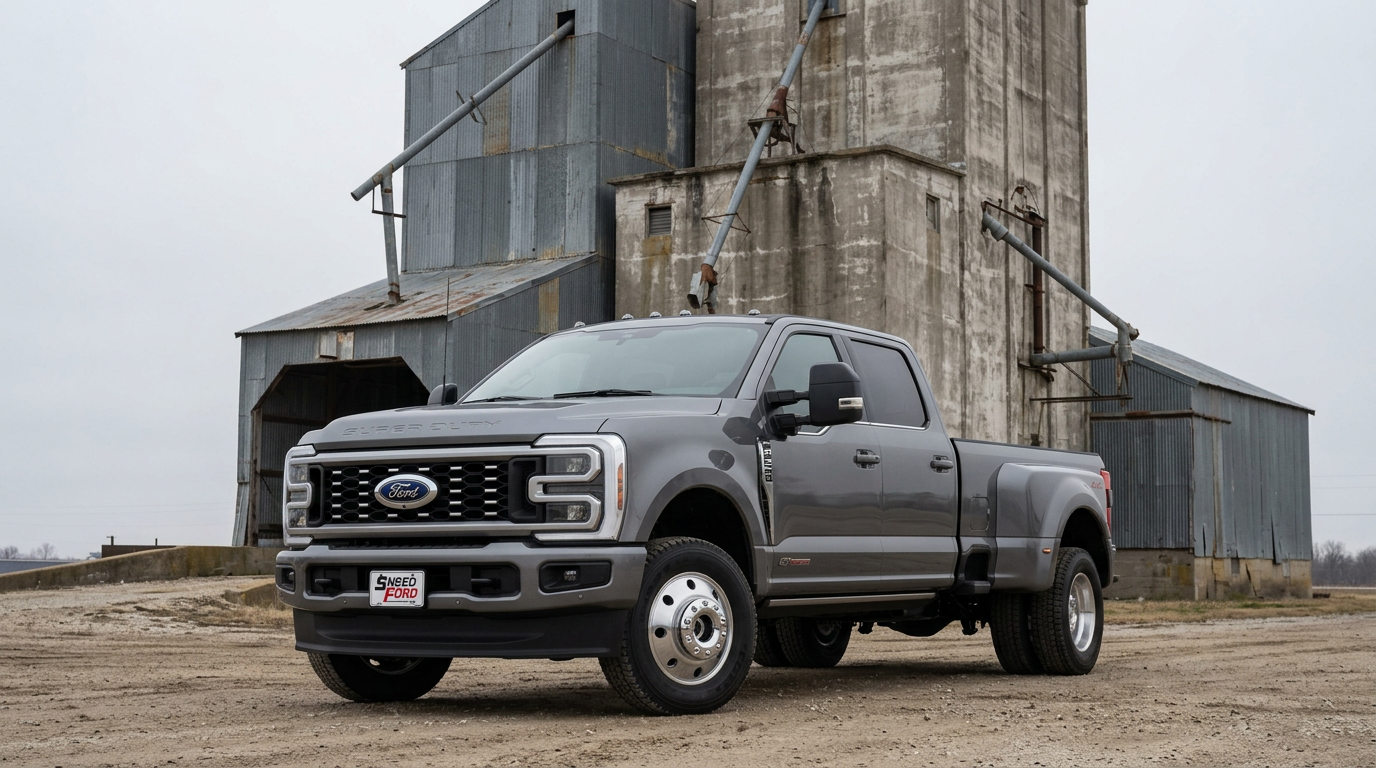
The 2026 Ford Super Duty gives you four V8 engines to choose from – two gas, two diesel – and the right one depends entirely on what you tow, how often, and how far. Here is how all four break down, what the numbers actually mean for your workload, and how to decide between gas and diesel without overbuying or underbuying.
What engines does the 2026 Ford Super Duty offer?
| Engine | Horsepower | Torque | Standard / Available |
|---|---|---|---|
| 6.8L gas V8 | 405 hp | 445 lb-ft | Standard on XL, XLT, Lariat |
| 7.3L gas V8 | 430 hp | 485 lb-ft | Standard on King Ranch, Platinum |
| 6.7L Power Stroke diesel | 475 hp | 1,050 lb-ft | Available on all trims |
| 6.7L HO Power Stroke diesel | 500 hp | 1,200 lb-ft | Available on all trims |
A closer look at each engine
6.8L Gas V8
405 hp | 445 lb-ft | Standard on XL, XLT, Lariat
The standard engine and the value workhorse of the lineup. For a contractor hauling a trailer around the county, a farmer running equipment, or anyone whose towing stays under the heaviest ranges, the 6.8L does the job without diesel complexity. It is the most straightforward Super Duty engine to own and operate.
7.3L Gas V8 “Godzilla”
430 hp | 485 lb-ft | Standard on King Ranch, Platinum
Ford’s big-displacement gas V8, nicknamed Godzilla, is the answer for buyers who want serious gas torque without going to diesel. It pulls hard, runs on regular fuel, and stands up to heavy use – a favorite for those who tow often but want simpler maintenance than a diesel demands.
6.7L Power Stroke Diesel
475 hp | 1,050 lb-ft | Available on all trims
The standard-output Power Stroke is where serious towing begins. With 1,050 lb-ft of torque, it handles big fifth-wheels and goosenecks with ease and delivers the low-end pulling power and highway manners that make long hauls comfortable. For most heavy-tow buyers, this is the sweet spot.
6.7L High-Output Power Stroke Diesel
500 hp | 1,200 lb-ft | Available on all trims
The top engine and the one that unlocks the Super Duty’s maximum tow ratings. With 500 horsepower and a class-leading 1,200 lb-ft of torque, the High-Output diesel is built for the heaviest commercial trailers, the largest RVs, and anyone who needs every pound of the lineup’s 40,000-lb gooseneck capability.
Should I get the gas or diesel 2026 Super Duty?
The honest answer is that most buyers do not need the biggest engine. If your trailer is under about 12,000 pounds and you tow a handful of times a month, a gas Super Duty will serve you well and keep things simple. But if you are pulling a 20,000-pound fifth-wheel across three states every month, the diesel’s torque, fuel range, and towing headroom pay off every mile. Match the engine to the real workload, not the spec sheet.
What transmission does the 2026 Super Duty use?
The 10-speed spreads its ratios to keep whichever engine you choose in its strongest power band, whether you are pulling away from a stoplight with a loaded gooseneck or holding a steady 70 on the interstate. Live-drive grade control and tow/haul modes come into play for managing big trailers on grades.
Why heavy-duty buyers from Kansas City, St. Joseph, and across northwest Missouri come to Gower:
- Top 5 Ford remarketing dealer nationally – sourcing volume that drives pricing metro stores can’t match.
- Ford Credit Partners in Quality – one of roughly 111 dealers nationwide recognized for customer satisfaction.
- Family-owned for 30 years – straight answers on gas vs diesel, with no pressure to overbuy.
- An easy drive – about 30 minutes north of Kansas City, 20 from St. Joseph. We ship nationwide.
2026 Super Duty engine FAQ
What is the most powerful 2026 Super Duty engine?
What is the 7.3L Godzilla engine?
Is the diesel worth it on a Super Duty?
How many engines does the 2026 Super Duty have?
Dennis Sneed Ford | 1046 S.W. Highway 169, Gower, MO 64454 | Sales: 816-409-1975 | Open 24/7 online at sneedford.com
Back to: 2026 Ford Super Duty Buyer’s Guide
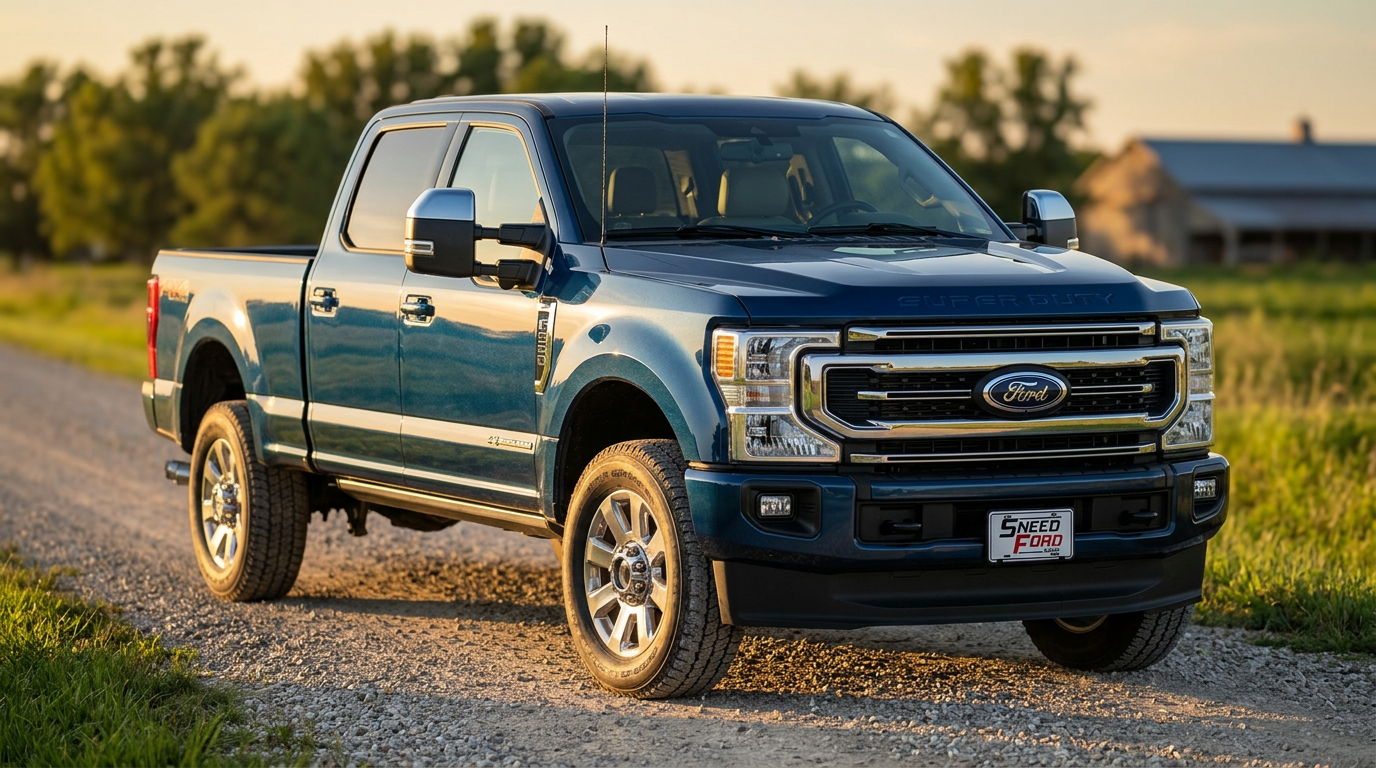
Picking the color is the fun part of ordering a Super Duty – but not every color is offered on every trim, and a few are new for 2026. Here is the full 2026 Ford Super Duty exterior and interior color lineup, what’s new, and how availability changes as you move up the trims.
What exterior colors does the 2026 Ford Super Duty come in?
What colors are new for the 2026 Super Duty?
Argon Blue Metallic is the standout addition – a deep, muted blue with a metallic flake that reads differently in direct sun versus overcast light. If you want a 2026 Super Duty that doesn’t look like every white and black work truck on the road, it’s the one to see in person.
Which Super Duty colors are available on each trim?
| Color | Type | Typical availability |
|---|---|---|
| Oxford White | Standard | All trims |
| Agate Black Metallic | Standard | All trims |
| Avalanche Gray | Standard | Most trims |
| Argon Blue Metallic | New 2026 | Across trims |
| Star White Tri-coat | Tri-coat | Lariat and up |
| Glacier Gray Tri-coat | Tri-coat | Lariat, King Ranch, Platinum |
Exact color-to-trim availability shifts during the model year as Ford adjusts the order guide. For the precise combination on the truck you want, check current inventory or ask our team to confirm before you order.
What interior colors does the 2026 Super Duty offer?
The work-focused XL and XLT trims pair practical Black Onyx and Medium Dark Slate cloth or vinyl with the job in mind. Move up to Lariat and King Ranch and the cabin gets richer – Kingsville Antique leather and Java tones – while the Platinum and Platinum Plus packages bring the most refined materials, including the Smoked Truffle quilted leather unique to Platinum Plus.
Why heavy-duty buyers from Kansas City, St. Joseph, and across northwest Missouri come to Gower:
- Top 5 Ford remarketing dealer nationally – sourcing volume that drives pricing metro stores can’t match.
- Ford Credit Partners in Quality – one of roughly 111 dealers nationwide recognized for customer satisfaction.
- Family-owned for 30 years – low overhead and straight answers on every build.
- An easy drive – about 30 minutes north of Kansas City, 20 from St. Joseph. We ship nationwide.
2026 Super Duty colors FAQ
What are the new 2026 Ford Super Duty colors?
How many colors does the 2026 Super Duty come in?
What are the tri-coat and tinted Super Duty colors?
What is the Argon Blue Metallic color?
Dennis Sneed Ford | 1046 S.W. Highway 169, Gower, MO 64454 | Sales: 816-409-1975 | Open 24/7 online at sneedford.com
Back to: 2026 Ford Super Duty Buyer’s Guide
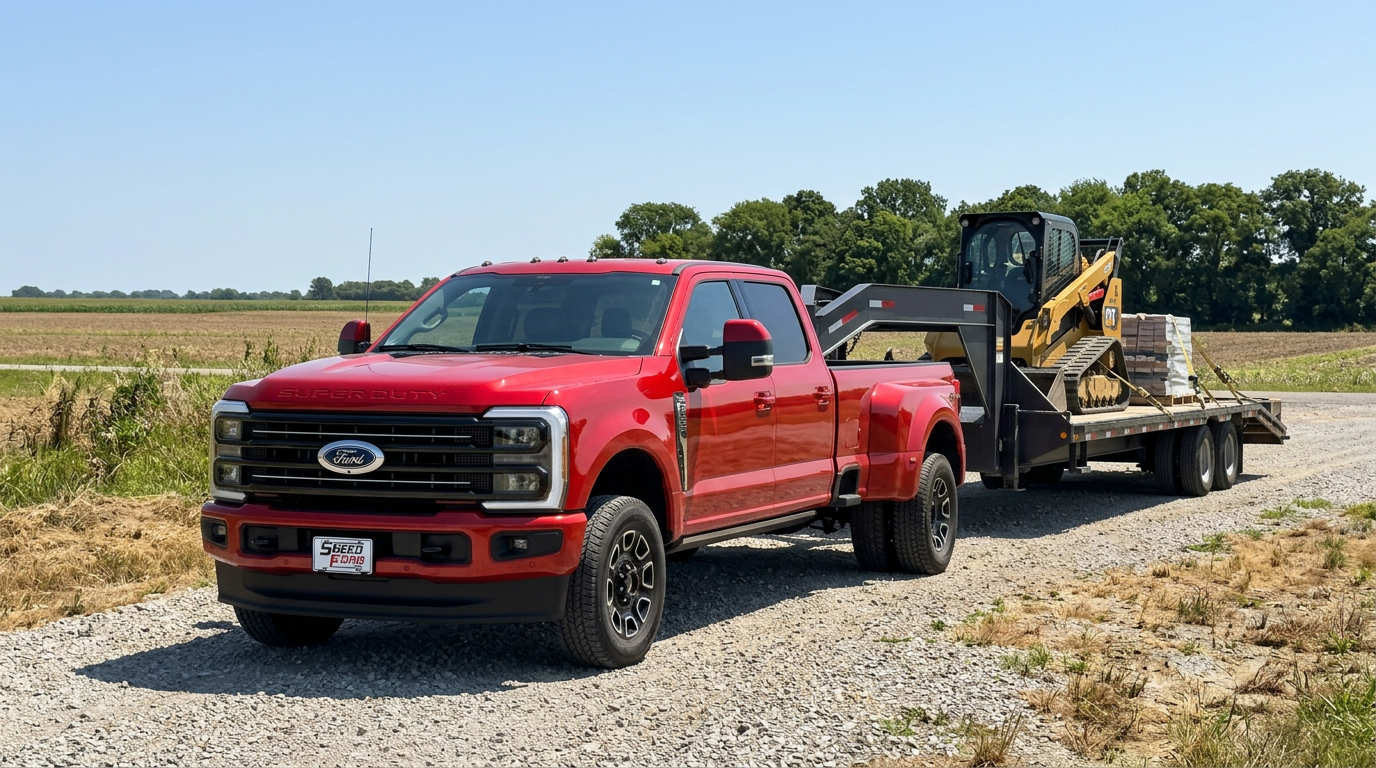
If you’re shopping a Super Duty to pull a fifth-wheel, a gooseneck flatbed, or a loaded equipment trailer, the towing number is the whole decision. Here is how 2026 Ford Super Duty towing and payload actually break down across the F-250, F-350, and F-450 – and how to read the ratings so you buy the right truck the first time.
How much can a 2026 Ford Super Duty tow?
Those are maximum ratings under ideal configurations. No single truck hits every maximum at once – the number changes with model, engine, cab style, bed length, rear-wheel setup, axle ratio, drivetrain, and hitch type. The table below shows the practical ceiling for each model so you can match a truck to your trailer.
| Model | Max conventional | Max 5th-wheel / gooseneck | Max payload |
|---|---|---|---|
| F-250 | Up to ~22,000 lbs | Up to ~23,000 lbs | Up to ~4,200 lbs |
| F-350 SRW | Up to ~23,000 lbs | Up to ~25,000 lbs | Up to ~5,300 lbs |
| F-350 DRW | Up to ~30,000 lbs | Up to ~38,000 lbs | Up to 8,000 lbs |
| F-450 DRW | Up to 30,000 lbs | Up to 40,000 lbs | Up to ~6,400 lbs |
How much can a 2026 Ford F-250 tow?
The F-250 is where most heavy-duty buyers start, and for good reason: it handles big campers, work trailers, and recreational loads while still driving like a truck you’d take to town. For livestock trailers, mid-size RVs, and most contractor loads, the F-250 has the capability without the bulk of a dually.
How much can a 2026 Ford F-350 tow?
The F-350 is the sweet spot for buyers who tow heavy regularly. Choosing between single rear wheel (SRW) and dual rear wheel (DRW) is the key decision: SRW is easier to live with day to day, while DRW adds the stability and payload that serious fifth-wheel and gooseneck towing demands. The 8,000-pound payload max – available on the gas-engine DRW – is the highest in the non-commercial lineup.
How much can a 2026 Ford F-450 tow?
If you need the highest towing capacity Ford offers outside its commercial chassis-cab trucks, the F-450 is it. The 40,000-pound gooseneck rating requires the High-Output Power Stroke diesel and the 40k Gooseneck Tow Package, but even in standard form the F-450 outpulls everything else in the range.
Why does towing capacity vary so much on the same truck?
Two trucks that both say F-350 on the tailgate can have very different ratings. A Regular Cab tows more than a Crew Cab because it weighs less. A dually tows more than a single-rear-wheel because it carries the load more stably. And a numerically higher axle ratio (like 4.30) raises the ceiling versus a lower ratio. That’s why the right answer always comes down to how the specific truck is built.
Which Super Duty is right for your trailer?
Bigger isn’t automatically better – if you’re towing a 12,000-pound camper a few weekends a year, an F-250 is the smarter buy than a dually you don’t need. Match the truck to the trailer and the workload, and you’ll get the right balance of capability and everyday usability.
Why heavy-duty buyers from Kansas City, St. Joseph, and across northwest Missouri come to Gower:
- Top 5 Ford remarketing dealer nationally – sourcing volume that drives pricing metro stores can’t match.
- Ford Credit Partners in Quality – one of roughly 111 dealers nationwide recognized for customer satisfaction.
- Family-owned for 30 years – low overhead, straight answers, and a team that knows heavy-duty configurations.
- An easy drive – about 30 minutes north of Kansas City, 20 from St. Joseph. We ship nationwide.
2026 Super Duty towing FAQ
What is the maximum towing capacity of a 2026 Ford Super Duty?
Can an F-250 tow 20,000 pounds?
What’s the difference between gooseneck and conventional towing capacity?
Which Super Duty has the highest payload?
Dennis Sneed Ford | 1046 S.W. Highway 169, Gower, MO 64454 | Sales: 816-409-1975 | Open 24/7 online at sneedford.com
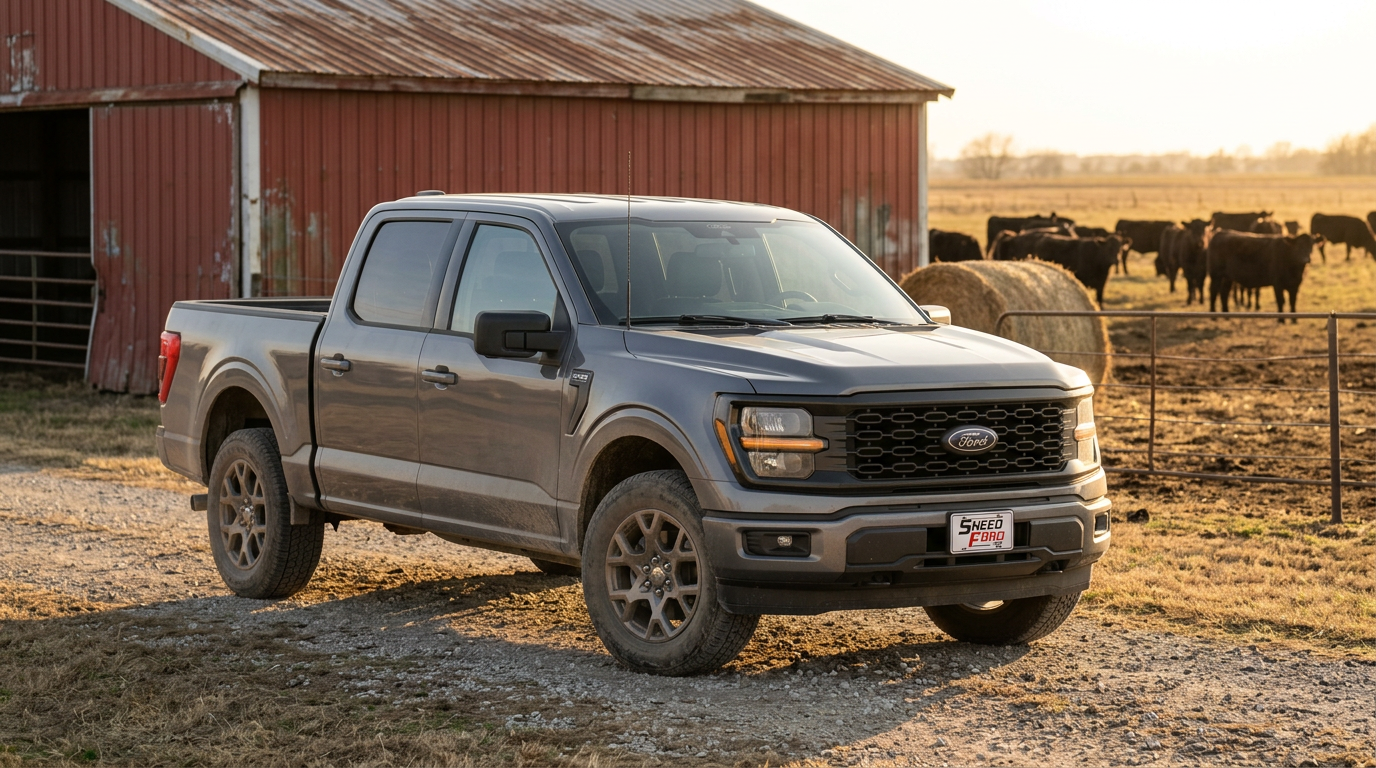
If you’re shopping for a truck that has to work as hard on your property as it does on the road, the F-150 is almost certainly on your list. Here’s the practical guide to the best F-150 setup for working farms, ranches, hobby properties, and rural homesteads — from a Ford dealer 45 minutes north of Kansas City that has been selling trucks to working ag families for 30 years.
What’s the best Ford F-150 for farm and ranch use?
The honest version of “best F-150 for farm and ranch use” depends on what’s actually on your property — cattle, hay, horses, hunting land, hobby acreage, or all of the above. The good news is the F-150 covers all of it with the right configuration. Below is the practical, use-case breakdown.
What an F-150 actually does on a working rural property
Most ranch and farm F-150 buyers we talk to at Sneed Ford are not single-purpose buyers. A working F-150 needs to pull a horse trailer one day, haul hay the next, run fence chargers the day after, and still be comfortable enough to drive 45 minutes to Kansas City for parts or to take the family to dinner. That dual-purpose reality drives the configuration choice more than any single use case.
The 6 most common F-150 jobs on a working rural property
Pulling cattle and horse trailers
A loaded 2-horse bumper-pull runs 5,000–7,000 lbs. A 4-horse with a tack room can hit 9,000–11,000 lbs. A gooseneck stock trailer with cattle on board often runs 10,000–13,000 lbs. The 3.5L EcoBoost with the Tow/Haul Package and Max Tow axle handles all of these.
Recommended: F-150 SuperCrew 4×4, 3.5L EcoBoost, Tow/Haul Package, Max Tow 3.73 axle.
Hauling hay and round bales
A flatbed gooseneck loaded with four round bales runs 7,000–9,000 lbs. Smaller square-bale runs on a utility trailer typically run 3,000–5,000 lbs. The 3.5L EcoBoost has no problem with either, but for buyers who haul hay often, the Bed Utility Package keeps the bed itself ready for tools, tarps, and chains.
Recommended: F-150 SuperCrew 4×4, 3.5L EcoBoost, Bed Utility Package, Tow/Haul Package.
Trailering equipment and implements
An open equipment trailer with a compact tractor (40–60 hp class) runs 7,000–10,000 lbs loaded. A skid-steer on a trailer can hit 11,000–13,000 lbs. The F-150’s 13,500-lb max tow rating (with the right configuration) covers nearly every common ag equipment job.
Recommended: F-150 SuperCrew 4×4, 3.5L EcoBoost, Max Tow 3.73, Tow/Haul Package, trailer brake controller.
Hunting land and recreational use
Most hunting trailers and side-by-side enclosed haulers run 3,000–6,000 lbs. The F-150 doesn’t need maximum capability for hunting use, but it does need 4×4 for backroads, pasture, and field access. The 2.7L EcoBoost or 5.0L V8 handle most hunting setups comfortably.
Recommended: F-150 SuperCrew 4×4 or SuperCab 4×4, 2.7L EcoBoost or 5.0L V8.
Daily gravel-road driving
Most ag-country F-150s spend more time on gravel roads, county blacktop, and the long driveway than they do on highways. SuperCrew comfort, 4×4 traction, and a refined cabin matter for what is effectively a daily driver disguised as a work truck. This is exactly where the Lariat earns its place — or a well-equipped XLT.
Recommended: F-150 SuperCrew 4×4 Lariat (or XLT 302A/303A for value).
Onboard power for chargers and tools
If you run fence chargers, jobsite lights, a welder, or any kind of property-side AC power, the F-150 PowerBoost Hybrid with the 7.2 kW Pro Power Onboard option is genuinely different from anything else on the market. It is a generator and a truck in one package — and it can run a window AC, microwave, lights, and TV simultaneously, or back up house essentials in a power outage.
Recommended: F-150 SuperCrew 4×4 with 3.5L PowerBoost Hybrid and 7.2 kW Pro Power Onboard.
If we had to spec one F-150 for a working rural property, it would be this:
- Trim: F-150 XLT (302A or 303A) or Lariat — the cabin you want to live in daily, with the features that matter.
- Cab and bed: SuperCrew 4×4 with the 6.5-ft box. SuperCrew comfort for daily driving, 6.5-ft bed for hauling more than a 5.5-ft box.
- Engine: 3.5L EcoBoost V6 (400 hp, 500 lb-ft). The torque shows up exactly where ag work needs it — pulling, hauling, climbing out of pasture, dragging a trailer up the elevator ramp.
- Axle: Max Tow 3.73 (XL7) electronic-locking rear axle. Required for the F-150’s full 13,500-lb tow rating.
- Tow/Haul Package (53T): includes the integrated trailer brake controller. Non-negotiable if you tow anything regularly.
- Bed Utility Package: if your bed lives full of work gear, this keeps the bed organized and the Pro Access Tailgate functional.
- Optional but smart: PowerBoost Hybrid swap if onboard power matters. The 7.2 kW Pro Power Onboard is a feature you cannot get from any other half-ton.
Why Pro Power Onboard is the F-150’s killer feature for farm and ranch use
What 7.2 kW of Pro Power Onboard actually runs on a farm or ranch
- Electric fence chargers — multiple units running off the truck while you work the line.
- Jobsite and barn lights — 500W LED jobsite lights run easily; multiple worklights at once.
- Welders and grinders — 120V/240V outlets in the bed let you run a small MIG or stick welder, plus angle grinders, in the field.
- Water pumps — running a pump off the truck for tank fills, livestock water, or hauling water to remote pasture.
- Camp and hunting setups — a remote deer camp powered by the truck instead of a separate generator.
- House backup in a power outage — the 7.2 kW package can back up the essentials at the house during a winter storm or outage.
The Pro Power Onboard feature alone makes the PowerBoost Hybrid worth a serious look for any working rural property — even buyers who would otherwise default to the gas 3.5L EcoBoost. For an honest look at the tradeoff between gas 3.5L and PowerBoost Hybrid, our 2026 F-150 engines guide walks through both engines head-to-head.
Best F-150 trim for farm and ranch use
The other trims work for ag use too. The F-150 XL is a strong fleet/work-truck base. The King Ranch is a luxury-cabin ag truck for buyers who want the western-heritage aesthetic with the working capability. The Platinum is the same truck with a modern aesthetic. The Tremor steps up the off-road capability for buyers who work on rough property. For the full trim-by-trim walkthrough, read our 2026 F-150 trims explained guide.
What kind of rural property do you have?
Click the description that fits best for our recommendation.
Cattle operation — cow/calf, finishing, or stocker
The F-150 SuperCrew 4×4 Lariat with the 3.5L EcoBoost, Tow/Haul Package, and Max Tow 3.73 axle. That setup pulls loaded gooseneck cattle trailers (10,000–13,000 lbs) without breaking a sweat. Add the PowerBoost Hybrid if you want onboard power for chute lights, fence chargers, and barn work.
Row crop or hay operation — corn, soybean, hay, alfalfa
The F-150 SuperCrew 4×4 XLT or Lariat with the 3.5L EcoBoost and the Bed Utility Package. The 3.5L’s torque handles loaded gooseneck flatbeds with multiple round bales. The Bed Utility Package keeps the bed organized for tools, fencing, and field gear. PowerBoost Hybrid is worth a look if you run AC equipment from the truck.
Equestrian property — horses, riding, training
The F-150 SuperCrew 4×4 Lariat or King Ranch with the 3.5L EcoBoost and Max Tow 3.73 axle. Pulls 2-horse, 3-horse, and 4-horse trailers (5,000–11,000 lbs loaded) with comfort. The Lariat’s ventilated seats and refined cabin matter on long hauls to shows or events. King Ranch adds the western-heritage aesthetic many equestrian buyers want.
Hobby farm or small acreage (5–40 acres)
The F-150 SuperCrew 4×4 XLT (302A or 303A) with the 2.7L EcoBoost or 5.0L V8. You don’t need maximum tow capacity for a hobby farm, so save the money on the 3.5L EcoBoost upgrade unless you specifically tow regularly. 2.7L EcoBoost handles small horse trailers, utility trailers, and most equipment work up to 8,400 lbs.
Hunting land or recreational rural property
The F-150 SuperCrew 4×4 or SuperCab 4×4 with the 2.7L EcoBoost or 5.0L V8. Most hunting trailers and side-by-side haulers run 3,000–6,000 lbs — well within capability of either engine. 4×4 is essential for backroads and field access. SuperCab works fine if you need bed length more than rear seat room.
Working ranch with onboard power needs
The F-150 SuperCrew 4×4 Lariat or XLT with the 3.5L PowerBoost Hybrid and 7.2 kW Pro Power Onboard. This is the F-150’s killer ag feature. Fence chargers, lights, welders, water pumps, house backup — all running off the truck. No other half-ton offers this. Tow capacity is up to 11,600 lbs — less than the gas 3.5L EcoBoost but still plenty for most ag use.
Multi-use property — cattle, hay, and recreation all on one place
The F-150 SuperCrew 4×4 Lariat with the 3.5L EcoBoost, Tow/Haul Package, Max Tow 3.73 axle, and Bed Utility Package. This is the all-around answer. Pulls cattle, hauls hay, works hunting land, daily drives to town — everything on the property, in one truck. The Lariat cabin makes it pleasant for long days.
30 years selling F-150s to the working ag families of northwest Missouri.
Dennis Sneed Ford has been in Gower, MO for 30 years. We are family-owned, a Ford Credit Partners in Quality award winner (one of approximately 111 dealers nationally), and one of the Top 5 Ford remarketing dealers in the country. Our customer base is genuinely the working families of DeKalb, Clinton, Buchanan, Platte, and Clay counties. Cattle operations. Row crop. Hay. Equestrian properties. Hobby farms. Hunting land. We know which F-150 configurations work in the real world and which look good on paper. We’ve spec’d thousands of working trucks for working people, and we know the difference. Read why Kansas City and rural buyers drive to Gower for their F-150 →
Where can I see an F-150 set up for farm and ranch use?
If you’re still working through which engine, trim, or configuration is right for your operation, our complete F-150 buyer content covers every angle:
• Complete 2026 F-150 buyer’s guide — the pillar with every spec, trim, and engine
• 2026 F-150 trims explained — which trim fits your use case
• 2026 F-150 engines decoded — which engine to get
• How much can the 2026 F-150 tow? — the complete towing configuration guide
• Best used Ford F-150 years to buy — for buyers considering used
F-150 farm and ranch questions, answered
What’s the best Ford F-150 trim for farm and ranch use?
For most working rural buyers, the F-150 XLT (in the 302A or 303A equipment group) or the F-150 Lariat are the right answers. XLT delivers most modern features at strong value. Lariat steps up with the standard 3.5L EcoBoost, ActiveX heated and ventilated seats, B&O sound, and a more refined cabin for long days. The F-150 Tremor adds serious off-road capability for buyers who work rough property.
What’s the best F-150 engine for farm and ranch use?
The 3.5L EcoBoost V6 is the right answer for most working rural buyers. It delivers 400 hp, 500 lb-ft of torque, and the F-150’s full 13,500-lb max tow rating when properly configured. If onboard power is important for fence chargers, lights, or tools, the 3.5L PowerBoost Full Hybrid is worth a serious look for its 7.2 kW Pro Power Onboard option.
Can the F-150 pull a loaded gooseneck cattle trailer?
Yes. A loaded gooseneck stock trailer with cattle on board typically runs 10,000–13,000 lbs. With the 3.5L EcoBoost, Tow/Haul Package, and Max Tow 3.73 electronic-locking rear axle, the F-150 handles this comfortably within its 13,500-lb max tow rating. For loaded fifth wheels or stock trailers regularly exceeding 13,000 lbs, the Super Duty F-250 or F-350 is the better choice.
What’s Pro Power Onboard and why does it matter for farms?
Pro Power Onboard is the F-150’s onboard generator system with AC outlets in the bed and cab. Up to 7.2 kW with the PowerBoost Hybrid — enough to run a window AC, microwave, lights, and TV simultaneously, or back up essentials in a power outage. For farms and ranches, that means running fence chargers, jobsite lights, welders, water pumps, or freezers off the truck instead of a separate generator. No other half-ton truck offers an equivalent feature.
What’s the best F-150 for a hobby farm or small acreage?
For most hobby farms and small acreages (5–40 acres), the F-150 SuperCrew 4×4 XLT with the 2.7L EcoBoost is the practical answer. The 2.7L handles up to 8,400 lbs of towing — plenty for small horse trailers, utility trailers, and most hobby-farm equipment work — and gets better fuel economy than the 3.5L when not towing. Save the upgrade to the 3.5L EcoBoost for buyers who genuinely tow heavy regularly.
Is the F-150 4×4 worth it for farm and ranch use?
For working rural properties in northwest Missouri, yes. Most ag-country F-150s spend significant time on gravel roads, in pastures, on muddy field roads, and on rural blacktop during ice and snow. The 4×4 system, increased ground clearance, and trail-rated tires on configurations like the Tremor all earn their keep in real working conditions. 4×4 also adds resale value when the truck rotates back through the used market.
Can I factory-order an F-150 spec’d for my property?
Yes. Dennis Sneed Ford can factory-order an F-150 built to your exact spec — engine, axle, cab and bed configuration, package selection, color. If our lot inventory doesn’t have the exact build you want, factory ordering is the right path. Most factory orders take 6–12 weeks depending on the configuration and Ford’s production schedule.
Where can I see F-150s set up for farm and ranch use near Kansas City?
At Dennis Sneed Ford in Gower, MO — approximately 45 minutes north of the Kansas City metro on US-169. We stock F-150 XLT, Lariat, and Tremor configurations in SuperCrew 4×4 setups suited for working ag use. Call 816-409-1975 to confirm what’s on the lot, or to spec a factory order for your operation.
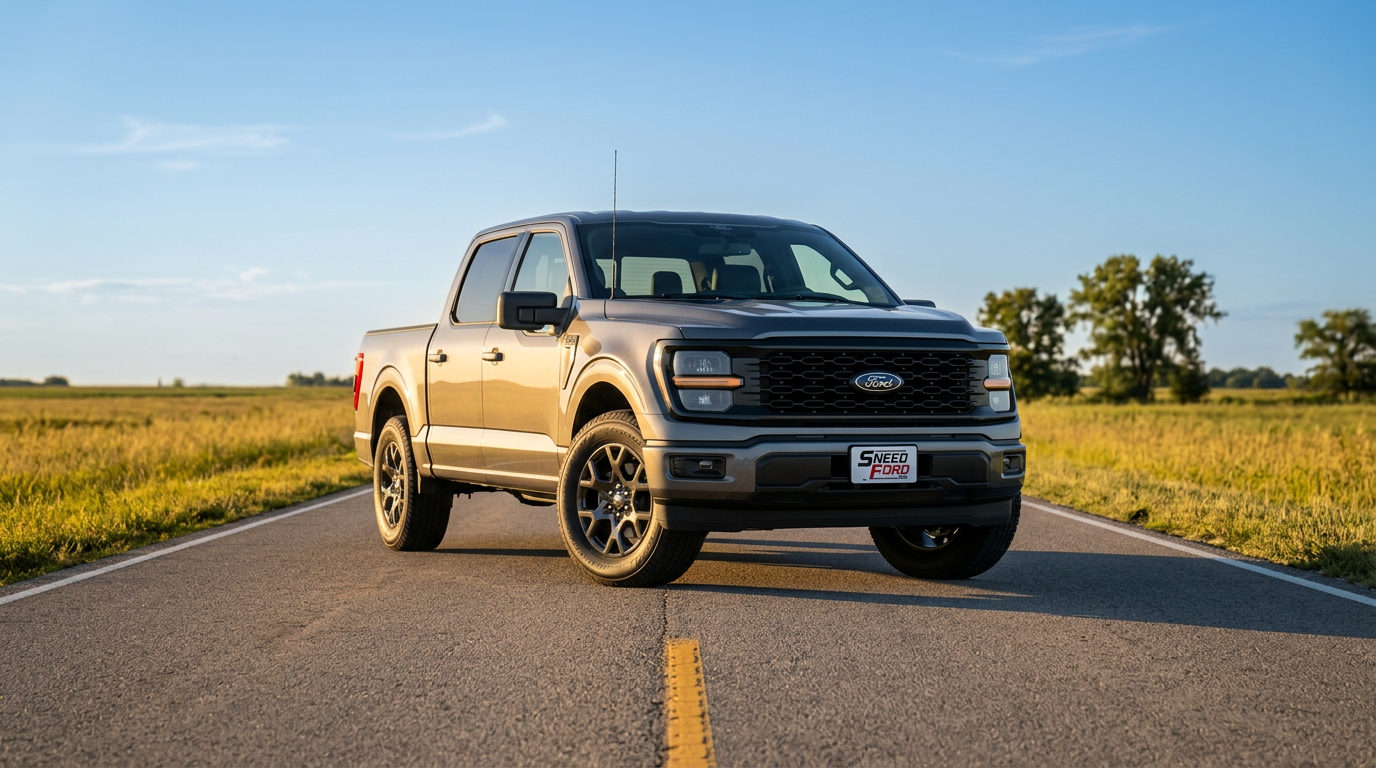
If you’re shopping a 2026 half-ton truck, you’re almost certainly cross-shopping the Ford F-150, the Chevy Silverado 1500, and the Ram 1500. All three are excellent trucks. Here’s a straight-up, spec-by-spec comparison — with the honest answer about where each one leads, from one of the Top 5 Ford remarketing dealers in the country.
2026 F-150 vs Silverado vs Ram — the quick verdict
The 2026 Half-Ton Scorecard — Headline Specs
Maximum towing capacity when properly configured. F-150 leads the segment by 200 lbs over Silverado and 1,890 lbs over Ram.
The full 2026 half-ton spec comparison
Each of these three trucks comes with multiple engines and configurations. The table below shows the maximum number each truck achieves on each category — not the entry-level spec. All numbers come from the 2026 manufacturer-published spec sheets and order guides.
| Specification | F-150 | Silverado 1500 | Ram 1500 |
|---|---|---|---|
| Max Towing | 13,500 lbs | 13,300 lbs | 11,610 lbs |
| Max Payload | 2,440 lbs | 2,260 lbs | 2,360 lbs |
| Top Engine HP | 720 (Raptor R) | 420 (6.2L V8) | 540 (Hurricane HO) |
| Top Engine Torque | 640 lb-ft | 495 lb-ft (Diesel) | 521 lb-ft |
| Number of Engine Options | 6 | 4 | 4 |
| Hybrid Available | Yes — PowerBoost | No | No |
| Pro Power Onboard | Up to 7.2 kW | No | No |
| Diesel Available | No | Yes — 3.0L Duramax | No |
| V8 Available | Yes — 5.0L Ti-VCT | Yes — 5.3L / 6.2L | Yes — 5.7L HEMI returns 2026 |
| Hands-Free Highway Driving | BlueCruise | Super Cruise | N/A standard |
| Air Suspension | No | No | Yes — Class-Exclusive Four-Corner |
| Transmission | 10-speed automatic | 8-speed (TurboMax) / 10-speed | 8-speed automatic |
All capability numbers shown are maximum when properly configured. Actual specifications on any specific truck depend on engine, drivetrain, cab, bed, and equipment ordered. Source: 2026 manufacturer-published spec sheets and order guides for Ford, Chevrolet, and Ram, current as of June 2026.
2026 F-150 vs Silverado vs Ram — the head-to-head matchups
Most truck buyers don’t sit there comparing all three trucks across every spec category at once. They get stuck on specific cross-shops. Here are the three matchups we walk our customers through most often at Sneed Ford.
2026 F-150 vs 2026 Silverado 1500
The F-150 leads on maximum towing (13,500 vs 13,300 lbs) and maximum payload (2,440 vs 2,260 lbs). The F-150 also offers the PowerBoost Full Hybrid V6 with up to 7.2 kW of Pro Power Onboard, which the Silverado doesn’t have. The Silverado’s signature advantage is the available 3.0L Duramax Turbo-Diesel I-6, which delivers 28 MPG highway and 13,300 lbs of towing — the only diesel engine in this comparison.
For most buyers, the F-150 wins on the headline capability numbers and the unique PowerBoost hybrid option. If you specifically want a diesel for long-distance towing fuel economy, the Silverado’s Duramax is genuinely the right answer.
2026 F-150 vs 2026 Ram 1500
The F-150 leads on maximum towing (13,500 vs 11,610 lbs) and maximum payload (2,440 vs 2,360 lbs). The F-150 offers the PowerBoost hybrid; the Ram does not. The Ram’s signature advantages are the new-for-2026 5.7L HEMI V8 return (395 hp, 410 lb-ft) and the Class-Exclusive Active-Level Four-Corner Air Suspension, which gives the Ram a notably refined ride quality that the F-150 doesn’t match. The Ram’s high-output 3.0L Hurricane I6 also produces a respectable 540 hp.
The F-150 wins on towing, payload, and hybrid availability by meaningful margins. If you specifically value the Ram’s air suspension ride quality or want the returning HEMI V8 character, the Ram has things the F-150 cannot match.
2026 Silverado 1500 vs 2026 Ram 1500
The Silverado leads on maximum towing (13,300 vs 11,610 lbs) and offers the segment-exclusive Duramax diesel. The Ram leads on Four-Corner Air Suspension and ride refinement, and brings back the 5.7L HEMI V8 for 2026. Both offer hands-free driving technology — Super Cruise on Silverado, with feature availability that varies by trim. Neither offers a full hybrid powertrain.
If you’re cross-shopping Silverado and Ram specifically (and not the F-150), the choice often comes down to whether you prioritize Silverado’s diesel and tow rating or Ram’s ride quality and HEMI V8 return. For buyers who haven’t considered the F-150 yet, both trucks tow less and carry less payload than the F-150 does — worth a look.
What each truck does best — an honest summary
Every truck in this comparison earns its place in the market. Here’s where each one genuinely stands out:
Where the 2026 Ford F-150 leads Most Categories
Class-leading maximum towing (13,500 lbs) and maximum payload (2,440 lbs). The only half-ton with a full hybrid powertrain (the PowerBoost). The only half-ton offering Pro Power Onboard up to 7.2 kW — enough to run a window AC, microwave, lights, and TV simultaneously, or back up the essentials in a power outage. Six engine options — the broadest powertrain choice in the segment. BlueCruise hands-free highway driving standard on Lariat and above, now also available as a one-time 7-year purchase for 2026.
Where the 2026 Chevy Silverado 1500 leads Diesel & MPG
The only diesel option in this comparison — the 3.0L Duramax Turbo-Diesel I-6 delivering 305 hp and 495 lb-ft of torque with 28 MPG highway, which is segment-leading for any half-ton engine type. Strong tow ratings (13,300 lbs with diesel or 6.2L V8). Super Cruise hands-free driving available on higher trims.
Where the 2026 Ram 1500 leads Ride & HEMI
Class-Exclusive Active-Level Four-Corner Air Suspension — the only half-ton with this feature, and it genuinely changes the ride quality. The 5.7L HEMI V8 returns for 2026 after a hiatus, with 395 hp and 410 lb-ft. The 3.0L Hurricane HO Twin-Turbo I6 delivers 540 hp — the most horsepower in any non-Raptor half-ton.
Which 2026 half-ton truck should you buy?
The honest version of this comparison is that all three trucks are excellent half-tons — the right choice depends on your specific priorities. Where the F-150 separates is the combination of category-leading specs, the only hybrid option, and the most engine flexibility. Where the Silverado and Ram each shine, they shine clearly — the Silverado’s diesel and the Ram’s air suspension are both genuine differentiators.
If you’re cross-shopping all three, the best path is actually to drive them. The spec sheet tells you a lot, but a half-ton truck is a vehicle you’ll own for years — the one that feels right when you’re behind the wheel is the one to buy. We carry F-150s in a deep range of configurations through our Top-5 Ford remarketing program, and we’re happy to be a no-pressure stop on your shopping list.
The half-ton truck specialists for Kansas City, Liberty, Lees Summit, and St. Joseph.
Dennis Sneed Ford is recognized as one of the Top 5 Ford remarketing dealers in the country, purchasing more than 1,100 late-model Ford and Lincoln units every year directly from Ford. We’re also a Ford Credit Partners in Quality award winner — one of approximately 111 dealers nationally with that recognition. What that means for a half-ton cross-shopper:
• Our F-150 inventory is unusually deep across trims, configurations, and model years.
• If you’re cross-shopping new vs. used, we have both — including a strong selection of late-model off-lease F-150s.
• We’re a no-pressure dealership. Many of our customers visit us after shopping the metro stores. Read why Kansas City buyers drive 45 minutes north to Gower →
Where can I see a 2026 F-150 in person near Kansas City?
If you’re still in the research phase, our complete 2026 F-150 buyer’s guide walks through every trim, engine, and configuration with verified specs. The deeper dives on individual topics:
• 2026 F-150 trims explained — which trim should you buy?
• 2026 F-150 engines decoded — which engine should you get?
• How much can the 2026 F-150 tow? The complete guide
• 2026 F-150 exterior colors — including 3 brand new for 2026
• Best used Ford F-150 years to buy — a buyer’s guide
2026 half-ton truck comparison questions, answered
Which 2026 half-ton truck has the highest towing capacity?
The 2026 Ford F-150, at 13,500 lbs maximum when properly configured with the 3.5L EcoBoost V6 and the Max Tow electronic-locking rear axle. The 2026 Chevy Silverado 1500 follows at 13,300 lbs (with the 6.2L V8 or 3.0L Duramax diesel). The 2026 Ram 1500 tops out at 11,610 lbs with the standard-output 3.0L Hurricane I6.
Which 2026 half-ton truck has the highest payload capacity?
The 2026 Ford F-150 leads at 2,440 lbs of maximum payload when properly configured. The 2026 Ram 1500 follows at 2,360 lbs, and the 2026 Chevy Silverado 1500 at 2,260 lbs.
Does the 2026 Silverado 1500 still come with a diesel engine?
Yes. The 2026 Chevy Silverado 1500 offers the 3.0L Duramax Turbo-Diesel I-6 with 305 hp and 495 lb-ft of torque, rated at 28 MPG highway and up to 13,300 lbs of maximum towing. It is the only diesel option among the three full-line domestic half-ton trucks for 2026.
Does the 2026 Ram 1500 still come with a HEMI V8?
Yes — the 5.7L HEMI V8 returns for the 2026 Ram 1500 after a hiatus. It produces 395 hp and 410 lb-ft of torque, paired with an 8-speed automatic and an eTorque belt starter-generator system. Maximum towing with the HEMI is 11,320 lbs when properly configured.
Which 2026 half-ton truck has a hybrid option?
Only the 2026 Ford F-150. The 3.5L PowerBoost Full Hybrid V6 produces 420 hp and 570 lb-ft of SAE-rated total-system output, tows up to 11,600 lbs, and offers up to 7.2 kW of Pro Power Onboard. Neither the 2026 Chevy Silverado 1500 nor the 2026 Ram 1500 currently offers a full hybrid powertrain.
What is Pro Power Onboard?
Pro Power Onboard is a Ford F-150 feature that turns the truck into a mobile generator with onboard 120V and 240V outlets in the bed and cabin. With the PowerBoost Hybrid, Pro Power Onboard is available up to 7.2 kW — enough to run a window AC, microwave, lights, and TV simultaneously, or back up the essentials in a power outage. Neither the Silverado nor the Ram currently offers an equivalent feature.
Does the 2026 F-150 have air suspension?
No. The 2026 Ford F-150 uses a coil-spring front and leaf-spring rear suspension across the lineup, with various performance-tuned variants on Tremor and Raptor models. The 2026 Ram 1500 offers a Class-Exclusive Active-Level Four-Corner Air Suspension on Crew Cab models — the only half-ton with this feature.
Where can I cross-shop 2026 F-150s near Kansas City?
At Dennis Sneed Ford in Gower, MO — approximately 45 minutes north of the Kansas City metro on US-169. We are recognized as one of the Top 5 Ford remarketing dealers in the country and carry a deep selection of 2026 F-150 trims and configurations, plus a strong used F-150 inventory. Call 816-409-1975 to confirm what’s on the lot before you drive up.
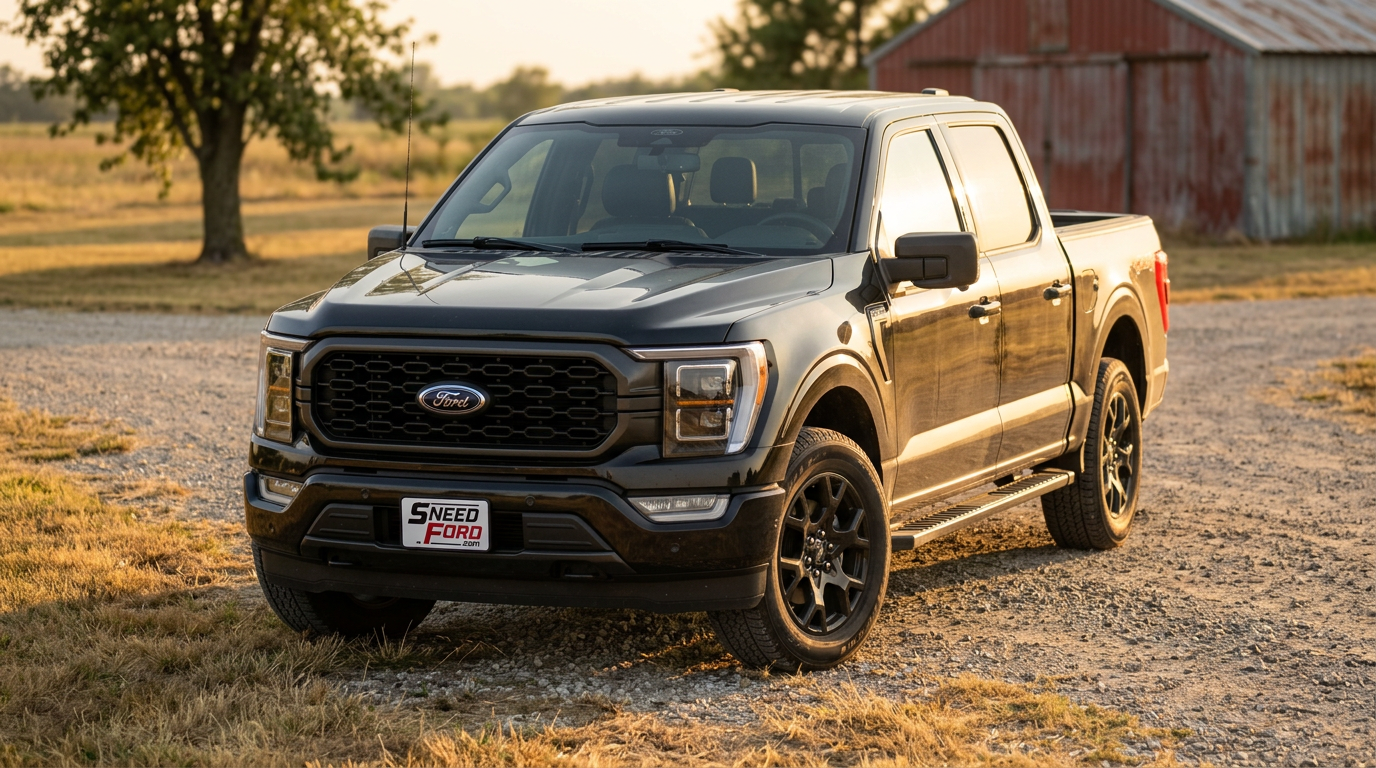
If you’re shopping for a used Ford F-150, you have one big advantage: the F-150 is the best-selling vehicle in America for over four decades, so the used market is deep, the trim history is well documented, and the value patterns are predictable. Here’s how to think about which years to consider — from one of the Top 5 Ford remarketing dealers in the country.
What are the best used Ford F-150 years to buy?
The honest answer to “what’s the best year” depends on what you’re shopping for — budget, capability needs, fuel economy priorities, and what kind of driving you do. The F-150’s strength as a used vehicle is that there’s a good year for almost every priority. Below is the generation-by-generation breakdown.
Ford F-150 generations — a used buyer’s guide
The aluminum-body revolution
The 2015 F-150 was the major one — Ford switched to a high-strength aluminum-alloy body, dropping hundreds of pounds and improving fuel economy across the lineup. Engines included the 2.7L EcoBoost (new for 2015), the 3.5L EcoBoost, the 5.0L V8, and a base 3.5L V6. Six-speed automatic on most builds; the 10-speed automatic arrived in 2017 paired with the 3.5L EcoBoost.
These early 13th-gen trucks are now well into used-market territory, often at attractive value points. The aluminum body has held up well over a decade of real-world use, and parts and service knowledge is widely available across the Ford dealer network.
Best for: budget-conscious buyers, drivers who tow occasionally, and anyone who wants a proven, simpler powertrain combo (the 5.0L V8 with 6-speed is a known quantity).
Mid-cycle refresh — 10-speed across the lineup
The 2018 refresh updated the front-end styling, added new safety tech (Pre-Collision Assist with Automatic Emergency Braking became standard on most trims), and brought the 10-speed automatic across all gas engines. The PowerStroke 3.0L diesel V6 joined the lineup briefly (2018–2021), and the high-output 3.5L EcoBoost moved into the F-150 Raptor.
By 2018–2020, the 10-speed transmission software had matured through several updates, addressing the early-launch shift-quality refinements that Ford rolled out across the platform. Co-Pilot360 driver-assist features became more widely available.
Best for: most used F-150 buyers in 2026. The 2018–2020 trucks deliver modern features and powertrain refinement at strong value, and they’re plentiful on the used market thanks to off-lease and fleet returns.
PowerBoost Hybrid, SYNC 4, Pro Power Onboard
The 2021 redesign brought the biggest update to the F-150 in years — the PowerBoost Full Hybrid V6 joined the lineup (430 hp / 570 lb-ft as launched), the SYNC 4 infotainment system with the 12-inch center display became available, Pro Power Onboard arrived (up to 7.2 kW with the hybrid), the Pro Trailer Hitch Assist debuted, and interiors stepped up meaningfully. The 14th gen also brought BlueCruise hands-free highway driving as the F-150’s flagship driver-assist tech.
The 2021–2024 trucks are the deepest part of Sneed’s used inventory because they’re the bulk of what comes back through Ford’s off-lease and executive remarketing programs. If you want modern tech without paying new-truck money, this generation is where most used buyers land.
Best for: buyers who want recent tech (SYNC 4, BlueCruise, 360-degree camera), the PowerBoost Hybrid, or Pro Power Onboard at a meaningful discount to new.
Current model years — near-new value
The 15th-gen refresh launched in 2024 with new front-end styling, an updated SYNC 4 with a 12-inch center display standard, the Pro Access Tailgate, and an evolved version of the entire powertrain lineup. For 2026, Ford added a 5G modem, the Ford Connectivity Package, BlueCruise as a one-time 7-year purchase option, and opened 4×2 to King Ranch and Platinum for the first time.
2024–2025 used F-150s are the closest you can get to a brand-new truck without paying brand-new prices. They show up on the used market through executive returns, off-lease, and Ford remarketing channels — which is exactly where Sneed sources its high-volume late-model inventory.
Best for: buyers who want a near-new F-150 with the latest tech, a balance-of-warranty advantage, and meaningful savings vs. brand-new pricing.
What should you inspect when buying a used F-150?
The Used F-150 Inspection Checklist
- Frame and underbody: walk under the truck. Surface rust on a 5+ year-old truck is normal; frame rust that’s flaking is not. Northwest Missouri trucks generally hold up well; Midwest snow-belt and northeast trucks need closer inspection.
- Hitch and tow history: excessive ball-mount wear, worn 7-pin connector, deep hitch-receiver scarring all suggest heavy towing. Not a deal-breaker, just informs how the rest of the drivetrain should be inspected.
- Transmission shift quality: on a 10-speed (2017+), shifts should be smooth across the range. Earlier-build 10-speeds were updated via software over the production run; any reputable used truck has had those updates applied, but worth confirming on a test drive.
- Recall and TSB status: the F-150 has had ordinary recall history over the years — nothing unusual for a vehicle that sells nearly a million units annually. Any Ford dealer can run the VIN through OASIS and confirm all recalls and updates are complete. We do this on every used F-150 we sell before it hits the lot.
- Service history: CARFAX, AutoCheck, and dealer maintenance records together tell the real story. Regular oil changes, scheduled maintenance, and any major work documented.
- Test drive priorities: highway cruise (listen for drivetrain noise), full acceleration (transmission shifts under load), low-speed maneuvering (steering and brake feel), AC and heat across all settings, and every electronic system you’ll use.
Top 5 Ford remarketing dealer in the country. 1,100+ Ford and Lincoln units a year — directly from Ford.
Dennis Sneed Ford is recognized as one of the Top 5 Ford remarketing dealers nationally, purchasing over 1,100 late-model Ford and Lincoln vehicles every year directly through Ford Motor Company’s remarketing channels. We are also a Ford Credit Partners in Quality award winner — one of approximately 111 dealers nationally with that recognition. What that means for you as a used F-150 buyer:
- Our used F-150 inventory is unusually deep — especially on late-model SuperCrew Lariat, XLT, and King Ranch trucks coming back from off-lease and executive programs.
- We have direct sourcing relationships at a scale most dealerships do not. We can find specific configurations on request.
- Every used truck on our lot has been through Ford-trained inspection, with all open recalls and TSBs verified and addressed.
- We see thousands of off-lease F-150s a year — we know which configurations age best, which years deliver the real-world MPG buyers actually see, and which spec combinations hold value.
Used Ford F-150 reliability — what the data actually shows
If you’re researching used F-150 reliability, the most useful thing to know is that maintenance history matters more than model year. A 2017 F-150 with documented Ford-dealer service history is a better bet than a 2021 with unknown maintenance. Engines have generally aged well across the lineup — the 2.7L EcoBoost, the 5.0L V8, and the 3.5L EcoBoost all have well-established service patterns and broad parts availability through any Ford dealer.
The single biggest reliability factor for any used F-150 is whether the truck was used as a daily driver versus heavily worked. A 60,000-mile fleet truck and a 60,000-mile family daily driver are very different vehicles even if the odometer matches. Trade-in history, service records, and a quality pre-purchase inspection sort that out.
Used Ford F-150 vs. new — how to decide
One thing that matters more than people realize: balance of warranty. A 2024 used F-150 still has significant Ford bumper-to-bumper (3 yr / 36,000 mi) and powertrain (5 yr / 60,000 mi) warranty remaining. That changes the risk math of “used” significantly — you’re not buying out of warranty, you’re buying with documented service history and remaining factory coverage.
If you’re cross-shopping new vs. used, the best path is to actually look at both. Most buyers walk in thinking they want new and discover that a 2-year-old 14th-gen Lariat with low miles delivers nearly the same experience for noticeably less. Other buyers walk in thinking they want used and realize the 2026 incentives and tech features they care about are worth the price step. The right answer is genuinely individual.
Already decided on new? Start here.
If your research is pointing you toward a new 2026 F-150 instead, here’s the rest of our F-150 buyer content:
- Complete 2026 Ford F-150 buyer’s guide — the full pillar with every spec, trim, and engine
- 2026 F-150 trims explained — which trim fits your use case
- 2026 F-150 engines decoded — which engine to get
- How much can the 2026 F-150 tow? — the complete towing guide
- 2026 F-150 exterior colors — including 3 brand-new for 2026
Where can I see used F-150 inventory near Kansas City?
If you’re driving up from KC, Overland Park, Lees Summit, Liberty, Leavenworth, or St. Joseph, you’re far from the only one. We’ve written about why so many Kansas City F-150 buyers make the 45-minute drive to Gower — short version: it’s worth it.
Used Ford F-150 questions, answered
What are the best used Ford F-150 years to buy?
For most used F-150 buyers in 2026, the strongest values are the late 13th generation (2018–2020) and the 14th generation (2021–2024). The 2018–2020 trucks deliver the mature 10-speed automatic and modern safety tech at strong values. The 2021–2024 trucks add PowerBoost Hybrid availability, SYNC 4, BlueCruise, and Pro Power Onboard at meaningful discounts to new.
Is the Ford F-150 a reliable used truck?
Yes. The F-150 has a strong long-term reliability reputation across multiple generations and is regularly cited among the trucks most likely to reach 200,000+ miles. The most important reliability factor for any used F-150 is documented maintenance history — a well-maintained older F-150 is often a better choice than a poorly maintained newer one.
What is the difference between the 13th and 14th generation Ford F-150?
The 13th generation (2015–2020) introduced the aluminum-alloy body, the 2.7L EcoBoost V6, and eventually the 10-speed automatic across the lineup with the 2018 mid-cycle refresh. The 14th generation (2021–2024) added the PowerBoost Full Hybrid V6, the SYNC 4 infotainment system with available 12-inch displays, Pro Power Onboard up to 7.2 kW, BlueCruise hands-free driving, and significant interior upgrades.
How many miles will a Ford F-150 last?
Industry long-vehicle-life studies regularly include the F-150 among the trucks most likely to reach 200,000+ miles, and many well-maintained F-150s exceed 300,000 miles. The single biggest determinant is maintenance history — oil changes on Ford’s recommended schedule, scheduled service, and addressing any open recalls or TSBs promptly.
Should I buy a used F-150 with the 2.7L EcoBoost or the 3.5L EcoBoost?
The 2.7L EcoBoost is the right choice for daily-driver buyers who tow occasionally under 5,000 lbs — it’s lighter, more responsive unloaded, and gets better fuel economy. The 3.5L EcoBoost is the right choice for buyers who tow regularly, with significantly more torque and tow capacity. Both have well-established service patterns and broad parts availability.
Should I buy a used F-150 or a new one?
If you want the latest features (the 2026 5G modem, Ford Connectivity Package, BlueCruise 7-year purchase option), new makes sense. If you want most of the modern features at meaningful savings, a 2021–2024 used F-150 is the right answer for many buyers. Balance-of-warranty on a recent used F-150 also reduces the risk gap meaningfully. Best path: actually look at both.
What should I inspect when buying a used Ford F-150?
Frame and underbody condition (especially on 4×4 trucks from snow-belt states), hitch and tow history (look at the ball mount and trailer brake controller), transmission shift quality on a test drive, recall and software-update status (any Ford dealer can run the VIN), and full service history. We do all of this on every used F-150 before it hits our lot.
Where can I find used Ford F-150 inventory near Kansas City?
At Dennis Sneed Ford in Gower, MO — approximately 45 minutes north of the Kansas City metro on US-169. Our used F-150 inventory rotates regularly thanks to our Top-5 Ford remarketing program (1,100+ Ford and Lincoln units annually from Ford). Call 816-409-1975 to confirm what’s on the lot or to discuss sourcing a specific configuration.
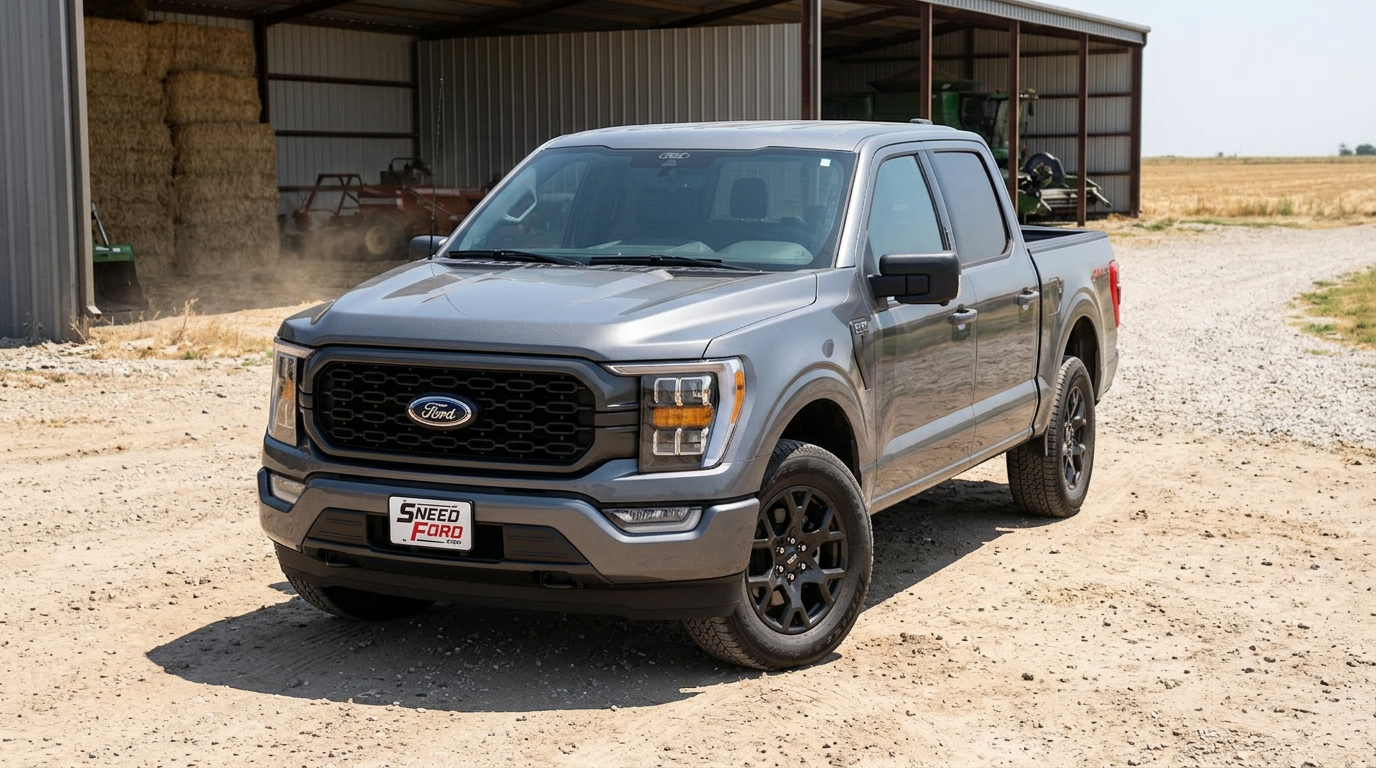
Ford gives you six engines in the 2026 F-150 — from a 325-hp twin-turbo V6 to a 720-hp supercharged V8. The differences in fuel economy, towing, and real-world feel are bigger than most buyers realize. Here’s how to figure out which engine is actually right for you.
How many engines does the 2026 Ford F-150 come with?
For most buyers, four of those six engines are realistic choices — the 2.7L EcoBoost, the 5.0L V8, the 3.5L EcoBoost, and the PowerBoost Hybrid. The two Raptor engines are trim-locked to the Raptor and Raptor R, so they’re only on the table if you’re shopping that specific truck.
All 6 2026 F-150 engines, explained
2.7L EcoBoost V6
The F-150’s best-kept secret. A twin-turbo V6 that’s lighter than the 3.5L, gets noticeably better fuel economy unloaded, and still handles most consumer trailers and boats up to 8,400 lbs without breaking a sweat. Standard on XL (141″/145″ wheelbase), STX, and XLT.
Best for: daily-driver buyers who tow occasionally under 5,000 lbs and want the best fuel economy in a non-hybrid F-150.
5.0L Ti-VCT V8
The naturally aspirated V8 for buyers who want the sound, the feel, and the linear power delivery of a traditional V8. Strong second-place tow capability at 12,800 lbs. Standard on XL with 122″ wheelbase, optional throughout most of the lineup.
Best for: buyers who specifically want a V8, prefer naturally aspirated character, and tow up to 12,000 lbs regularly.
3.5L EcoBoost V6
The headline engine. 500 lb-ft of torque (the most of any non-Raptor F-150 engine), the full 13,500-lb max tow rating, and 2,440 lbs of max payload. Standard on Lariat, King Ranch, Platinum, and Tremor. The right answer for most buyers who tow.
Best for: regular towing over 5,000 lbs, anyone wanting maximum capability, and the engine that makes the F-150 class-leading.
3.5L PowerBoost Full Hybrid V6
The hybrid F-150. SAE-rated 420 hp and 570 lb-ft of total-system output. Best fuel economy in any F-150 by a meaningful margin (22 mpg city). Standard 2.4 kW Pro Power Onboard, with available 7.2 kW Pro Power Onboard — enough to run a window AC, microwave, lights, and a TV simultaneously, or back up the essentials in a power outage. New for 2026: now available with 4×2 on STX, XLT, Lariat, King Ranch, and Platinum from Job 2 production onward.
Best for: buyers who camp, tailgate, or work off-grid and want serious onboard power; or anyone wanting the highest F-150 fuel economy.
3.5L HO EcoBoost V6 (Raptor)
The High-Output version of the 3.5L EcoBoost, tuned for the Raptor’s off-road performance mission. 450 hp delivered through the long-travel suspension and 4×4 with Hi-Lock transfer case. Tow rating drops compared to the standard 3.5L EcoBoost because the truck is configured for off-road, not max-tow, duty.
Best for: Raptor buyers. Trim-locked — you can’t get this engine in any other F-150 trim.
5.2L Supercharged V8 (Raptor R)
The 5.2L supercharged V8 from the Mustang Shelby GT500, dropped into the F-150 Raptor R. 720 hp, 640 lb-ft, and zero practical purpose other than going extremely fast through the desert. Available exclusively on the Raptor R sub-model.
Best for: Raptor R buyers. A niche-within-a-niche — pure performance toy.
*PowerBoost figures are SAE-rated total-system output. All capability numbers shown are maximum when properly configured.
2026 F-150 engine comparison at a glance
| Engine | HP | Torque | Max Tow | Max Payload | MPG (4×2) |
|---|---|---|---|---|---|
| 2.7L EcoBoost V6 | 325 | 400 lb-ft | 8,400 lbs | 1,775 lbs | 19/25 |
| 5.0L Ti-VCT V8 | 400 | 410 lb-ft | 12,800 lbs | 2,235 lbs | 16/24 |
| 3.5L EcoBoost V6 | 400 | 500 lb-ft | 13,500 lbs | 2,440 lbs | 17/25 |
| 3.5L PowerBoost Hybrid | 420* | 570 lb-ft* | up to 11,600 lbs | up to 2,045 lbs | 22/24 |
| 3.5L HO EcoBoost (Raptor) | 450 | 510 lb-ft | 8,200 lbs | 1,400 lbs | 14/18 |
| 5.2L SC V8 (Raptor R) | 720 | 640 lb-ft | 8,700 lbs | 1,400 lbs | 10/15 |
The 2026 F-150 engine matchups buyers actually cross-shop
Most F-150 buyers don’t sit there comparing all six engines at once — they get stuck between two specific options. Here are the matchups we walk customers through most often at Sneed Ford.
2.7L EcoBoost vs 3.5L EcoBoost
The most common F-150 engine cross-shop. Both are twin-turbo V6s with very similar fuel economy on paper. The 3.5L produces 75 more hp, 100 more lb-ft of torque, and tows 5,100 more pounds when properly configured. The 2.7L is lighter, costs less, and feels noticeably more responsive in unloaded daily driving.
If you tow regularly over 5,000 lbs, the 3.5L EcoBoost is the right answer. If your towing is occasional and under 5,000 lbs, the 2.7L is genuinely a better daily driver and saves real money up front.
5.0L V8 vs 3.5L EcoBoost
The traditional vs modern matchup. Same horsepower (400), but the 3.5L EcoBoost makes 90 more lb-ft of torque (500 vs 410) at much lower rpm (3,100 vs 4,250) and tows 700 more pounds. The 5.0L V8 trades that capability for the V8 sound, the linear power delivery, and the naturally aspirated character that some buyers will never give up.
Spec sheet says 3.5L EcoBoost. Heart says 5.0L V8. Both are completely defensible choices — this is more of a personal preference call than a performance one.
3.5L EcoBoost vs PowerBoost Hybrid
The capability vs hybrid matchup. The 3.5L EcoBoost tows more (13,500 vs ~11,600 lbs) and carries more payload (2,440 vs 2,045 lbs). The PowerBoost gets dramatically better fuel economy (22/24 mpg vs 17/25), produces more torque on paper (570 vs 500 lb-ft), and adds the option of 7.2 kW Pro Power Onboard — which the gas EcoBoost cannot match.
If maximum tow is the priority, gas 3.5L EcoBoost. If you camp, tailgate, work off-grid, want the best F-150 fuel economy, or value the onboard power feature, PowerBoost Hybrid.
What’s the most fuel-efficient 2026 F-150 engine?
The PowerBoost Hybrid’s fuel economy advantage is most visible in city driving and stop-and-go, where the hybrid system can shut off the gas engine entirely at low speeds. On long highway runs it’s closer to the 3.5L EcoBoost — both are doing about 24-25 mpg. But over a year of mixed driving, the hybrid will save real fuel.
Which 2026 F-150 engine is best for towing?
Hitting the 13,500-lb max tow rating requires more than just the right engine — it also requires the Tow/Haul Package, the Max Tow electronic-locking rear axle, and the right cab and bed combination. For the complete configuration walkthrough, read our complete 2026 F-150 towing guide.
Which 2026 F-150 engine should you get?
Click the use case that fits you best for our recommendation.
I tow regularly over 5,000 lbs and want maximum capability
The 3.5L EcoBoost V6. 400 hp, 500 lb-ft of torque, the F-150’s full 13,500-lb max tow rating, and 2,440 lbs of max payload. Pair it with the Tow/Haul Package and the Max Tow electronic-locking rear axle (3.55 XL5 or 3.73 XL7) to unlock the full rating. Standard on Lariat, King Ranch, Platinum, and Tremor.
I daily drive my F-150 and rarely tow more than a small boat or trailer
The 2.7L EcoBoost V6. 325 hp, 400 lb-ft of torque, and 8,400-lb max tow handles most consumer trailers and boats. Better fuel economy than the 3.5L when unloaded, lighter, and noticeably more responsive in daily driving. Standard on XL, STX, and XLT — the most common F-150 engine for buyers who don’t tow regularly.
I want a V8 specifically — sound, feel, naturally aspirated character
The 5.0L Ti-VCT V8. 400 hp, 410 lb-ft of torque, 12,800-lb max tow. This is the engine for buyers who specifically want a V8 and would rather give up some peak torque than drive a turbo V6. Strong second-place tow capability behind the 3.5L EcoBoost.
I camp, tailgate, work off-grid, or want serious onboard power
The 3.5L PowerBoost Full Hybrid V6. The available 7.2 kW Pro Power Onboard turns the truck into a mobile generator — enough to run a window AC, microwave, lights, and TV simultaneously, or back up the essentials in a power outage. 420 hp / 570 lb-ft SAE-rated total-system output, up to 11,600 lbs max tow, and the best F-150 fuel economy (22/24 mpg on the 4×4).
Fuel economy is my top priority
The 3.5L PowerBoost Hybrid at 22 mpg city / 24 mpg highway. The gap over the next-best gas engine (the 2.7L EcoBoost at 19/25 in 4×2) is meaningful in real-world driving, especially in city and stop-and-go conditions where the hybrid system shines.
If hybrid is not on the table, the 2.7L EcoBoost in 4×2 is the next-best fuel-economy option at 19/25 mpg.
I want serious off-road performance, not maximum tow
The 3.5L HO EcoBoost V6 in the F-150 Raptor. 450 hp, 510 lb-ft, paired with the Raptor’s long-travel suspension, available 37″ tires, and Baja terrain mode. Tow rating is lower (8,200 lbs) because the truck is built for going fast off-road, not pulling heavy.
I want the most powerful F-150 ever built and money is not a constraint
The 5.2L Supercharged V8 in the F-150 Raptor R. 720 hp, 640 lb-ft — the same engine that powered the Mustang Shelby GT500, now in a four-door truck with long-travel suspension. Fuel economy is 10/15 mpg. Practical purpose: none. Thrill: maximum.
30 years of helping buyers pick the right engine — not the most expensive one.
Dennis Sneed Ford is a Ford Credit Partners in Quality award winner (one of approximately 111 dealers nationally) and one of the Top 5 Ford remarketing dealers in the country. We see thousands of off-lease F-150s come through our remarketing program every year — which means we know which engine choices age well, which deliver the real-world fuel economy buyers actually see, and which configurations buyers come back and trade in early. We’ll spec the engine that fits how you actually use the truck. Read why Kansas City F-150 buyers drive 45 minutes to Gower →
2026 F-150 engine questions, answered
How many engines does the 2026 Ford F-150 come with?
Six. The 2.7L EcoBoost V6, the 5.0L Ti-VCT V8, the 3.5L EcoBoost V6, the 3.5L PowerBoost Full Hybrid V6, the 3.5L HO EcoBoost V6 (exclusive to the Raptor), and the 5.2L Supercharged V8 (exclusive to the Raptor R). All six pair with a 10-speed automatic transmission.
What is the best 2026 F-150 engine for towing?
The 3.5L EcoBoost V6, by a clear margin. With the Tow/Haul Package and Max Tow electronic-locking rear axle, it delivers the F-150’s full 13,500-lb max tow rating and 2,440 lbs of max payload. The 5.0L V8 follows at 12,800 lbs and the PowerBoost Hybrid handles up to 11,600 lbs.
What is the most fuel-efficient 2026 F-150 engine?
The 3.5L PowerBoost Full Hybrid V6, at 22 mpg city and 24 mpg highway on the 4×4. The PowerBoost is the only hybrid F-150 engine and offers the best fuel economy in the lineup by a meaningful margin, especially in city and stop-and-go driving.
What is the difference between the 2.7L EcoBoost and the 3.5L EcoBoost?
Both are twin-turbo V6s with similar fuel economy. The 3.5L EcoBoost produces 400 hp and 500 lb-ft of torque with a 13,500-lb max tow rating. The 2.7L EcoBoost produces 325 hp and 400 lb-ft with an 8,400-lb max tow rating. The 2.7L is lighter, more responsive in unloaded driving, and costs less. The 3.5L is the answer if you tow regularly over 5,000 lbs.
How many horsepower does the 2026 F-150 PowerBoost Hybrid have?
420 horsepower and 570 lb-ft of torque as SAE-rated total-system output. The PowerBoost Hybrid combines the 3.5L EcoBoost V6 with an electric motor and lithium-ion battery, and also offers Pro Power Onboard up to 7.2 kW — enough to run a window AC, microwave, lights, and TV simultaneously, or back up the essentials in a power outage.
Does the 2026 F-150 still come with the 5.0L V8?
Yes. The naturally aspirated 5.0L Ti-VCT V8 remains available on most F-150 trims for 2026, producing 400 hp and 410 lb-ft of torque. It is standard on the XL with the 122″ wheelbase and optional throughout most of the lineup. Max tow is 12,800 lbs when properly configured.
Which 2026 F-150 engine is in the Raptor R?
The Raptor R uses the 5.2L Supercharged V8 producing 720 horsepower and 640 lb-ft of torque — the same engine that powered the Mustang Shelby GT500. It is exclusive to the Raptor R sub-model and is not available in any other F-150 trim.
What transmission do 2026 F-150 engines use?
All 2026 F-150 engines pair with a 10-speed automatic transmission. The PowerBoost Hybrid uses a hybrid version of the 10-speed that incorporates the electric motor. All gas engines use the standard 10-speed.
Connect with us


- 2025 Ford Bronco Sport Big Bend
- 2025 Ford Bronco Sport Outer Banks
- Battery Maintenance
- chevy silverado
- Dennis Sneed Ford
- Dennis Sneed Ford Service
- Ford Bronco Sport
- Ford Explorer
- Ford F-150
- Ford Super Duty
- Ford Super Duty Trucks
- Ford SUVs
- Ford Trucks
- Gower Ford Dealer
- Gower Ford Service
- Gower Used Cars
- How Long Does a Car Battery Last
- How To Change Your Oil
- Uncategorized
- Used Ford Trucks