

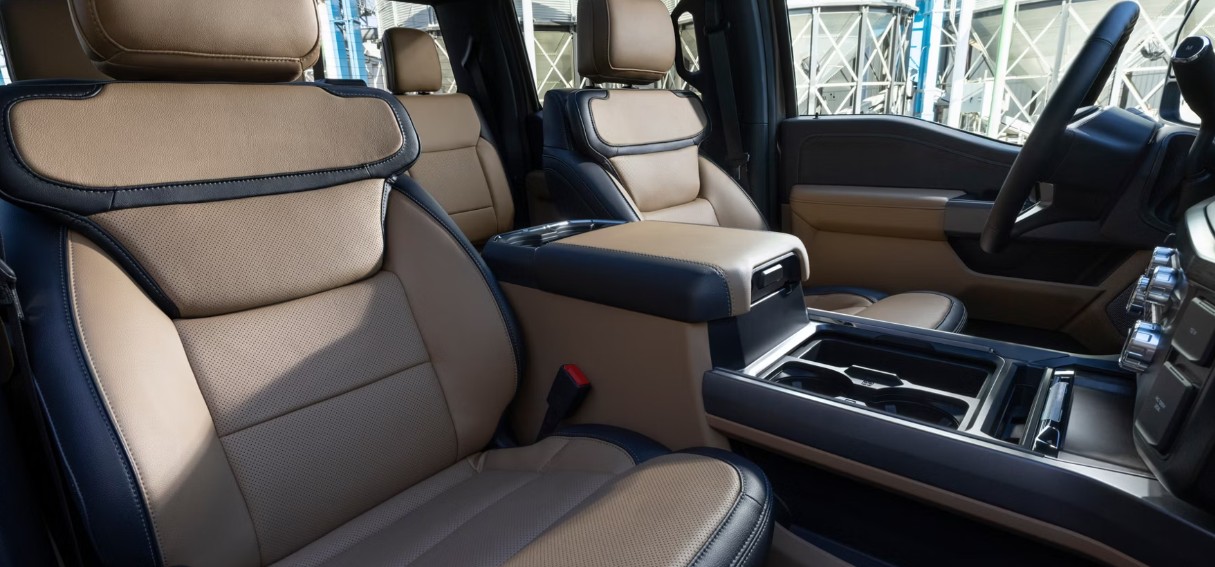
At Dennis Sneed Ford in Gower, Missouri, we help business owners understand how buying the right work truck can put serious money back in their pocket immediately. The Ford F-250 Super Duty isn’t just one of the most capable trucks on the market — for qualifying businesses, it’s also one of the smartest tax moves you can make in 2026.
Thanks to the One Big Beautiful Bill Act, the 2026 Section 179 deduction limit has jumped dramatically to $2,560,000 — more than double the 2024 cap — and 100% bonus depreciation has been fully restored. That means a business purchasing a Ford F-250 Super Duty this year can potentially write off the entire purchase price in the same year they buy it, creating immediate cash flow relief rather than waiting years for depreciation to trickle through.
This guide walks you through how Section 179 works, why the F-250 qualifies without the vehicle caps that limit SUVs and cars, how to calculate your actual tax savings, what documentation you need, and common mistakes to avoid. As always, this is educational information — consult your tax professional for advice tailored to your specific business situation.
Explore Ford Super Duty Trucks at Dennis Sneed Ford
Why the Section 179 Deduction Matters for Business Owners
Section 179 of the IRS tax code is one of the most powerful tools available to businesses that purchase equipment. Instead of depreciating a truck’s cost over five to seven years, Section 179 lets you deduct the full purchase price in the year you place the vehicle in service. The financial impact is immediate: lower taxable income, lower taxes owed, and more cash available to reinvest in your business.
For 2026, the benefit is better than it’s ever been:
- Maximum Section 179 deduction: $2,560,000 for qualifying equipment placed in service during the tax year
- Phase-out threshold: $4,090,000 in total qualifying purchases — well above what most small and mid-size businesses will spend in a year
- 100% bonus depreciation restored for property placed in service after January 19, 2025, giving businesses an additional tool beyond Section 179
- Both new and used vehicles qualify — pre-owned F-250 trucks are fully eligible as long as the vehicle is new to your business
| Section 179 Feature | 2026 Details | Business Impact |
|---|---|---|
| Maximum Deduction Limit | $2,560,000 | Write off equipment purchases fully in year one |
| Phase-Out Threshold | Begins at $4,090,000 | Applies to total qualifying equipment spending for the year |
| Business Use Requirement | More than 50% | Must track and document business mileage carefully |
| Taxable Income Limitation | Cannot exceed business income | Unused amounts carry forward to the following tax year |
| Bonus Depreciation | 100% | No taxable income limitation; can create a loss |
One important note: Section 179 cannot reduce your taxable income below zero. If your deduction exceeds your business income for the year, the unused portion carries forward to the following tax year. This is where a combination with bonus depreciation — which has no taxable income limitation — can be powerful. Talk to your CPA about the optimal approach for your situation.
Why the Ford F-250 Super Duty Qualifies Without a Cap
Not all vehicles are equal under Section 179. The IRS places strict deduction caps on many business vehicles — but the F-250 Super Duty avoids them entirely. Here’s why.
The GVWR Threshold That Changes Everything
The IRS classifies vehicles for tax purposes based on Gross Vehicle Weight Rating (GVWR) — the maximum loaded weight of the vehicle as certified by the manufacturer. You’ll find this number on a sticker inside your driver’s door jamb. The 6,000 lb GVWR threshold is the dividing line:
- Passenger cars under 6,000 lbs GVWR: highly limited deductions (small annual caps)
- SUVs and crossovers between 6,000–14,000 lbs GVWR: deduction is capped at $32,000 for 2026
- Heavy-duty pickup trucks like the F-250 with a GVWR over 6,000 lbs: no deduction cap — full purchase price eligible
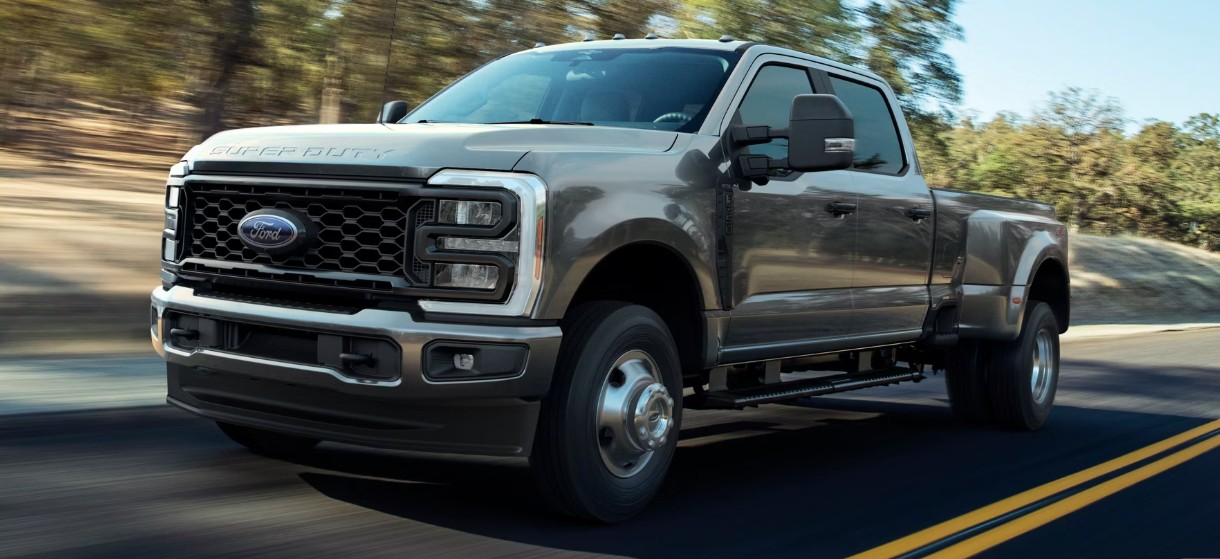
The F-250 Super Duty’s GVWR ranges from approximately 8,800 to 10,000 lbs depending on configuration — well above the threshold that would impose any cap. Every F-250 at Dennis Sneed Ford qualifies for full, uncapped Section 179 treatment.
| Vehicle Type | Typical GVWR | 2026 Section 179 Cap |
|---|---|---|
| Passenger Sedans | Under 6,000 lbs | Very limited annual cap |
| SUVs and Crossovers | 6,000–14,000 lbs | $32,000 maximum |
| Ford F-250 Super Duty | ~8,800–10,000 lbs | No cap — full deduction |
Every Trim, Cab Style, and Engine Qualifies
There’s no wrong choice when it comes to Section 179 eligibility across the F-250 lineup. Every configuration qualifies because every configuration exceeds the GVWR threshold by a wide margin:
- All six trim levels qualify: XL, XLT, Lariat, King Ranch, Platinum, and Limited
- All cab configurations qualify: Regular Cab, SuperCab, and Crew Cab
- Both engine options qualify: 6.7L Power Stroke Diesel and gasoline engines
- Higher trims and diesel engines increase your purchase price — which means a larger dollar deduction
Choose the F-250 configuration that fits your business needs and workload. Explore the full Ford Super Duty lineup or see how the F-150 and F-250 compare if you’re weighing which Super Duty is right for your operation.
How to Calculate Your 2026 Section 179 Tax Savings
The math behind your tax savings is straightforward. Here’s a step-by-step calculation, followed by two real-world scenarios:
Step 1: Start with your F-250’s purchase price (including any options or accessories).
Step 2: Multiply by your business use percentage (if less than 100%). This is your deductible basis.
Step 3: Confirm the deductible basis doesn’t exceed your 2026 taxable business income or the $2,560,000 Section 179 limit.
Step 4: Multiply your deductible amount by your combined effective tax rate (federal + state).
Step 5: Subtract that figure from the purchase price to find your true after-tax cost.
Scenario 1: Contractor Buying a New F-250 Lariat
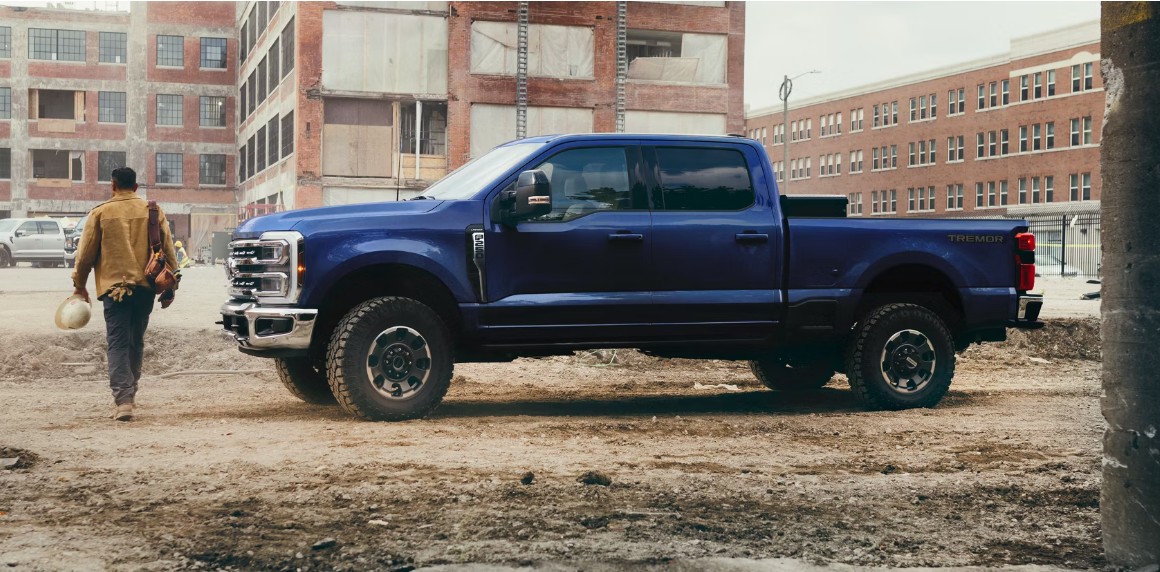
| Calculation Step | Amount |
|---|---|
| F-250 Lariat Purchase Price | $82,000 |
| Business Use Adjustment (90%) | $73,800 |
| Tax Savings (32% combined rate) | $23,616 |
| Effective After-Tax Cost | $58,384 |
Scenario 2: Landscaper Adding a Pre-Owned F-250 to Her Fleet
| Calculation Step | Amount |
|---|---|
| Pre-Owned F-250 XLT Purchase Price | $58,000 |
| Business Use (100% — dedicated work truck) | $58,000 |
| Tax Savings (28% combined rate) | $16,240 |
| Effective After-Tax Cost | $41,760 |
These scenarios illustrate one of the most important facts about Section 179: the truck doesn’t have to be new to qualify. Both new and quality pre-owned F-250 Super Duty trucks at Dennis Sneed Ford are fully eligible — the deduction is based on your actual purchase price, not whether the vehicle is new. The key requirement for used vehicles is simply that it must be new to your business, purchased from an unrelated party.
Business Use Requirements and Record-Keeping Rules
Qualifying for Section 179 isn’t just about buying the right truck — it’s about using it correctly and documenting that use every year you own it. The IRS has clear rules, and the consequences for falling short can be costly.
The 50% Business Use Threshold
Your F-250 must be used more than 50% for business to qualify for Section 179 — and this requirement applies in every subsequent year, not just the year of purchase. If business use drops to 50% or below in a later year, the IRS will require you to pay back a portion of the deduction you claimed (called “recapture”), including interest and potential penalties.
| Activity Type | Counts as Business Use | Does Not Count |
|---|---|---|
| Job Site Travel | Driving to client sites, customer locations, work projects | Commuting from home to a fixed regular workplace |
| Equipment and Material Transport | Hauling tools, materials, livestock, business supplies | Moving personal belongings or household goods |
| Customer and Supplier Visits | Service calls, sales meetings, deliveries, pickups | Personal shopping, social visits, family errands |
| Travel Between Locations | Multiple work sites, supplier visits, business conferences | Vacation travel, recreational trips, personal events |
The Mileage Log: Your Most Important Document
The IRS requires contemporaneous records — meaning you document each business trip as it happens, not months later from memory. A solid mileage log for each business trip should include:
- Date of the trip and starting location
- Destination address or description
- Business purpose of the trip (specific enough to be clear)
- Miles driven (starting and ending odometer is ideal)
- Beginning and ending odometer reading for each calendar year
Smartphone apps can automate much of this tracking. Paper logbooks work equally well. What matters is consistency. Keep these records for at least five to seven years — the IRS statute of limitations for audits. One additional note: if you claim Section 179 or bonus depreciation, you are required to use the actual expense method for that vehicle going forward. You cannot switch back to the standard mileage rate, so keep all receipts for fuel, maintenance, insurance, and repairs as well.
Section 179 and Bonus Depreciation: Using Both Strategically
Section 179 and bonus depreciation are two separate tax tools, and for 2026 both are at peak strength. Understanding how they work together lets your tax advisor structure your deduction for maximum benefit.
- Section 179: Deduct up to $2,560,000 in qualifying purchases in year one. Limited to your taxable business income — cannot create a loss. Unused amounts carry forward to the next year.
- Bonus Depreciation (100% for 2026): Applies to the remaining basis after Section 179. No taxable income limitation — can create or increase a loss, which may carry forward and benefit future years.
- You cannot apply both provisions to the same dollar of asset cost — but you can use Section 179 first (up to your taxable income), then apply bonus depreciation to any remaining eligible basis.
Example: Your business has $60,000 in taxable income and purchases an $85,000 F-250 (used 100% for business). You elect $60,000 under Section 179 to zero out your taxable income, then apply 100% bonus depreciation to the remaining $25,000 basis. Your total first-year write-off equals the full $85,000 purchase price. Always confirm the optimal structure with your CPA — every business situation is different.
Timing Your F-250 Purchase for Maximum Tax Benefit
To claim a Section 179 deduction for the 2026 tax year, your F-250 must be placed in service by December 31, 2026. “Placed in service” means the truck is in your possession, registered, and available for business use — not just ordered or under contract. Payment alone doesn’t satisfy the requirement.
Here’s what makes year-end timing risky if you wait too long:
| Timeline Phase | Recommended Timing | Why It Matters |
|---|---|---|
| Initial Research and Financing | 6–8 weeks before year-end | Time to explore options and secure financing without pressure |
| Vehicle Selection and Pricing | 4–6 weeks before year-end | Ensures your preferred F-250 configuration is available |
| Purchase and Paperwork | 2–3 weeks before December 31 | Provides buffer for documentation or registration delays |
| Final Delivery | At least one week before deadline | Guarantees vehicle is placed in service before 2026 tax deadline |
Note that the deduction is the same whether you purchase in January or November — what changes is which tax year it applies to. If your goal is a 2026 deduction, don’t wait until the final week of December. Holiday schedules, Missouri weather, title processing delays, and high year-end demand all create risks. Our team at Dennis Sneed Ford is experienced in helping business customers meet year-end deadlines — but start early.
Financing, Leasing, and Common Mistakes to Avoid
Good news if you’re financing: Section 179 allows you to deduct the full purchase price of your F-250 in year one, even if you financed 100% of it. The deduction is based on the truck’s total cost, not your down payment or payments made during the year. For many business owners, the tax savings in year one are comparable to or exceed the first year of truck payments — making a financed Super Duty remarkably accessible.
If you’re leasing: Traditional leases do not qualify for Section 179 (you don’t own the vehicle). However, monthly lease payments are generally deductible as a business expense proportional to business use. Some capital lease or lease-to-own arrangements may qualify — confirm with your tax advisor. For maximum first-year tax benefit, purchasing is the recommended route.
Three common mistakes that can cost you your deduction:
- Exceeding personal use limits: Using your F-250 as the family’s everyday vehicle can push business use below the required 50% threshold. Track every mile and stay honest with your estimates. If you’re unsure whether you’ll consistently clear 50%, standard depreciation may be safer than Section 179.
- Inadequate record-keeping: The IRS puts the burden of proof on you. Reconstructed logs created months after the fact are far less defensible than contemporaneous records. Start your mileage log from day one and maintain it every week.
- Missing the in-service deadline: Taking delivery on January 2nd instead of December 31st delays your deduction by a full year. For a business expecting $25,000 in tax savings, that’s a meaningful cash flow setback. Plan ahead and give yourself at least one week of buffer before the deadline.
Apply for Business Financing at Dennis Sneed Ford
Why Dennis Sneed Ford Is the Right Partner for Your Business Vehicle Purchase
At Dennis Sneed Ford in Gower, Missouri, we understand that buying a work truck is a business decision as much as it is a vehicle decision. We specialize in helping contractors, farmers, landscapers, tradespeople, and business owners across northwest Missouri find the right F-250 Super Duty configuration for their operations — and we provide the complete documentation your tax professional needs to claim the Section 179 deduction with confidence.
- Detailed purchase invoice with vehicle price, make, model, VIN, and sale date — everything your CPA needs
- GVWR specification documentation confirming your F-250 qualifies for full, uncapped Section 179 treatment
- Manufacturer’s Certificate of Origin (new trucks) or title documentation (pre-owned trucks)
- Finance team experienced in structuring business vehicle purchases to maximize cash flow and tax benefits
- Wide Super Duty inventory across trim levels, cab styles, and engine options — in stock and ready to view in Gower
We’re also equipped to help you long after the purchase. Our Ford-certified service center keeps your work truck running at full capability, and our team is happy to provide additional documentation if your accountant has follow-up questions. We’re not your tax advisor — but we make sure you have everything your tax advisor needs to do the job right.
For more truck research, read our related posts: 2025 Ford Super Duty towing capacity, pickup trucks with the best longevity, and what to look for when buying a used Ford truck.
Your Tax Savings Start Here: Find Your F-250 at Dennis Sneed Ford
The 2026 Section 179 deduction is the most powerful version of this benefit ever offered — with a $2,560,000 limit and 100% bonus depreciation fully restored, business owners have more first-year write-off potential than at any point in recent history. The Ford F-250 Super Duty is uniquely positioned to take full advantage: its GVWR eliminates the caps that limit SUVs, every trim level qualifies for full deductions, and its unmatched capability means it earns its place in your operation every day.
Visit Dennis Sneed Ford at 1046 S.W. Highway 169 in Gower, Missouri — conveniently located on the I-29 corridor between Kansas City and St. Joseph. Call our sales team at (816) 409-1975, schedule a test drive, or browse our full Super Duty inventory online. Our team is ready to help you find the right F-250, build a purchase strategy around your timeline, and put the documentation in your hands before tax season.
Disclaimer: This article is for general informational purposes only and does not constitute tax, legal, or financial advice. Tax laws change frequently and individual circumstances vary. Always consult a qualified tax professional or CPA to determine your eligibility and optimize your specific tax strategy.
Schedule Your F-250 Test Drive at Dennis Sneed Ford
Frequently Asked Questions
Does the Ford F-250 Super Duty qualify for the full Section 179 deduction without a vehicle cap?
Yes. The Ford F-250 Super Duty qualifies for a full, uncapped Section 179 deduction. Because its Gross Vehicle Weight Rating (GVWR) exceeds 6,000 lbs — typically ranging from 8,800 to 10,000 lbs depending on configuration — it is not subject to the $32,000 cap that applies to SUVs. This means you can potentially deduct the entire purchase price of your F-250 in the year you place it in service, up to the 2026 maximum of $2,560,000, provided your business meets the business use and taxable income requirements. At Dennis Sneed Ford in Gower, Missouri, every F-250 in our inventory qualifies. We can show you the GVWR certification label on any truck you’re considering.
Can I still claim Section 179 if I finance my Ford F-250 purchase?
Absolutely. Financing your F-250 — even 100% of the purchase price — does not reduce or eliminate your Section 179 deduction. The deduction is based on the vehicle’s total purchase price, not your down payment or what you’ve paid during the year. Many of our business customers find that their first-year tax savings equal or exceed their first year of truck payments, making a financed Super Duty a very efficient use of working capital. Our finance team at Dennis Sneed Ford works with multiple lenders and can help structure a loan that fits both your cash flow and your tax strategy. Always confirm the final details with your CPA.
What is the 2026 Section 179 deduction limit, and how does the phase-out work?
For 2026, the Section 179 maximum deduction is $2,560,000 — more than double the 2024 limit — thanks to the One Big Beautiful Bill Act and annual inflation adjustments. The phase-out begins when your total qualifying equipment purchases for the year exceed $4,090,000, reducing your available deduction dollar-for-dollar above that threshold. For most small and mid-size businesses, these limits are far above their annual equipment spending, meaning the full deduction is available. Additionally, 100% bonus depreciation has been restored for qualifying property placed in service after January 19, 2025, providing a complementary tool for businesses whose Section 179 deduction is limited by taxable income. Confirm current limits with your tax professional before filing.
What percentage of business use is required, and what happens if it drops later?
Your Ford F-250 must be used more than 50% for qualifying business purposes — meaning at least 51% or greater. If your business use falls to 50% or below in any year after you’ve claimed Section 179, the IRS can require recapture of a portion of the deduction, resulting in additional taxable income, taxes owed, interest, and potential penalties. This requirement applies in every year you own the vehicle, not just the purchase year. To protect your deduction, maintain a detailed, contemporaneous mileage log from day one, documenting each business trip with the date, destination, purpose, and miles driven. If there’s meaningful doubt about whether you can consistently maintain more-than-50% business use, consider standard depreciation methods instead — your tax advisor can help you evaluate the risk.
What is the difference between Section 179 and Bonus Depreciation for an F-250 purchase?
Both Section 179 and Bonus Depreciation allow you to write off equipment costs in the year of purchase rather than over several years, but they work differently. Section 179 lets you deduct up to $2,560,000 for 2026 but cannot exceed your business’s taxable income — it cannot create a loss. Bonus depreciation (100% for 2026) has no taxable income limitation and can create or increase a loss, which may carry forward to benefit future years. A common strategy is to use Section 179 first, up to your taxable income limit, then apply bonus depreciation to any remaining eligible basis. You cannot apply both to the same dollar amount of cost. For an F-250 purchase, the right approach depends on your business’s income, other equipment purchases, and long-term tax planning. Your CPA can determine the optimal combination for your specific situation. Dennis Sneed Ford provides all the purchase documentation your tax advisor needs to make this determination accurately.
Connect with us


- 2025 Ford Bronco Sport Big Bend
- 2025 Ford Bronco Sport Outer Banks
- Battery Maintenance
- chevy silverado
- Dennis Sneed Ford
- Dennis Sneed Ford Service
- Ford Bronco Sport
- Ford F-150
- Ford Super Duty
- Ford Super Duty Trucks
- Ford Trucks
- Gower Ford Dealer
- Gower Ford Service
- Gower Used Cars
- How Long Does a Car Battery Last
- How To Change Your Oil
- Uncategorized
- Used Ford Trucks