
Blog / Battery Maintenance

How Long Does a Car Battery Last?

Car Battery Service at Dennis Sneed Ford

Learn the signs of battery failure and how to extend your battery's lifespan with expert tips from Dennis Sneed Ford

Ever been stuck because your car wouldn't start when you needed it most? You're not alone. Batteries are a big reason for breakdowns on the road, but most people don't think about them until it's too late.

At Dennis Sneed Ford in Gower, Missouri, we think knowing is key. Knowing how long your battery will last can save you from unexpected problems. It keeps you safe and moving on the road.

Average Battery Lifespan

Most car batteries last three to five years under normal driving conditions. However, factors like driving habits, maintenance, and Missouri's extreme weather can significantly affect your battery's longevity.

We've made this guide to help you spot problems early and understand what affects your battery. Our team is here to keep you informed and your car running smoothly, no matter what Missouri's roads bring.

Understanding Average Car Battery Lifespan

At Dennis Sneed Ford in Gower, Missouri, we help hundreds of customers each year understand their battery's expected lifespan. Knowing what to expect from your battery helps you plan ahead and avoid inconvenient breakdowns. The average car battery lifespan varies based on several important factors we'll explore in this section.

We believe informed drivers make better decisions about their vehicle maintenance. That's why our service team takes time to explain battery performance and answer your questions. Let's dive into what you can realistically expect from your car's battery.

Typical Battery Lifespan in Years

The average car battery lifespan typically ranges from three to five years under normal driving conditions. However, we've seen batteries at our service center last anywhere from just one year to as long as six years. The variation depends on climate, driving habits, and how well the battery is maintained.

Most quality batteries will perform reliably for at least three years. After this milestone, we strongly recommend scheduling regular battery testing at Dennis Sneed Ford. Our advanced diagnostic equipment can detect declining performance before you experience starting problems.

Minimum Lifespan

1-2 years in extreme conditions or with poor maintenance

Average Lifespan

3-5 years under normal driving conditions with regular care

Maximum Lifespan

5-6 years with optimal maintenance and moderate climate

Some batteries exceed expectations and continue working effectively for five or even six years. These longer-lasting batteries usually belong to vehicles that receive consistent maintenance and operate in moderate climates. We're always happy to test your battery free of charge to give you peace of mind.

Understanding Your Battery Warranty Period

Most quality car batteries come with warranties that provide valuable protection for your investment. The typical car battery warranty period includes a free replacement window of about three years. Understanding these warranty terms helps you maximize your coverage.

Warranty coverage generally falls into two categories: free replacement and prorated replacement. During the free replacement period, if your battery fails testing, the manufacturer provides a brand-new battery at no cost. After this period ends, prorated coverage means you'll pay a percentage based on how long you've owned the battery.

We encourage all our customers to keep their warranty documentation in a safe place. When you bring your vehicle to Dennis Sneed Ford for battery service, having this paperwork allows our team to process warranty claims quickly and efficiently. This can save you significant money on a replacement battery.
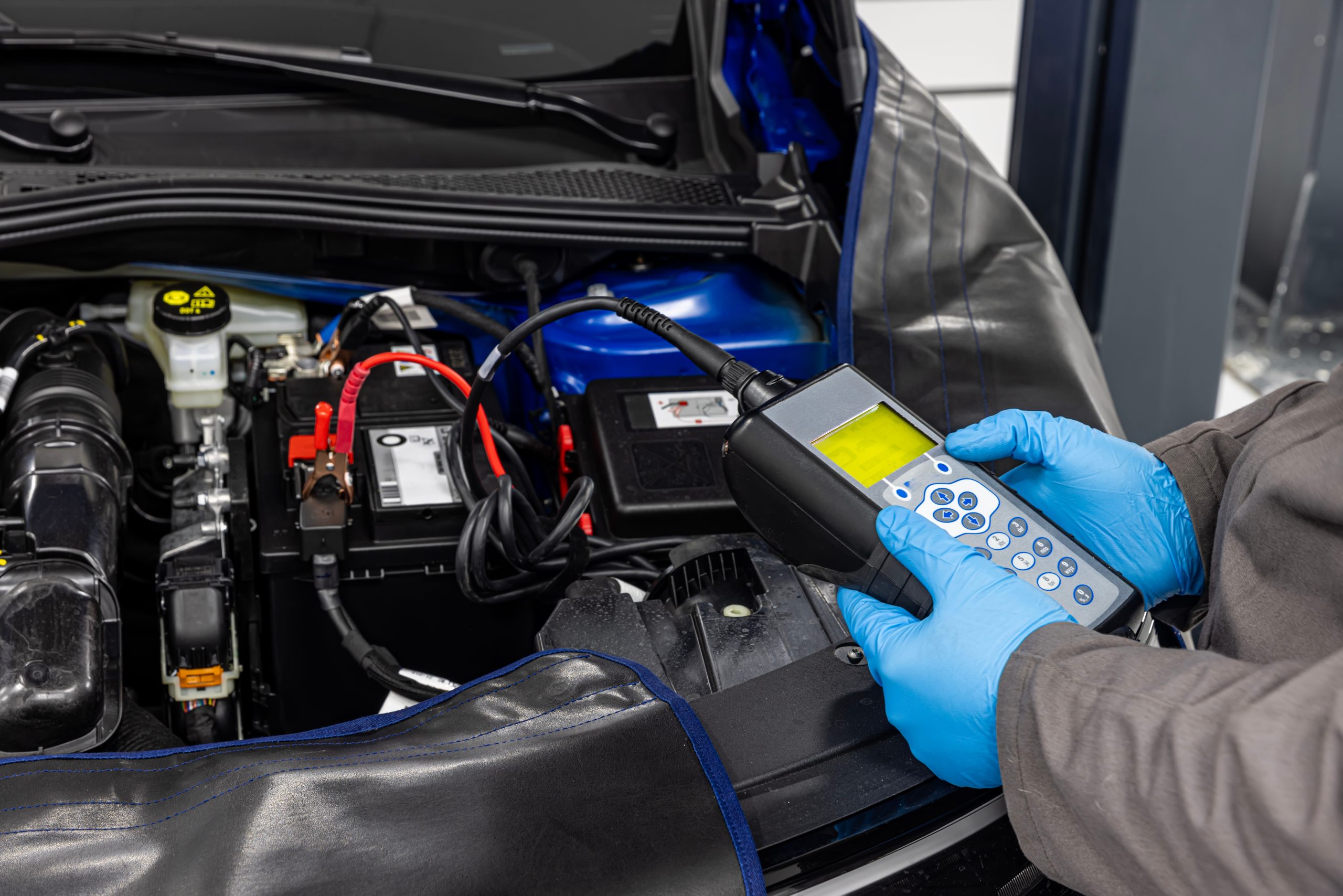
Car Battery Service at Dennis Sneed Ford

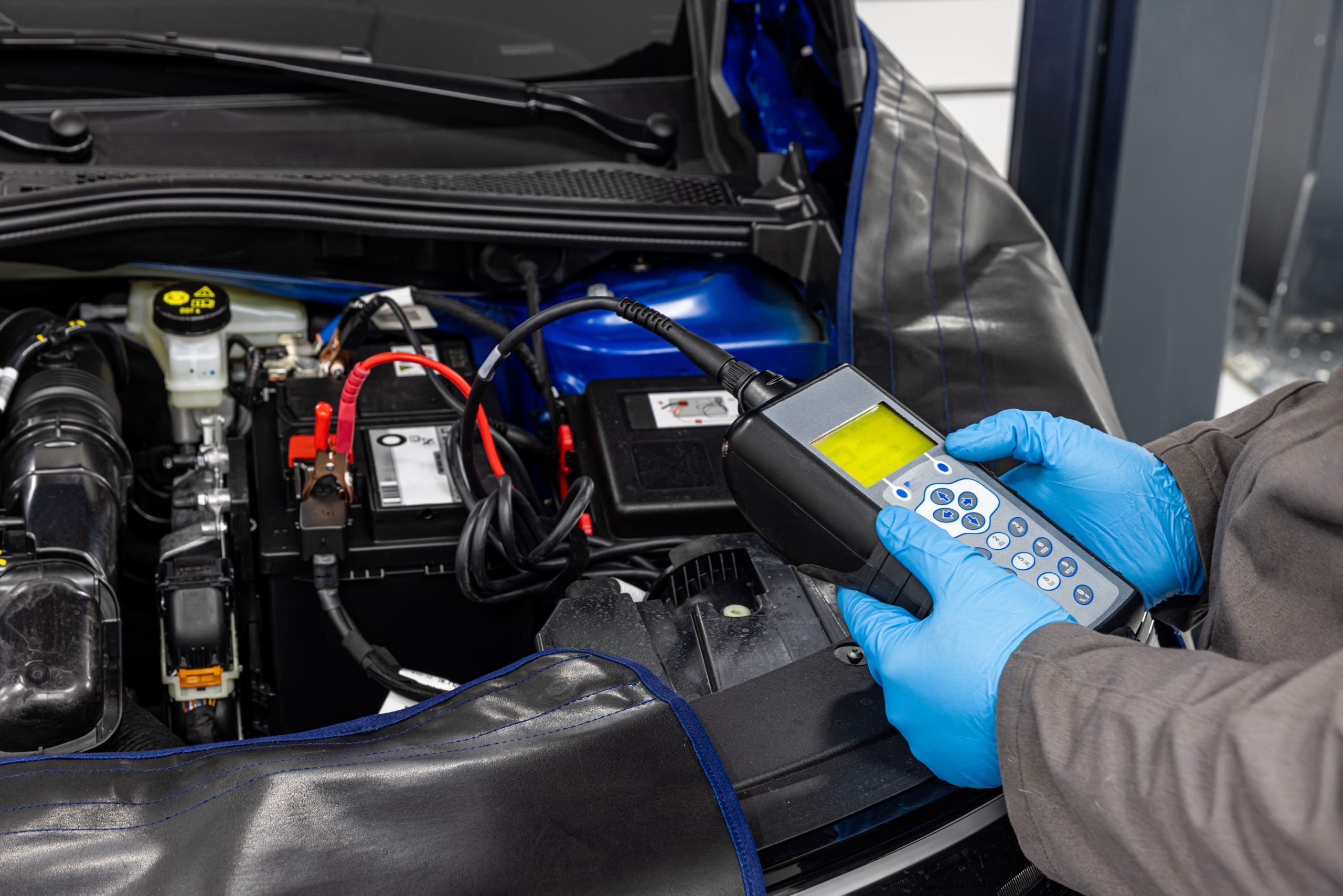
Our expert technicians at Dennis Sneed Ford provide comprehensive battery testing and service

Warning Signs Your Battery Is Failing

Recognizing the early signs of a failing car battery helps you address problems before they leave you stranded. We always tell our customers not to wait until their car won't start to think about battery replacement. Paying attention to these warning signs can prevent frustrating breakdowns.

Your vehicle communicates battery problems through various symptoms. Learning to identify these signals means you can schedule service at your convenience rather than dealing with an emergency. Let's look at the most common indicators that your battery needs attention.

Slow Engine Crank

A healthy battery starts your engine quickly and smoothly with a strong, confident turn. When your battery begins failing, you'll notice the engine cranks more slowly than usual. The starter may sound labored, or you might hear clicking, grinding, or buzzing noises.

This sluggish cranking happens because the weakened battery can't deliver enough power to turn the engine over efficiently. Cold mornings often make this problem more noticeable. If you experience slow cranking, bring your vehicle to our Gower service center right away for testing.

Dimming Headlights and Electrical Issues

Your battery powers all electrical components in your vehicle. When it weakens, you'll notice dimming headlights, especially while idling at stop lights. The lights may brighten when you press the accelerator, indicating the alternator is compensating for a weak battery.

Other electrical problems often accompany battery failure. You might experience flickering interior lights, slow-moving power windows, or erratic behavior from your radio and air conditioning system. These issues stem from inconsistent power delivery from a dying battery.

Slow Engine Crank

Engine turns over slowly with clicking, grinding, or buzzing sounds

Dimming Lights

Headlights dim at idle and brighten when accelerating

Dashboard Warning Light

Battery symbol illuminates indicating charging system issues

Electrical Malfunctions

Flickering interior lights, slow windows, erratic radio behavior

Dashboard Warning Light

Modern vehicles include a battery warning light on the dashboard, typically shaped like a battery symbol. When this light illuminates while driving, it indicates your charging system isn't working properly. This could mean battery failure, alternator problems, or loose connections.

Never ignore a battery warning light. While it might seem minor, this indicator warns you of potentially serious electrical issues. The light may come on intermittently at first, then stay illuminated as the problem worsens. If you see this warning light, schedule an appointment with our service team immediately.

Additional Warning Signs

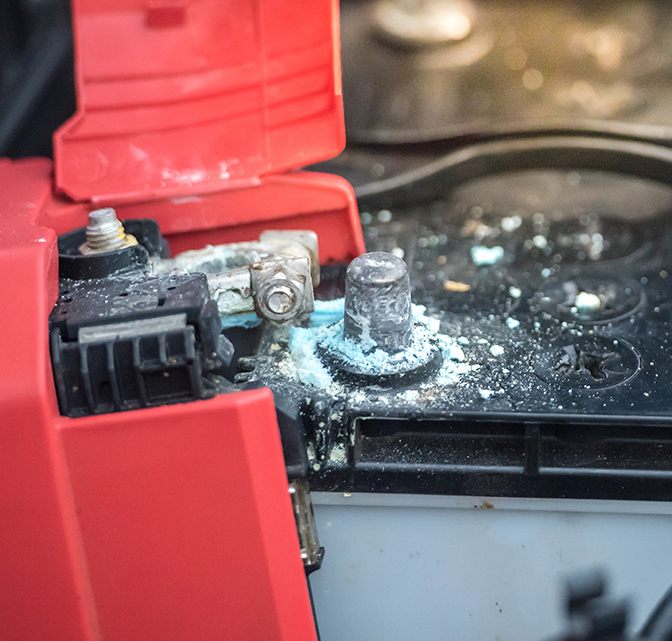
Additional warning signs include visible corrosion around battery terminals (white or bluish residue), cracks or bulges on the battery casing, and a pungent rotten-egg smell indicating a sulfuric acid leak. Any of these symptoms requires immediate professional attention at Dennis Sneed Ford.

Key Factors That Impact Your Battery's Longevity

Many things affect how long your car battery lasts. Some things you can't control, but knowing what impacts battery life helps you make better choices. We'll look at the main factors that affect battery life, especially for our Gower, Missouri customers.

Cold Missouri Winters and Battery Performance

Cold weather is a big problem for batteries in northwest Missouri. When it's below freezing, your battery loses up to 35% of its power. This makes starting your car harder during those frigid winter mornings.

Cold weather also makes your engine oil thicker, requiring more effort from the starter to turn the engine. At the same time, the battery's chemical reactions slow down. This is why cars often struggle to start in the cold. Many batteries that seem fine in fall reveal their weaknesses when winter arrives.

Hot Summer Temperatures

Hot weather actually causes more damage to batteries than cold. Heat speeds up the chemical reactions inside your battery, leading to faster wear. High temperatures also cause the electrolyte fluid to evaporate faster, potentially exposing the internal plates.

Missouri summers are hot, speeding up corrosion inside your battery. This damage adds up over time, shortening your battery's life. Many batteries that fail in winter actually got damaged in the summer—the heat weakened the battery, and the cold revealed the problem.

Weather ConditionEffect on BatteryPower LossRecommendation
Extreme Cold (Below Freezing)Slowed chemical reactions, thicker oilUp to 35%Test battery before winter
Extreme Heat (90°F+)Accelerated corrosion, fluid evaporationPermanent damagePark in shade, check fluid levels
Moderate Climate (50-80°F)Optimal performanceMinimalRegular maintenance

Your Driving Habits Matter

How you drive and use your car affects your battery's life. Your alternator recharges the battery when the engine is running. But it needs enough time to fully recharge after starting.

Short trips don't give your alternator enough time to recharge the battery fully. This leads to sulfation buildup on the battery plates, reducing capacity over time. The battery works harder with each start but never gets fully recharged.

Car batteries also face challenges when not used for a long time. Even when parked, your car draws power to keep systems running. If your car sits for weeks without running, the battery drains until it can't start the engine. We recommend taking a 30-40 minute drive weekly if your car doesn't get regular use.
Car Battery Maintenance Tips

Regular battery maintenance can extend your battery's life and prevent unexpected breakdowns

Proper Maintenance and Care Tips

Simple preventive maintenance can extend your car battery's life. Regular care can add years to your battery's service life and prevent breakdowns. These tips don't need special tools or expertise—just a little time and attention.

Terminal corrosion is a common problem we see at Dennis Sneed Ford. The white, crusty buildup around the terminals reduces electrical flow. You can clean this corrosion yourself using a baking soda and water solution, along with an old toothbrush or wire brush.

Keep your battery connections tight and secure. Loose connections create resistance and prevent proper charging. Avoid using accessories like the radio, air conditioning, or phone chargers when your engine isn't running, as this puts direct strain on the battery without the alternator's support.

Maintenance TaskFrequencyWhy It MattersDIY or Professional
Clean battery terminalsEvery 3-6 monthsRemoves corrosion that blocks electrical flowDIY with baking soda solution
Check cable connectionsEvery 3-6 monthsEnsures tight connections for proper chargingDIY with basic wrench
Battery load testEvery 6-12 monthsIdentifies weakness before complete failureProfessional at Dennis Sneed Ford
Inspect for damage or leaksEvery 3 monthsCatches physical problems earlyDIY visual inspection

If you store a vehicle for a long time, consider using a trickle charger. These devices provide a slow, steady charge that prevents the battery from draining completely. We also recommend parking in a garage when possible, as this protects your battery from extreme temperatures.

Schedule regular battery inspections at Dennis Sneed Ford at least twice yearly. Our technicians can perform load tests that show how much capacity your battery retains and predict when replacement might be needed. This proactive approach helps you avoid unexpected failures and plan for replacement on your schedule.

Trust Our Team at Dennis Sneed Ford for Expert Battery Service

Our team at Dennis Sneed Ford in Gower, Missouri is ready to help. We offer free battery testing to check your car's electrical health. This service gives you peace of mind and helps you avoid unexpected breakdowns.

We can accurately diagnose and replace your battery. Our service center has quality batteries at competitive prices. Every installation comes with a warranty to protect your investment.

Wondering when to replace your car battery? We suggest checking it after three years. You can do this during your oil change. It saves time and prevents emergencies.

Our friendly team is ready to help. We'll tell you if your battery needs a replacement or just maintenance. Schedule an appointment online, call us, or visit our Gower service center today. Regular battery care keeps you safe on Missouri's roads. Let us help you stay reliable with proactive testing and expert service.

Frequently Asked Questions

How long does a car battery typically last?

Batteries usually last 3-5 years under normal driving conditions. However, at Dennis Sneed Ford we've seen batteries last anywhere from 1-6 years depending on climate, maintenance, and driving habits. After 3 years, we recommend regular testing to check if your battery is still performing well.

What are the signs that my car battery is failing?

Look out for slow engine crank, dim headlights, flickering interior lights, and erratic power accessory behavior. A dashboard battery warning light is also a clear indicator. If you notice any of these signs, visit Dennis Sneed Ford for a free battery test.

When should I replace my car battery?

Replace your battery if it's over 3-5 years old, shows signs of failure, or fails a load test. Our Gower, Missouri service team can tell you if your battery needs replacement or just maintenance during a quick inspection.

How does cold weather affect my car battery performance?

Cold weather causes batteries to lose up to 35% of their power and makes engine oil thicker, requiring more effort to start. This combination is why we see more battery failures in winter. Regular testing before the cold season helps prevent being stranded.

Does hot weather damage car batteries?

Yes, heat actually damages batteries more than cold. High temperatures speed up chemical breakdown, cause fluid evaporation, and accelerate internal corrosion. Summer maintenance is just as important as winter care for extending your battery's life.

What car battery maintenance tips can extend battery life?

Clean terminals regularly, keep connections tight, avoid using accessories when the engine is off, and take longer drives to allow full recharging. Schedule regular inspections at Dennis Sneed Ford—a little preventive care goes a long way in extending battery life.

How do driving habits affect battery life?

Short trips don't give your alternator enough time to fully recharge the battery, leading to sulfation buildup and reduced capacity. We recommend longer drives of 30-40 minutes weekly to keep your battery healthy, especially if you don't drive regularly.

What services does Dennis Sneed Ford offer for car batteries?

We offer free battery testing, professional diagnosis, quality battery installation with warranty protection, and regular maintenance services. Visit our Gower service center for comprehensive battery care and expert advice on keeping your vehicle running reliably.

Posted in:

Related Posts

ford ranger used cars

Used Ford Ranger Buying Guide: What to Check First

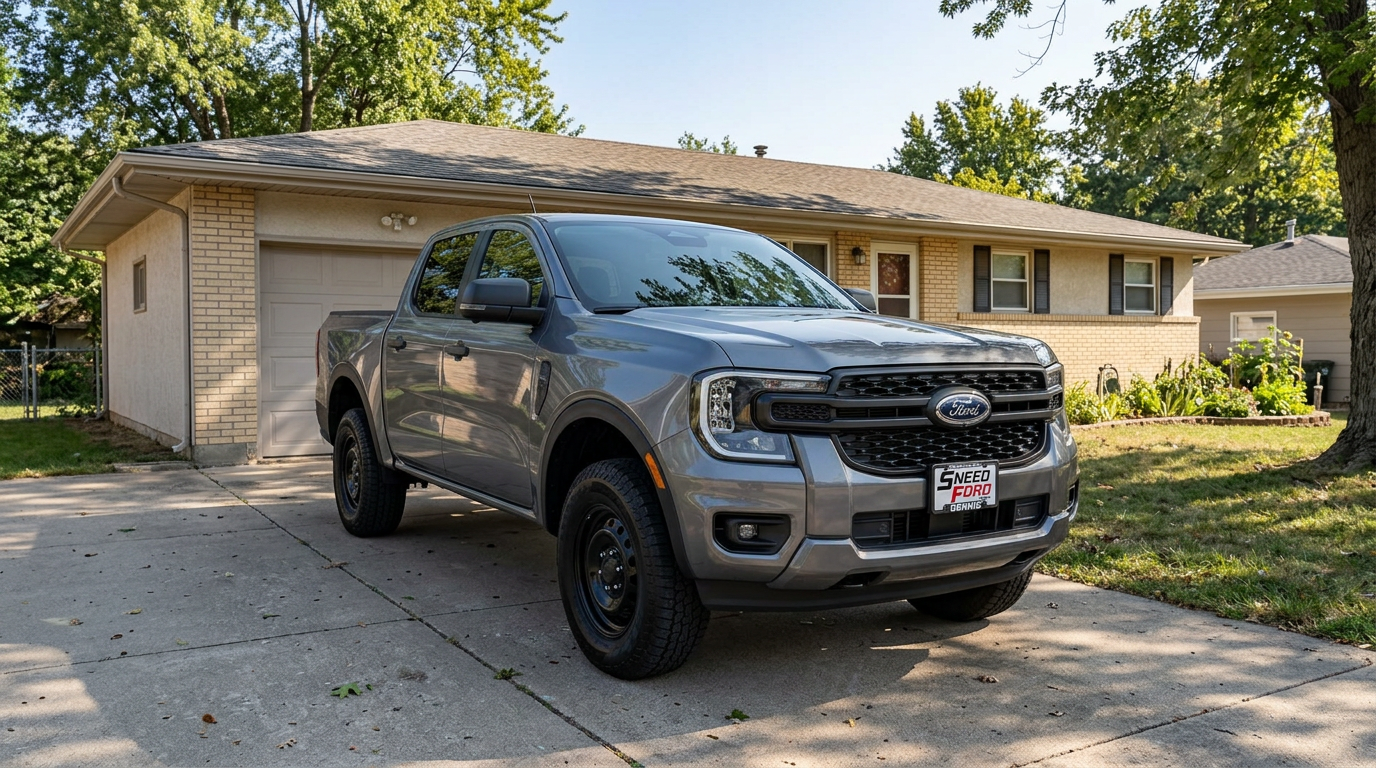
On a used Ranger, one option matters more than mileage, trim, or color: whether it has the Trailer Tow Package. It cannot be added later, and without it the truck is rated for considerably less than the 7,500 lbs people assume. Here is what to check before you buy, and how our remarketing program puts them on the lot in Gower. Where do the used Rangers at Dennis Sneed Ford come from? Most come directly from Ford. Dennis Sneed Ford is a Top 5 Ford remarketing dealer nationally, purchasing 1,100+ late-model Ford and Lincoln vehicles straight from Ford each year. That gives us a sourcing channel most dealerships our size do not have, so late-model used Rangers turn up here regularly rather than only when one is traded in. Remarketing is how off-lease, factory, and program vehicles come back through Ford and get placed with dealers who buy at volume. On a truck as configuration-dependent as the Ranger — three engines, two drivetrains, and an option that determines its tow rating — that variety is the difference between finding the right one and settling. What should you check first on a used Ranger? The Trailer Tow Package, the drivetrain, and the engine, before you look at mileage. Those three decide what the truck can actually do. Two Rangers with the same badge and similar odometer readings can differ by thousands of pounds of capability. What to check Why it matters Trailer Tow Package Determines the tow rating, and cannot be added after purchase 4x2 or 4x4 Changes payload, winter capability, and gravel-road confidence 2.3L or 2.7L engine 90 lb-ft of torque apart; also changes payload by roughly 250 lbs FX4 Off-Road Package Off-road hardware; requires 4x4, so its presence confirms the drivetrain Payload on the door jamb The real number for that specific truck, not the brochure maximum History report We provide free Autocheck and Carfax on our used inventory The one that cannot be fixed later: the Trailer Tow Package. Everything else on a truck can be added, swapped, or lived with. A Ranger that left the factory without the tow package will never have the full rating, no matter what you bolt to it afterward. Check for the trailer brake controller and the wiring connectors. Which used Ranger configuration should you look for? For most buyers, an XLT with four-wheel drive and the Trailer Tow Package. That combination covers towing, winter, and gravel roads without the price step of a Lariat, and the XLT is the volume model so used examples turn up more often than XL, Lariat, or Raptor. Best odds of finding one: XLT. It outsells the others by a wide margin. Maximum capability for the money: an XL with the tow package. It pulls exactly as much as a Lariat. You want the stronger engine: look for the 2.7L V6, offered on XLT and Lariat only. You want maximum payload: the 2.3L with two-wheel drive carries the most. You want off-road hardware: look for FX4, which requires four-wheel drive. You want the Raptor: know going in that it tows less than every other Ranger. One note on model years: the Ranger has changed substantially across recent generations in engines, equipment, and trim structure. Match the badge to the specific model year in front of you rather than assuming a name means the same thing across the years, and read the window sticker rather than the listing title. Should you buy a used Ranger or order new? Order new if you need a specific combination, particularly if towing matters — the Trailer Tow Package is not something you can add to a used truck that lacks it. Buy used if you find one configured the way you need and the model year suits you. That is the honest framing on this truck. On most vehicles the used-versus-new question is about price and mileage. On a Ranger it is mostly about whether the specific truck in front of you has the options that determine what it can do. A used XLT with 4x4 and the tow package is a strong buy. A used XLT without the tow package, when you plan to tow, is a compromise you will feel every time you hitch something up. Search Used Inventory Search New Ranger Inventory Value Your Trade What is a manufacturer buyback Ranger? A manufacturer buyback is a vehicle originally sold as new, repurchased by Ford because of a warranty concern, repaired by Ford, and released for resale. It may carry a branded title. It is not a salvage or rebuilt-title vehicle, and it was not in an accident, flooded, or declared a total loss by an insurer. Dennis Sneed Ford is one of a limited number of Ford dealers nationally that participates in this program. We state the branded title part plainly because it is the most important thing to understand before buying one, and it is why these are offered at a discount. We provide a free Autocheck and Carfax on every one so you can review the history yourself. The vehicle comes with the balance of the original factory warranty or a 12-month/12,000-mile warranty, whichever is longer. It is not right for every buyer — if you plan to trade in a few years, factor the branded title into that decision. Full detail is on our manufacturer buyback program page. Where can you see used Rangers near Kansas City? At Dennis Sneed Ford in Gower, MO — 1046 S.W. Highway 169, about 45 minutes north of the Kansas City metro on US-169 and roughly 30 minutes south of St. Joseph. Call 816-409-1975 to check what is on the lot before you drive up. Roughly 60% of our business comes from the Kansas City metro — Liberty, Smithville, Kearney, Overland Park, Lees Summit, and the surrounding suburbs, along with St. Joseph, Maryville, and Savannah to the north. Tell us what you tow and we will read you the window sticker before you make the drive. THE SNEED DIFFERENCE 30 years. Family-owned. Sourced, not accumulated. Top 5 Ford remarketing dealer in the country — 1,100+ late-model Ford and Lincoln vehicles purchased directly from Ford each year. Ford Credit Partners in Quality — one of roughly 111 dealers nationally recognized for the highest customer satisfaction and loyalty. One of a limited number of Ford manufacturer buyback dealers nationally, with free Autocheck and Carfax provided. We will read you the window sticker on any Ranger on the lot, so you know whether it has the tow package before you drive up. Used Ford Ranger questions, answered Does Dennis Sneed Ford have used Ford Rangers for sale? Availability changes regularly. As a Top 5 Ford remarketing dealer nationally we purchase 1,100+ late-model Ford and Lincoln vehicles directly from Ford each year, which gives us a sourcing channel most dealerships our size do not have, so late-model used Rangers turn up here more often than at most stores. Call 816-409-1975 to check current inventory. What should I check before buying a used Ford Ranger? Check for the Trailer Tow Package, the drivetrain, and the engine before mileage. The tow package determines the truck's tow rating and cannot be added after purchase. Four-wheel drive changes payload and capability, and the 2.7L V6 differs from the 2.3L by 90 lb-ft of torque and about 250 lbs of payload. Confirm all of it on the window sticker rather than the listing description. Can you add a tow package to a used Ranger? Not in a way that restores the factory rating. The Trailer Tow Package is a factory option that must be ordered with the truck, and a Ranger built without it will not carry the full rating regardless of what is added afterward. Look for the trailer brake controller and wiring connectors to confirm a used truck has it. How can I tell if a used Ranger has four-wheel drive? Check the window sticker or look for the drivetrain selector in the cabin. The presence of the FX4 Off-Road Package also confirms it, since FX4 requires four-wheel drive. Four-wheel drive affects payload as well as capability, so it is worth verifying rather than assuming from the trim. What is a manufacturer buyback Ford Ranger? It is a vehicle originally sold as new, repurchased by Ford because of a warranty concern, repaired by Ford, and released for resale. It may carry a branded title. It is not a salvage or rebuilt-title vehicle and was not in an accident, flood damaged, or declared a total loss by an insurance company. It comes with the balance of the original factory warranty or a 12-month/12,000-mile warranty, whichever is longer. How far is Dennis Sneed Ford from Kansas City? Dennis Sneed Ford is at 1046 S.W. Highway 169, Gower, MO 64454, about 45 minutes north of the Kansas City metro on US-169 and roughly 30 minutes south of St. Joseph. From the Northland the drive is closer to 30 minutes. Call 816-409-1975 for hours and directions. Keep researching the Ranger If you are weighing used against new, the complete 2026 Ford Ranger buyer's guide covers all four models and three engines. Our towing and payload guide explains what 7,500 lbs actually means once there is a trailer behind you, the trims guide covers XL through Raptor, the Ranger vs F-150 comparison settles the size question, and the colors guide has all nine with paint codes. For the model overall, start at the Ford Ranger at Sneed Ford. Search Used Inventory Manufacturer Buyback Program Call 816-409-1975 Carey Sneed Dennis Sneed Ford · Gower, MO · 30 Years Family-Owned Carey Sneed represents the second generation at Dennis Sneed Ford, a Ford Credit Partners in Quality dealer and one of the Top 5 Ford remarketing dealers in the country. Meet the Sneed Ford team Although every reasonable effort has been made to ensure accuracy, absolute accuracy cannot be guaranteed. Specifications referenced are for the current model year and verified against Ford's published Ranger specifications; earlier model years differ in equipment, trim availability, and ratings. Used vehicle equipment, configuration, and availability vary by individual vehicle and change daily. Towing and payload figures require proper equipment and vary based on cargo, configuration, accessories, and number of passengers. Manufacturer buyback vehicle terms, warranty coverage, and title status vary by vehicle — confirm the specifics of any individual vehicle before purchase. Confirm exact equipment on any vehicle via its window sticker and history report.

Ford Ranger Towing and Payload

Ford Ranger Towing and Payload: What 7,500 lbs Really Means

Most towing pages quote a maximum number and stop. That number is real, but it is not what determines whether your specific trailer works behind your specific truck. Payload does, more often than towing capacity, and almost nobody explains why. Here is what the 2026 Ranger's ratings actually mean once there is a trailer on the back. How much can the 2026 Ford Ranger tow? Up to 7,500 lbs on the XL, XLT, and Lariat when equipped with the available Trailer Tow Package. The Ranger Raptor is rated at 5,510 lbs, with the Trailer Tow Package standard. Without the tow package, the Ranger does not reach the 7,500 lb figure. Model Max towing Trailer Tow Package Ranger XL 7,500 lbs Available Ranger XLT 7,500 lbs Available Ranger Lariat 7,500 lbs Available Ranger Raptor 5,510 lbs Standard The first thing worth noticing: the trim badge does not buy towing capacity. A base XL with the tow package pulls exactly as much as a loaded Lariat. If towing is the reason you are shopping, the package matters and the trim does not. Order the tow package if there is any chance you will tow. It is the single option that changes what the truck can do, and it cannot be added later. A Ranger without it is a considerably less capable truck than the 7,500 lb figure suggests. Why does the Ranger Raptor tow less? Because it is built for a different job. The Raptor's suspension, gearing, and 33-inch all-terrain tires are tuned for speed over rough ground rather than for pulling weight. It is rated at 5,510 lbs against the 7,500 lbs a base XL manages — nearly 2,000 lbs less from the most powerful Ranger. This catches people out constantly, and it is worth being blunt about. The Raptor has the most horsepower in the lineup at 405, and the least towing capability. Power and tow rating are not the same thing. Tow rating comes from frame, suspension, cooling, gearing, and brakes working together, and the Raptor trades several of those for off-road performance. If you want off-road capability and full towing, the better answer is an XL, XLT, or Lariat with four-wheel drive and the FX4 Off-Road Package. That combination keeps the 7,500 lb rating. Towing and payload are different, and payload is usually what stops you Towing capacity is what the truck can pull behind it. Payload is what it can carry — and payload includes passengers, cargo in the bed and cab, and the trailer's tongue weight pressing down on the hitch. On a mid-size truck, payload runs out before towing capacity more often than people expect. Engine and drivetrain Max payload 2.3L EcoBoost, 4x2 1,767 lbs 2.3L EcoBoost, 4x4 1,763 lbs 2.7L EcoBoost V6, 4x4 1,513 lbs Raptor, 3.0L V6 4x4 1,373 lbs Note that payload follows the engine and drivetrain rather than the trim. Moving from the 2.3L to the 2.7L V6 costs about 250 lbs of payload, because the V6 and its associated hardware weigh more and that weight comes out of what you can carry. The calculation nobody does: a conventional trailer puts roughly 10 to 15% of its weight on the hitch. A 6,000 lb trailer means 600 to 900 lbs of tongue weight sitting on your payload before anyone gets in the truck. Add four passengers and gear and a 1,513 lb payload disappears quickly. That is why two trucks with the same tow rating can behave differently, and why the honest question is not "can it pull this" but "can it pull this with my family and my gear in it." What can 7,500 lbs actually pull? A properly equipped Ranger handles most of what people in northwest Missouri actually tow — a small travel trailer, a bass boat, a pair of side-by-sides on a tandem trailer, or a loaded utility trailer with lawn equipment or materials. Small travel trailers — many single-axle and smaller tandem-axle campers fall comfortably inside the rating, though loaded weight matters more than the brochure dry weight. Boats — most bass boats, pontoons, and runabouts on single-axle trailers. Utility and equipment trailers — a mower, an ATV or two, materials, or a small skid loader depending on weight. Livestock trailers — smaller bumper-pull trailers, with the caveat that live weight shifts and tongue weight changes as it does. Where the Ranger runs out is the larger end of travel trailers, heavier equipment, and anything approaching gooseneck territory. If that is your regular load, an F-150 tows up to 13,500 lbs and is the honest answer rather than running a mid-size truck at its ceiling. What should you check before you tow? Confirm the truck has the Trailer Tow Package, find the payload figure on the door jamb sticker of your specific vehicle, and weigh your trailer loaded rather than trusting the dry weight. Those three steps prevent nearly every towing mismatch we see. Verify the tow package. Look for the trailer brake controller and the connectors. Without it you do not have the 7,500 lb rating. Read the door jamb sticker. Your specific truck's payload is printed there, and it reflects the options actually fitted. It will usually be lower than the maximum published figure. Weigh the trailer loaded. Dry weight is what it left the factory at. Loaded weight includes water, propane, gear, and everything else, and it is often 1,000 lbs or more higher. Account for tongue weight in payload, not just towing. This is the step that is skipped most. Count the people. Passengers come out of payload too. Call us at 816-409-1975 with what you tow and we will tell you honestly whether a Ranger covers it, or whether you are better served by an F-150. We sell both and have no reason to steer you wrong. Search Ranger Inventory Value Your Trade Call 816-409-1975 THE SNEED DIFFERENCE Tell us what you tow and we will point you at the right truck Dennis Sneed Ford has been family-owned in Gower, MO for 30 years, about 45 minutes north of the Kansas City metro and 30 minutes south of St. Joseph. The whole truck lineup — Maverick, Ranger, F-150, and Super Duty. The right answer depends on your trailer, not on what is on our lot. Top 5 Ford remarketing dealer in the country — 1,100+ late-model Ford and Lincoln vehicles purchased directly from Ford each year. We will read you the door jamb sticker on any truck here, so you know the real payload rather than the brochure maximum. Ranger towing questions, answered How much can a 2026 Ford Ranger tow? The Ranger XL, XLT, and Lariat are each rated at a maximum 7,500 lbs when equipped with the available Trailer Tow Package. The Ranger Raptor is rated at 5,510 lbs with the Trailer Tow Package standard. Without the tow package, the Ranger does not reach the 7,500 lb rating. Do I need the Trailer Tow Package to tow with a Ranger? To reach the maximum 7,500 lb rating, yes. The Trailer Tow Package is required for that figure and is available on the XL, XLT, and Lariat, and standard on the Raptor. It cannot be added after purchase, so it should be ordered with the truck if there is any chance you will tow. Why does the Ranger Raptor tow less than a Ranger XL? The Raptor's suspension, gearing, and all-terrain tires are tuned for high-speed off-road driving rather than for pulling weight, so it is rated at 5,510 lbs against the 7,500 lbs a properly equipped XL manages. Tow rating comes from frame, suspension, cooling, gearing, and brakes working together rather than from horsepower, which is why the most powerful Ranger tows the least. What is the payload capacity of the 2026 Ford Ranger? Payload follows the engine and drivetrain rather than the trim. The 2.3L EcoBoost with two-wheel drive carries the most at 1,767 lbs, the 2.3L with four-wheel drive 1,763 lbs, the 2.7L V6 with four-wheel drive 1,513 lbs, and the Raptor 1,373 lbs. Your specific truck's payload is printed on its door jamb sticker. Does trailer tongue weight count against payload? Yes. A conventional trailer typically places roughly 10 to 15% of its weight on the hitch, and that tongue weight counts against the truck's payload along with passengers and cargo. A 6,000 lb trailer can put 600 to 900 lbs onto the payload figure before anyone gets in the truck, which is why payload often becomes the limiting factor rather than tow rating. Can a Ford Ranger tow a travel trailer? Many smaller travel trailers fall within the Ranger's 7,500 lb rating when it is properly equipped, but loaded weight matters more than the advertised dry weight. Water, propane, and gear commonly add 1,000 lbs or more. Weigh the trailer loaded and account for tongue weight against payload before deciding. Keep researching the 2026 Ranger If you are weighing mid-size against full-size for towing, our Ranger vs F-150 comparison covers where each one wins. The trims guide explains why a base XL tows as much as a Lariat, and the colors guide has all nine with paint codes. The complete 2026 Ford Ranger buyer's guide pulls every figure together, and the Ford Ranger at Sneed Ford is the place to start on the model overall. Search Ranger Inventory Contact Sneed Ford Call 816-409-1975 Carey Sneed Dennis Sneed Ford · Gower, MO · 30 Years Family-Owned Carey Sneed represents the second generation at Dennis Sneed Ford, a Ford Credit Partners in Quality dealer and one of the Top 5 Ford remarketing dealers in the country. Meet the Sneed Ford team Although every reasonable effort has been made to ensure accuracy, absolute accuracy cannot be guaranteed. Specifications verified against Ford's published 2026 Ranger specifications and window stickers on our own inventory. Towing and payload figures require proper equipment and vary based on cargo, configuration, accessories, and number of passengers. Tongue weight percentages are general guidance; consult your owner's manual and the trailer manufacturer for your specific setup. Always confirm your vehicle's actual payload on its door jamb sticker and weigh trailers loaded rather than relying on published dry weights.

Ford Ranger Dennis Sneed Ford

Ford Ranger vs F-150: Which Truck Do You Actually Need

We sell both, so this is not a page arguing you into the truck we happen to have. The Ranger and the F-150 answer genuinely different questions, and the honest version is that most people who assume they need full-size do not, while the people who actually need it know it within about two questions. Here is where each one wins. What is the difference between the Ford Ranger and F-150? The Ranger is a mid-size pickup that tows up to 7,500 lbs on a 128.7-inch wheelbase. The F-150 is full-size, tows up to 13,500 lbs on a 145.4-inch wheelbase in SuperCrew form, carries up to 2,440 lbs of payload, and seats up to six. The Ranger is easier to park and live with; the F-150 does more. The gap is real but it is narrower than the badge suggests in the places most people actually use a truck, and much wider in the places they think they do. Both carry a 4x8 sheet of plywood flat. Only one pulls a 12,000 lb trailer. The question that settles it: what is the heaviest thing you will tow more than twice a year? Under 7,500 lbs, the Ranger does everything and costs you less to run. Over it, nothing about the Ranger will make you happy, and no amount of saving is worth being at the limit. How much more does the F-150 tow and haul? Considerably. The Ranger tows up to 7,500 lbs with the Trailer Tow Package and carries up to 1,767 lbs. The F-150 tows up to 13,500 lbs with the 3.5L EcoBoost V6 and carries up to 2,440 lbs — roughly 80% more towing and 38% more payload at the top of each range. Ranger F-150 Max towing 7,500 lbs 13,500 lbs Max payload 1,767 lbs 2,440 lbs Engines offered Three Six Max seating 5 6 Cab styles SuperCrew only Regular Cab, SuperCab, SuperCrew Bed lengths One 5.5 ft, 6.5 ft, 8.0 ft Fuel capacity 18 gal (20 Raptor) 23 gal, 36 gal extended Those top figures both require specific configurations. The F-150's 13,500 lbs comes from the 3.5L EcoBoost V6 properly equipped, and its 2,440 lb payload comes from a Regular Cab with the 8-foot box — not from the SuperCrew most people buy. The Ranger's 7,500 lbs requires the Trailer Tow Package. How much bigger is the F-150 really? About 17 inches of wheelbase. The Ranger rides on 128.7 inches; a SuperCrew F-150 with the 5.5-foot box is 145.4 inches and measures 232 inches long overall. That difference is felt every time you park, turn around in a driveway, or pull into a garage. Where it is not felt is the bed. This is the number that surprises people most: Bed measurement Ranger F-150 (5.5 ft box) Width between wheel wells 48.2 in 50.6 in Length at floor 59.6 in 67.1 in Depth 20.6 in 21.4 in Volume 43.5 cu ft 52.8 cu ft Both take a sheet of plywood flat. A 4x8 sheet needs 48 inches between the wheel wells. The Ranger gives you 48.2, the F-150 gives you 50.6. The difference between the two beds is 2.4 inches of width and about 7 inches of length — not the chasm people assume when they step up to full-size for hauling reasons. Which one costs less to run? The Ranger, though the gap is smaller than the size difference suggests. The Ranger's 2.3L EcoBoost is EPA-rated at 21 city / 25 highway / 23 combined with two-wheel drive. Both trucks recommend 87-octane regular on their mainstream engines, with premium only on the top performance versions. Two things worth knowing beyond the EPA figures. The Ranger holds 18 gallons against the F-150's 23, so the range advantage is narrower than the MPG gap implies. And both trucks put premium fuel only on their halo engines — the Ranger Raptor's 3.0L asks for 91 octane, as do the F-150 Raptor's engines, while everything else in both lineups runs on regular. Which truck should you buy? Buy the Ranger if you tow under 7,500 lbs, park in a normal garage or a tight driveway, and use the bed for gear rather than commercial loads. Buy the F-150 if you tow heavy, carry five or six people regularly, need a bed longer than six feet, or want a V8. You tow a small camper, boat, or utility trailer: Ranger. 7,500 lbs covers most of what people actually pull. You tow a large travel trailer or loaded equipment trailer: F-150, and do not try to make the math work otherwise. Your garage is tight or your driveway is short: Ranger, by about 17 inches of wheelbase. You carry six people: F-150. The Ranger seats five, full stop. You need an 8-foot bed: F-150. The Ranger offers one bed length. You want a V8: F-150. The Ranger's engines are all EcoBoost. You haul sheet goods and yard material: either. Both beds take plywood flat. It is a work truck and capability per dollar matters: worth pricing a Ranger XL with the Trailer Tow Package against an F-150 XL before assuming. The honest failure mode we see most: someone buys full-size for a towing scenario that happens twice a year, then drives a truck that is harder to park for the other 363 days. The opposite mistake is rarer but worse — being at the limit of a mid-size truck with a trailer behind you is not a place to save money. Search Ranger Inventory Search F-150 Inventory Call 816-409-1975 THE SNEED DIFFERENCE We sell both, so we have no reason to push you either way Dennis Sneed Ford has been family-owned in Gower, MO for 30 years, about 45 minutes north of the Kansas City metro and 30 minutes south of St. Joseph. The whole truck lineup — Maverick, Ranger, F-150, and Super Duty. Tell us what you tow and we will point you at the right one. Top 5 Ford remarketing dealer in the country — 1,100+ late-model Ford and Lincoln vehicles purchased directly from Ford each year. Ford Credit Partners in Quality — one of roughly 111 dealers nationally recognized for customer satisfaction and loyalty. Ranger vs F-150 questions, answered Is the Ford Ranger big enough to replace an F-150? For many buyers, yes. The Ranger tows up to 7,500 lbs and carries up to 1,767 lbs, which covers a small camper, a boat, an equipment trailer, or a loaded bed. If you tow above 7,500 lbs, carry six people, or need a bed longer than the Ranger's single option, the F-150 is the right truck. How much more can an F-150 tow than a Ranger? The F-150 tows up to 13,500 lbs with the 3.5L EcoBoost V6 properly equipped, against the Ranger's 7,500 lbs with the Trailer Tow Package. That is roughly 80% more at the top of each range, though both figures require specific configurations rather than applying to every version of each truck. Can a Ford Ranger haul a sheet of plywood? Yes, flat. A 4x8 sheet needs 48 inches of clearance between the wheel wells, and the Ranger bed measures 48.2 inches. For comparison, the F-150 measures 50.6 inches. The Ranger bed is 59.6 inches long at the floor and holds 43.5 cubic feet. How much smaller is a Ranger than an F-150? The Ranger rides on a 128.7-inch wheelbase. A SuperCrew F-150 with the 5.5-foot box rides on 145.4 inches and measures 232 inches long overall, so the difference is roughly 17 inches of wheelbase. That gap is most noticeable when parking, turning around, and fitting into a garage. Does the Ford Ranger come with a V8? No. The Ranger offers three engines, all EcoBoost: a 2.3L four-cylinder, a 2.7L V6, and a 3.0L V6 in the Raptor. If you want a V8, the F-150 offers the 5.0L Ti-VCT V8 rated at 400 horsepower and 410 lb-ft. Which is cheaper to run, a Ranger or an F-150? The Ranger, though the gap is narrower than the size difference suggests. The Ranger's 2.3L EcoBoost is EPA-rated at 21 city / 25 highway / 23 combined with two-wheel drive. Both trucks run on 87-octane regular fuel on their mainstream engines, with premium recommended only on their respective Raptor models. Keep researching the 2026 Ranger If the Ranger is the right size, the next questions are trim and color. Our 2026 Ranger trims guide covers all four models and why a base XL tows as much as a Lariat, and the colors guide has all nine with swatches and paint codes. The complete 2026 Ford Ranger buyer's guide pulls every engine and capability figure together, and the Ford Ranger at Sneed Ford is the place to start on the model overall. Search Ranger Inventory Contact Sneed Ford Call 816-409-1975 Carey Sneed Dennis Sneed Ford · Gower, MO · 30 Years Family-Owned Carey Sneed represents the second generation at Dennis Sneed Ford, a Ford Credit Partners in Quality dealer and one of the Top 5 Ford remarketing dealers in the country. Meet the Sneed Ford team Although every reasonable effort has been made to ensure accuracy, absolute accuracy cannot be guaranteed. Specifications for both vehicles verified against Ford's published Ranger specifications and Ford's published F-150 specifications, along with window stickers on our own inventory. Maximum towing and payload figures for both trucks require specific configurations and proper equipment, and vary based on cab style, bed length, engine, drivetrain, cargo, accessories, and number of passengers. Fuel-economy figures are EPA estimates and vary by configuration and driving conditions. Confirm the exact equipment and ratings on any specific vehicle via its window sticker.