A manufacturer buyback is a vehicle the automaker repurchased from its first owner over an unresolved warranty problem, then repaired, inspected, and resold with a manufacturer-backed warranty. A regular used car is a trade-in, lease return, or auction purchase with no buyback in its past. The buyback costs less up front, but it carries that history for life.
Quick Answer: Same Lot, Different Backstory
The manufacturer buyback vs. used car difference comes down to four things: where the vehicle came from, who signed off on the repairs, how much coverage it carries, and what it will be worth when you sell. A Ford buyback was reacquired by Ford Motor Company, repaired under Ford's supervision, cleared against a 50-point checklist, and sold with the balance of its factory warranty or a 12-month/12,000-mile limited warranty, whichever is longer. A regular used car keeps whatever factory coverage is left, if any, and whatever history its previous owners gave it. Buybacks are priced below comparable retail units, and that discount follows them to trade-in. At Dennis Sneed Ford in Gower, MO, both kinds sit on the same lot and both pass the same 99-point inspection, so you can browse the current lemon law buyback vehicles for sale and compare them against standard used units in a single visit.
Key Takeaways
- Both are pre-owned, so the real difference is the backstory. A manufacturer buyback went back to Ford because a warranty concern was not resolved to the first owner's satisfaction; a regular used car changed hands through an ordinary trade-in, lease return, or auction.
- Oversight is different. A Ford buyback is repaired under the manufacturer's supervision and checked against a 50-point checklist before resale, a process that usually takes about two weeks, and any unit Ford cannot fully correct is recycled instead of sold.
- Included coverage often favors the buyback: the balance of the factory warranty or a 12-month/12,000-mile limited warranty, whichever is longer. A non-certified used car carries only what remains of its original factory coverage.
- Resale value cuts the other way. Buyback history typically appears on vehicle history reports and lowers trade-in offers, so part of the up-front discount comes back out of your pocket when you sell.
- At Dennis Sneed Ford in Gower, MO, buybacks and regular used vehicles share one lot, one 99-point inspection, free vehicle history reports, and a sales team that earns $0 in commission, which keeps the comparison honest.
| What Sets Them Apart | Manufacturer Buyback | Regular Used Car | Ford Blue Advantage Certified |
|---|---|---|---|
| How it reached the lot | Repurchased by Ford over a warranty concern, then repaired | Trade-in, lease return, or auction purchase | A used Ford that met Ford's age, mileage, and history limits |
| Inspection before sale | Ford's 50-point checklist plus the dealer's 99-point inspection | The dealer's 99-point inspection | 172-point (Gold) or 139-point (Blue) certification inspection |
| Warranty at purchase | Factory balance or 12-mo/12,000-mi limited, whichever is longer | Remaining factory coverage only, if any | Gold: 12-mo/12,000-mi comprehensive plus 7-yr/100,000-mi powertrain; Blue: 90-day/4,000-mi |
| Trade-in value later | Discounted, because the history follows the vehicle | Standard market value | Standard market value |
Video: the steps a Ford buyback goes through between reacquisition and resale, none of which a regular traded-in used car ever sees
Manufacturer Buyback vs. Used Car: How Each One Reaches the Lot
Most of the confusion around buybacks clears up once you trace how each vehicle arrived. Picture two F-150s with the same year, trim, and mileage parked side by side. One came in on trade from a family moving up to a Super Duty. The other spent about two weeks in Ford's reacquisition process before it was cleared for sale. They look identical, but the paperwork behind them is not. If you are still deciding whether buybacks can be trusted at all, start with our guide on whether manufacturer buyback and lemon law vehicles are reliable, then come back here for the head-to-head comparison.
The Regular Used Car Path
A regular used car reaches a dealership through everyday channels: a customer trades it in, a lease ends, or the store buys it at auction. Nobody at the manufacturer reviews it before it is resold. Any remaining factory warranty simply transfers to the next owner, and the vehicle's condition reflects how its previous owners drove and maintained it. That can be excellent, since a one-owner, dealer-serviced trade-in is often the best buy on any lot, but the quality control belongs to the dealership alone. At Sneed Ford, that means a 99-point inspection and a free vehicle history report on every used unit.
The Manufacturer Buyback Path
A buyback starts life as a new vehicle with a problem its first owner could not get fixed. Under Missouri's lemon law, that generally means the same defect survived four or more repair attempts, or the vehicle sat out of service for 30 or more working days, with the problem reported during the warranty term or the first year after delivery. Ford also reacquires some vehicles as a goodwill gesture when repairs dragged on or the owner simply lost confidence. Either way, Ford takes the vehicle back, corrects the concern, and checks it against a 50-point checklist before a dealer can sell it. Our overview of the Ford manufacturer buyback program walks through that timeline step by step.
Where Certified Pre-Owned Fits In
Certified pre-owned is a third category that often gets blurred into the other two. A Ford Blue Advantage vehicle is a regular used car that cleared extra hurdles: Gold Certified units must be under six years old with fewer than 80,000 miles and pass a 172-point inspection, while Blue Certified allows up to ten years and 150,000 miles with a 139-point inspection, according to Ford's own comparison of Gold, EV, and Blue Certified vehicles. Certification is a separate program with its own warranty. Do not assume a buyback is certified unless the paperwork says so, and do not assume a certified car is automatically a better deal than a buyback just because of the badge.
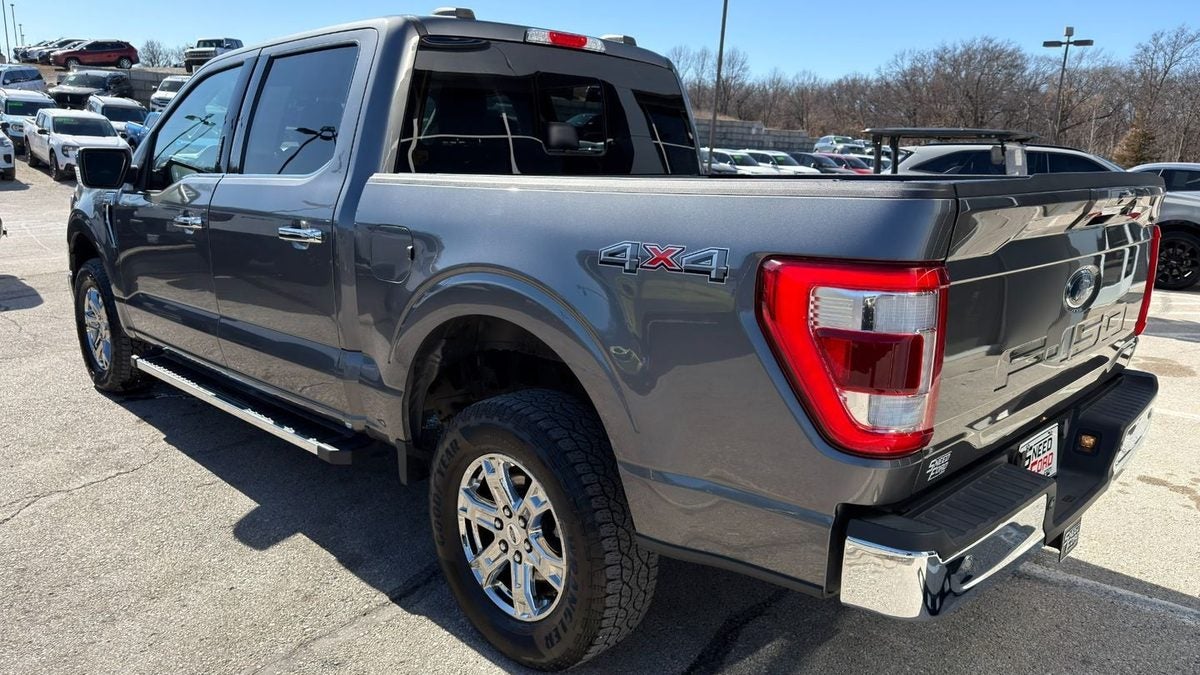
Ford buybacks and traded-in used vehicles share one lot at Dennis Sneed Ford, 1046 S.W. Highway 169 in Gower, Missouri
The Differences That Actually Change What You Pay
Origin stories are useful, but most shoppers care about what the manufacturer buyback vs. used car decision does to their budget at three moments: the day they sign, the months they are covered by a warranty, and the day they trade the vehicle in. Those three moments pull in different directions, which is why there is no one-size-fits-all answer.
The short version: a buyback usually wins on purchase price and included coverage, a regular used car usually wins on resale value and simplicity, and the better choice depends mostly on how long you plan to keep the vehicle.
Price Today vs. Value Later
Because buyback history is disclosed and typically shows up on vehicle history reports, buybacks are priced below comparable retail units of the same year, trim, and mileage. That discount is real money at signing. The catch is that your future buyer will see the same history you did, so expect a lower trade-in or private-sale offer when you move on. Before choosing, get a value on your current vehicle and ask for the price of a comparable non-buyback unit, so you are looking at the actual gap instead of a guess.
The Warranty You Drive Away With
This is where buybacks quietly outperform many regular used cars. A Ford buyback includes either the rest of its original factory warranty or a 12-month/12,000-mile limited warranty, whichever gives you more. A non-certified used car of similar age might have only a few months of factory coverage left, or none at all. If you want protection beyond either one, Sneed Ford offers extended service contracts and maintenance plans through Zurich on used vehicles.
Paperwork, Titles, and History Reports
Here is a detail many shoppers miss: Missouri's lemon law does not require a buyback brand on the title or a notice to later buyers, so whether a title mentions the buyback depends on the state where Ford reacquired the vehicle. That makes the dealer's disclosure and the vehicle history report your real sources of truth. With a regular used car, the history report is most of the story: owners, accidents, and service visits. With a buyback, you also want the repair documentation showing what the original concern was and how Ford corrected it.
| What You Are Comparing | Manufacturer Buyback | Regular Used Car |
|---|---|---|
| Purchase price | Below comparable retail for the same year, trim, and mileage | Market retail |
| Warranty at purchase | Factory balance or 12-mo/12,000-mi limited, whichever is longer | Remaining factory coverage, if any |
| Who verified the repairs | Ford Motor Company, then the dealer's 99-point inspection | The dealer's 99-point inspection |
| Documents to review | Buyback disclosure, Ford repair records, and the vehicle history report | Vehicle history report and service records |
| Best fit | Buyers who keep a vehicle five years or longer | Buyers who trade every two or three years |
Which One Should You Buy? A Quick Decision Guide
Neither option is automatically the smarter one. The better pick depends on your timeline, your comfort with reading repair paperwork, and whether a lower price today matters more to you than a stronger trade-in later. Use these three buyer profiles as a starting point.
A Buyback Makes Sense If
You plan to keep the vehicle for five years or more, you want a late-model Ford for less money, and you are comfortable reviewing the repair history. Long-term owners feel the resale discount the least.
A Regular Used Car Makes Sense If
You trade every two or three years, you want the cleanest possible resale, or the exact truck or SUV you need simply is not available as a buyback this week. Resale value holds up best here.
Certified Pre-Owned Makes Sense If
You want manufacturer-backed coverage on a used Ford without buyback history, and you are willing to pay a little more for a Gold Certified unit's 7-year/100,000-mile powertrain limited warranty.
Whichever route you take, run the VIN through NHTSA's free vehicle recall lookup before you sign. Any used vehicle, buyback or regular, can have an open safety recall, including recalls issued after it was resold, and recall repairs are free at a Ford dealership. Then work through the questions below on whichever vehicle you are considering.
| Question to Ask | On a Manufacturer Buyback | On a Regular Used Car |
|---|---|---|
| What is the history? | What was the original concern, and how did Ford fix it? | How many owners, and are there accident or damage reports? |
| How much warranty is left? | Does the factory balance or the 12-mo/12,000-mi coverage run longer? | How many months and miles remain on factory coverage? |
| What inspection did it pass? | Ford's 50-point checklist plus the 99-point dealer inspection | The 99-point dealer inspection |
| Are there open recalls? | Check the VIN with NHTSA before signing | Check the VIN with NHTSA before signing |
| What will it be worth later? | Expect a buyback discount at trade-in time | Normal market depreciation |
| What is the out-the-door price? | Compare it against a non-buyback unit of the same trim | Compare it against a buyback alternative, if one is in stock |
Comparing Buybacks and Used Cars in Gower, MO
Plenty of dealerships can technically retail a Ford buyback. Far fewer stock buybacks next to a deep used inventory, where you can compare the two directly. At our Ford dealership in Gower, MO, buybacks sourced directly from Ford sit alongside 275+ used Ford and Lincoln vehicles, which turns an apples-to-apples comparison into a single afternoon instead of a weekend of driving between stores. Gower sits right on US-169, about 30 minutes north of downtown Kansas City.
Drive Times to Gower
| Starting Point | Approximate Drive to Gower | Main Route |
|---|---|---|
| Trimble, MO | About 10 minutes | US-169 North |
| Smithville, MO | About 15 minutes | US-169 North |
| Kearney, MO | About 25 minutes | MO-92 West, then US-169 North |
| Platte City, MO | About 25 minutes | MO-92 East, then US-169 North |
| St. Joseph, MO | About 25 minutes | US-169 South |
| North Kansas City, MO | About 30 minutes | US-169 North |
| Liberty, MO | About 35 minutes | MO-152 West, then US-169 North |
| Leavenworth, KS | About 45 minutes | K-92/MO-92 East through Platte City, then US-169 North |
| Overland Park, KS | About 50 minutes | I-35 North into Kansas City, then US-169 North |
| Downtown Kansas City, MO | About 30 minutes | US-169 North across the Broadway Bridge |
Shopping from the Kansas side? Buyback history follows the VIN rather than the state line, so registering the vehicle in Kansas does not change what a history report shows or what you should ask before signing.
Dennis Sneed Ford, 1046 S.W. Highway 169, Gower, MO 64454, where buybacks and regular used vehicles can be compared on one lot
Financing, Insurance, and Trade-Ins
Most lenders finance a buyback much like any other used vehicle, and Sneed Ford's finance team works with first-time buyers and shoppers rebuilding their credit. A few insurers and lenders treat buyback history differently, so get quotes on the specific VIN before you commit. If you are trading in, bring your title or payoff details, your driver's license, and proof of insurance, then ask for out-the-door numbers on both the buyback and the regular used option with your trade applied, since the math shifts with each vehicle.
Why the Dealer Matters as Much as the Vehicle
A buyback is only as transparent as the people selling it. Dennis Sneed Ford has been family-owned in Gower for more than 30 years, holds a 4.6-star Google rating, and pays its sales staff $0 in commission, so nobody on the floor earns more by steering you toward one vehicle over another. That matters most on a buyback, where the honest answer is sometimes that the regular used truck is the better fit for how you drive.
Compare Both Side by Side at Dennis Sneed Ford
The manufacturer buyback vs. used car question gets a clear answer once you know how long you will keep the vehicle. Buybacks reward long-term owners with a lower price and manufacturer-backed coverage, while regular used cars reward frequent traders with stronger resale. Seeing both on the same lot settles it faster than any article can.
Dennis Sneed Ford is located at 1046 S.W. Highway 169, Gower, MO 64454. Sales is open Monday through Saturday, 8:30 AM to 6:00 PM, and closed Sunday. Call 816-409-1975 to ask which buybacks are on the lot this week, what the original concern was on each one, and which regular used units compare.
Tell us your budget and how long you plan to keep your next vehicle, and we will lay out the buyback and non-buyback options side by side, covering price, coverage, and expected trade-in value, with no commission-driven pressure in either direction.